Research Methods
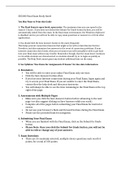
,EXAM SKILLS:
Design a study Qs:
- Justify
- Add in key terms
- Reliability - mention stats score of +0.8 is high reliability
- Pilot study
- Behaviour categories - give examples
- If it says ordinal or measuring something e.g. happiness use
a scale
‘In this study’:
- Over apply
, LT1
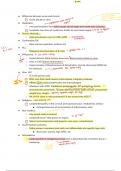
Experimental method
AIMS: general statement on what topic is being researched
EXPERIMENTAL HYPOTHESIS: statement that predicts the difference in the DV, when the IV is manipulated
ALTERNATIVE HYPOTHESIS: predicts outcome of research as an alternative to the null
DIRECTIONAL HYPOTHESIS: predicts the direction of difference/ relation the results take e.g. shorter words will be recalled more
frequently than longer ones. Use when there is past research with the same/ similar hypothesis
NON DIRECTIONAL HYPOTHESIS: predicts the difference/ relationship is found but not its direction e.g. the length of words will affect the
frequency of recall
NULL HYPOTHESIS: predicts no difference/ relationship found and if it does it is due to chance - tested statistically
INDEPENDENT VARIABLE: manipulated/ changed to show a difference
DEPENDENT VARIABLE: measured variable
OPERATIONALISATION: the process of defining and measuring IV and DV for replication = increases objectivity
,EXAM SKILLS:
Design a study Qs:
- Justify
- Add in key terms
- Reliability - mention stats score of +0.8 is high reliability
- Pilot study
- Behaviour categories - give examples
- If it says ordinal or measuring something e.g. happiness use
a scale
‘In this study’:
- Over apply
, LT1
Experimental method
AIMS: general statement on what topic is being researched
EXPERIMENTAL HYPOTHESIS: statement that predicts the difference in the DV, when the IV is manipulated
ALTERNATIVE HYPOTHESIS: predicts outcome of research as an alternative to the null
DIRECTIONAL HYPOTHESIS: predicts the direction of difference/ relation the results take e.g. shorter words will be recalled more
frequently than longer ones. Use when there is past research with the same/ similar hypothesis
NON DIRECTIONAL HYPOTHESIS: predicts the difference/ relationship is found but not its direction e.g. the length of words will affect the
frequency of recall
NULL HYPOTHESIS: predicts no difference/ relationship found and if it does it is due to chance - tested statistically
INDEPENDENT VARIABLE: manipulated/ changed to show a difference
DEPENDENT VARIABLE: measured variable
OPERATIONALISATION: the process of defining and measuring IV and DV for replication = increases objectivity