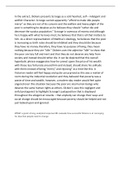
In the extract, Dickens presents Scrooge as a cold hearted, self – indulgent and
wolfish Character. Scrooge cannot apparently “afford to make idle people
merry” as they are not of his concern and the welfare and heavy plight of the
poor is something he despises as he believes they should “rather die and
decrease the surplus population.” Scrooge is ravenous of money and although
he is happy with what he loves most, he believes that that is all that matters to
him. As a direct representation of Malthus's ideology, he believes that the poor
is increasing so birth rates should be inhibited and they should die because
they have no money therefore, they have no purpose of living, they mean
nothing because they are “idle.” Dickens uses the adjective “idle” to show that
the poor are lazy full and inert and that they do not deserve any help from
society and instead should rather die. It can be depicted that this overall
hyperbolic phrase exaggerates how he cannot spare the price of his wealth
with those less fortunate around him and instead, should share his solitude
with them instead of being "merry” and rejoicing” at a time like this. A
Victorian reader will feel happy and quite unsurprised as this was a matter of
norm during the industrial revolution and they believed that poverty was a
waste of time and wealth; however, a modern-day reader would feel quite
angered over this situation because the poor are also human beings who
deserve the same human rights as others. Dicken’s uses this negligent and
sinful protagonist to highlight Scrooge’s juxtaposition that is displayed
throughout the allegorical novella – that anybody can change their ways and
social change should be encouraged because poverty should be helped and not
just looked upon and ignored.
WWW: a good, strong, analytical response EBI: evaluate how successful Dickens is at conveying
his idea that people need to change
wolfish Character. Scrooge cannot apparently “afford to make idle people
merry” as they are not of his concern and the welfare and heavy plight of the
poor is something he despises as he believes they should “rather die and
decrease the surplus population.” Scrooge is ravenous of money and although
he is happy with what he loves most, he believes that that is all that matters to
him. As a direct representation of Malthus's ideology, he believes that the poor
is increasing so birth rates should be inhibited and they should die because
they have no money therefore, they have no purpose of living, they mean
nothing because they are “idle.” Dickens uses the adjective “idle” to show that
the poor are lazy full and inert and that they do not deserve any help from
society and instead should rather die. It can be depicted that this overall
hyperbolic phrase exaggerates how he cannot spare the price of his wealth
with those less fortunate around him and instead, should share his solitude
with them instead of being "merry” and rejoicing” at a time like this. A
Victorian reader will feel happy and quite unsurprised as this was a matter of
norm during the industrial revolution and they believed that poverty was a
waste of time and wealth; however, a modern-day reader would feel quite
angered over this situation because the poor are also human beings who
deserve the same human rights as others. Dicken’s uses this negligent and
sinful protagonist to highlight Scrooge’s juxtaposition that is displayed
throughout the allegorical novella – that anybody can change their ways and
social change should be encouraged because poverty should be helped and not
just looked upon and ignored.
WWW: a good, strong, analytical response EBI: evaluate how successful Dickens is at conveying
his idea that people need to change