CHAPTER 1: The Power of Principles: A Historical Perspective
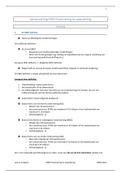
CHAPTER OUTLINE
1) Introduction
2) The World in 1840
Doing Business in 1840
Conditions of Business in 1840: Life without a Modern Infrastructure
Example 1.1: The Emergence of Chicago
Example 1.2: Building National Infrastructure: The Transcontinental Railroad
3) The World in 1910
Doing Business in 1910
Business Conditions in 1910: A “Modern” Infrastructure
Example 1.3: Evolution of the Steel Industry
4) The World Today
Doing Business Today
Modern Infrastructure
Example 1.4: The Gaizhi Privatization Process in China
5) Three Different Worlds: Consistent Principles, Changing Conditions, and Adaptive Strategies
6) Chapter Summary
7) Questions
8) Endnotes
CHAPTER SUMMARY
This chapter analyses the business environment in three different time periods: 1840, 1910
and the present. It looks at the business infrastructure, market conditions, the size and
scope of a firm’s activities and a firm’s response to changes. This historical perspective
,shows that all successful businesses have used similar principles to adapt to widely varying
business conditions in order to succeed.
Businesses in the period before 1840 were informally organized and operated in localized
markets. The size of a business was restricted by the lack of production technology,
professional managers, capital and large-scale distribution networks. The limited
transportation and communication infrastructures made it risky for businesses to expand
and restricted them to small local markets. Owners ran their own businesses and depended
on brokers and agents to match the products with the needs of the buyers. There were
forces in place, however, that would enable businesses to expand their economic activity
over a larger geographic area.
The infrastructure for conducting business had expanded tremendously by 1910. New
technologies permitted the higher volume of standardized production. The expansion of the
rail system permitted the reliable distribution of manufactured goods to a wider geographic
area. The telegraph enabled businesses to monitor and control suppliers, distributors and
factories. Finally, the growth of financial institutions allowed businesses to raise capital and
transact on a global scale. Businesses expanded in size and market-reach by making
investments to capture the benefits of these innovations.
Businesses which invested in these new technologies needed a sufficient flow of throughput
to keep production levels high. That is, even the largest and best-managed firms of that time
were still constrained by the problem of control—how to gain sufficient information on a
timely enough basis to adapt to change. As a result, manufacturing firms vertically
integrated into raw materials acquisition, distribution, and retailing, eliminating the need to
rely on independent factors, suppliers and agents. The growth in the size and enhancement
of functional responsibilities, or horizontal integration, was critical to manage these large
organizations. Price wars drove weaker rivals out of the market as the firms tried to build
volume and spread the fixed costs. Businesses established managerial hierarchies to
administrate and coordinate the various functions being performed within the organization.
These hierarchies gave rise to a class of professional managers who became experts in
certain functions performed by the firm and they became a source of competitive
advantage. But the goals of these managers had to be aligned with that of the firm. Large
hierarchical firms would dominate the first half of the 20th century.
The entire business infrastructure has undergone massive changes over the last 30 years.
Improvements in transportation, communication and financial infrastructures have
facilitated the globalization of markets increasing competition and have placed a premium
on quickness and flexibility. Innovations in technology have minimized the advantages of
large-scale production facilities and have made it possible for firms to coordinate extremely
complex tasks over large distances without being vertically integrated. Smaller and flatter
organizations are the preferred way of structuring firms to take advantages of these
changes.
,These changes have created opportunities as well as constraints. They have made the
modern marketplace a global one but they have also increased the number of competitors at
the same time. Technological innovations have given firms more control and decreased the
geographic distances but they have also allowed smaller nimble firms to compete with big
firms in meeting the rapid changes in consumer needs. Well-developed financial markets
have lowered the cost of capital but these same markets have made large firms targets for
potential hostile takeover.
The three periods, with widely different business practices and infrastructure, illustrate
that a consistent set of principles have to be applied to changing business conditions in
order to implement a successful business strategy. The business tactics used by firms varied
from one period to another to meet the different business circumstances but the economic
principles and the behavioral relationships used to form the tactics are general. These
principles and relationships haven't changed and can be applied to a wide variety of
business circumstances. By judiciously applying these principles, managers can successfully
adapt their firm’s business strategy to their competitive environment.
, APPROACHES TO TEACHING THIS CHAPTER
This chapter encourages students to be cognizant of the most “bird’s eye” view one can adapt of
the context in which firms compete: What are the opportunities and constraints that result from
current state of the world’s development? This chapter is intended to shed light on some key
strategic concepts developed later in this book including the fluidity of firm boundaries, the
importance of scale and scope, the importance of throughput, and how technology and
infrastructure affect strategic choices.
You might want to discuss that the key business issues in 1840 (riskiness, large number of owner-
operators, inefficiency, etc.) and their causes (poor communications, lack of technology, etc.) can
be seen today in many emerging markets (e.g., Tanzania, Ivory Coast, and Poland). You could
also raise issues of the mistakes that Western firms could make in “emerging markets” if they
misunderstand basic business conditions.
The Chicago example is a terrific illustration of how technological changes can change the
environment under which firms operate. It would be interesting to ask students why Chicago
emerged as the center of distribution if grain elevator technology was available throughout the
Midwest at the time. It will come out that Chicago's location, with access to the Great Lakes and
Mississippi River, created the advantage. It was essentially a “hub” as in the airline industry
today. Furthermore, improvements in communications favored Chicago as a location for
distribution activity. Distributors in Chicago had begun the practice of grading grain and were
willing to buy and sell grain at guaranteed prices in Chicago before the price was actually set in
New York. This was the beginning of a futures market, now called the Chicago Board of Trade
(CBOT). Superior information transfer allowed grain traders to bear the risk and still profit.
Conclusion: The confluence of technology development allowed Chicago to outperform those
who vied for its position at the time.
Today there are still distinct infrastructure changes and new organizational forms emerging. You
might discuss the media's current attention on mergers in the telecommunications, financial
services, entertainment, and health care industries and the opposing fact that most industries are
experiencing quite a different trend (i.e., the virtual corporation). Mention the largest
manufacturers of athletic footwear in the world (Nike, Boss, Benetton, and Trek), which are
“network” firms. Explain the concept of network firms. You could also mention how global firms
are facing simultaneous pressures to both coordinate on a worldwide scale and pass more
decisions down to local managers.
In addition to these examples, it may be helpful to encourage your students to draw on their own
life/work experiences and think of the following:
1) An industry that is dominated by a few large companies. Why might that be?
2) An industry that consists of many small companies. Why might that be?
3) An industry that is highly government-regulated. How has it affected industry structure and
the size and scope of the firm?
CHAPTER OUTLINE
1) Introduction
2) The World in 1840
Doing Business in 1840
Conditions of Business in 1840: Life without a Modern Infrastructure
Example 1.1: The Emergence of Chicago
Example 1.2: Building National Infrastructure: The Transcontinental Railroad
3) The World in 1910
Doing Business in 1910
Business Conditions in 1910: A “Modern” Infrastructure
Example 1.3: Evolution of the Steel Industry
4) The World Today
Doing Business Today
Modern Infrastructure
Example 1.4: The Gaizhi Privatization Process in China
5) Three Different Worlds: Consistent Principles, Changing Conditions, and Adaptive Strategies
6) Chapter Summary
7) Questions
8) Endnotes
CHAPTER SUMMARY
This chapter analyses the business environment in three different time periods: 1840, 1910
and the present. It looks at the business infrastructure, market conditions, the size and
scope of a firm’s activities and a firm’s response to changes. This historical perspective
,shows that all successful businesses have used similar principles to adapt to widely varying
business conditions in order to succeed.
Businesses in the period before 1840 were informally organized and operated in localized
markets. The size of a business was restricted by the lack of production technology,
professional managers, capital and large-scale distribution networks. The limited
transportation and communication infrastructures made it risky for businesses to expand
and restricted them to small local markets. Owners ran their own businesses and depended
on brokers and agents to match the products with the needs of the buyers. There were
forces in place, however, that would enable businesses to expand their economic activity
over a larger geographic area.
The infrastructure for conducting business had expanded tremendously by 1910. New
technologies permitted the higher volume of standardized production. The expansion of the
rail system permitted the reliable distribution of manufactured goods to a wider geographic
area. The telegraph enabled businesses to monitor and control suppliers, distributors and
factories. Finally, the growth of financial institutions allowed businesses to raise capital and
transact on a global scale. Businesses expanded in size and market-reach by making
investments to capture the benefits of these innovations.
Businesses which invested in these new technologies needed a sufficient flow of throughput
to keep production levels high. That is, even the largest and best-managed firms of that time
were still constrained by the problem of control—how to gain sufficient information on a
timely enough basis to adapt to change. As a result, manufacturing firms vertically
integrated into raw materials acquisition, distribution, and retailing, eliminating the need to
rely on independent factors, suppliers and agents. The growth in the size and enhancement
of functional responsibilities, or horizontal integration, was critical to manage these large
organizations. Price wars drove weaker rivals out of the market as the firms tried to build
volume and spread the fixed costs. Businesses established managerial hierarchies to
administrate and coordinate the various functions being performed within the organization.
These hierarchies gave rise to a class of professional managers who became experts in
certain functions performed by the firm and they became a source of competitive
advantage. But the goals of these managers had to be aligned with that of the firm. Large
hierarchical firms would dominate the first half of the 20th century.
The entire business infrastructure has undergone massive changes over the last 30 years.
Improvements in transportation, communication and financial infrastructures have
facilitated the globalization of markets increasing competition and have placed a premium
on quickness and flexibility. Innovations in technology have minimized the advantages of
large-scale production facilities and have made it possible for firms to coordinate extremely
complex tasks over large distances without being vertically integrated. Smaller and flatter
organizations are the preferred way of structuring firms to take advantages of these
changes.
,These changes have created opportunities as well as constraints. They have made the
modern marketplace a global one but they have also increased the number of competitors at
the same time. Technological innovations have given firms more control and decreased the
geographic distances but they have also allowed smaller nimble firms to compete with big
firms in meeting the rapid changes in consumer needs. Well-developed financial markets
have lowered the cost of capital but these same markets have made large firms targets for
potential hostile takeover.
The three periods, with widely different business practices and infrastructure, illustrate
that a consistent set of principles have to be applied to changing business conditions in
order to implement a successful business strategy. The business tactics used by firms varied
from one period to another to meet the different business circumstances but the economic
principles and the behavioral relationships used to form the tactics are general. These
principles and relationships haven't changed and can be applied to a wide variety of
business circumstances. By judiciously applying these principles, managers can successfully
adapt their firm’s business strategy to their competitive environment.
, APPROACHES TO TEACHING THIS CHAPTER
This chapter encourages students to be cognizant of the most “bird’s eye” view one can adapt of
the context in which firms compete: What are the opportunities and constraints that result from
current state of the world’s development? This chapter is intended to shed light on some key
strategic concepts developed later in this book including the fluidity of firm boundaries, the
importance of scale and scope, the importance of throughput, and how technology and
infrastructure affect strategic choices.
You might want to discuss that the key business issues in 1840 (riskiness, large number of owner-
operators, inefficiency, etc.) and their causes (poor communications, lack of technology, etc.) can
be seen today in many emerging markets (e.g., Tanzania, Ivory Coast, and Poland). You could
also raise issues of the mistakes that Western firms could make in “emerging markets” if they
misunderstand basic business conditions.
The Chicago example is a terrific illustration of how technological changes can change the
environment under which firms operate. It would be interesting to ask students why Chicago
emerged as the center of distribution if grain elevator technology was available throughout the
Midwest at the time. It will come out that Chicago's location, with access to the Great Lakes and
Mississippi River, created the advantage. It was essentially a “hub” as in the airline industry
today. Furthermore, improvements in communications favored Chicago as a location for
distribution activity. Distributors in Chicago had begun the practice of grading grain and were
willing to buy and sell grain at guaranteed prices in Chicago before the price was actually set in
New York. This was the beginning of a futures market, now called the Chicago Board of Trade
(CBOT). Superior information transfer allowed grain traders to bear the risk and still profit.
Conclusion: The confluence of technology development allowed Chicago to outperform those
who vied for its position at the time.
Today there are still distinct infrastructure changes and new organizational forms emerging. You
might discuss the media's current attention on mergers in the telecommunications, financial
services, entertainment, and health care industries and the opposing fact that most industries are
experiencing quite a different trend (i.e., the virtual corporation). Mention the largest
manufacturers of athletic footwear in the world (Nike, Boss, Benetton, and Trek), which are
“network” firms. Explain the concept of network firms. You could also mention how global firms
are facing simultaneous pressures to both coordinate on a worldwide scale and pass more
decisions down to local managers.
In addition to these examples, it may be helpful to encourage your students to draw on their own
life/work experiences and think of the following:
1) An industry that is dominated by a few large companies. Why might that be?
2) An industry that consists of many small companies. Why might that be?
3) An industry that is highly government-regulated. How has it affected industry structure and
the size and scope of the firm?