Consumer Behaviour
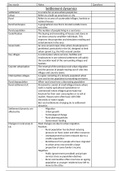
Lecture 1: Intro
What is Consumer Behaviour?
o Understand why individuals act a certain way
o Identify what individuals want
Products/services ect
o Influence behaviour in certain situations
Consumer decision process
o What decisions do purchasers make during the day?
o Identify relationships between variables that affect decision making
o Develop & implement marketing mix strategies
A Continuum of Decision Behaviour
o Need Recognition
o Information search
o Evaluation of Alternatives
Low effort decision making
High effort decision making
o Purchase and consumption
o Postpurchase Evaluation
Perspectives on the decision process
o Cognitive processing perspective
Behaviour is rational, highly cognitive, systematic and
reasoed
o Experimental/behavioural perspective
Behavioural reinforcement & punishment
Behaviour determined by emotions, pursuit of fun, fanasies
ad feelings
Types of decisions
o Extended problem solving
o Limited problem solving
o Habitual decision making
A continuum of decision behaviour
o Situational Factors
o Personal Factors
o Psychological Factors
o Social Factors
The CDP model
Communication Objectives
o Build category wants
, o Enhancing attitudes and influencing intentions
o Creating brand awareness
o Facilitate purchase
Lecture 2: Consumer Motives & Values
Homeostasis see-saw
o We strive for a state of equilibrium between need satisfaction and
deprivation
o Physiological needs move us away from this
o But so do social and psychological needs
Buyers Buy BENEFITTS, Not THINGS
Some Varying Perspectives
o Desires (wants) are social in nature and the driving force behind
much of our contemporary consumption (Belk et al., 2003)
o Misham (1971) argued that marketing just adds to dissatisfaction
rather than satisfaction – by making us think that the only things
that matter are based on materialistic acquisition and that this in
itself doesn’t satisfy so we press for more and more and hence a
spiralling down in satisfaction terms
o Marx (1867) argued this point further by suggesting that our
continual aspirations to have things merely creates an illusion of our
happiness and as we aspire more and more we actually move
further from happiness
o The Frankfurt School (e.g. Thedor Adorno) saw the social symbolism
of the things we buy outweigh their practical value – this supports
the ‘benefits over features’ point
McGuire: Drives and Motives
o Biogenic drives: such as hunger & thirst originate from our
physiology.
o Psychogenic drives: such as to achieve a certain status originate
from our social & cultural environment and psychological make up.
o Cognitive Motives: we are motivated to adapt to our environment
and achieve a sense of meaning.
o Affective Motives: we are motivated to attain emotional goals and to
achieve satisfying feeling states
Maslows Hierarchy of needs
Freudian See-Saw
o Id to ego to Superego
Jungian Motivation
o Jung also proposed an unconscious, but that it is divided into:
Experiences that were once conscious but now sufficiently
repressed, suppressed, ignored or forgotten, that they are
now unconscious. Jung argued that if they resurface they can
explain intuition. This is Jung’s ‘personal unconscious’.
Experiences that are equally unconscious but which derive
from our previous ancestral existences. Such motives hidden
in the unconscious reflect a more spiritual collectivism from
the past. This is Jung’s ’collective unconscious’.
“We have become a nation of shopaholics.”
o “Fascism. Communism. Democracy. Religion. But only one has
achieved total supremacy. Its compulsive attractions rob its
followers of reason and good sense. It has created unsustainable
, inequalities and threatened to tear apart the very fabric of our
society. More powerful than any cause or even religion, it has
reached into every corner of the globe. It is consumerism.”
- Jonathon Porritt, environmental campaigner
Lecture 3: Exposure, Attention & Perception
Information Search
o The motivated activation of knowledge stored in memory or
acquisition of information from the environment.
o INTERNAL SEARCH: Recalling and reviewing relevant information in
the memory.
o EXTERNAL SEARCH: Information from other sources e.g. ads,
friends, salespeople, store displays, product, testing magazines
o Benefits of external search
More comfortable because making an informed choice
increased chance of greater satisfaction.
feeling good about being generally knowledgeable about
products and services.
Pleasure from shopping.
Potential for saving of money.
o Costs of external search
Time used in search activities
Missing out on other activities
Frustration & tension
What information do consumers search for?
o Information about the existence and availability of products and
services.
o Information on which attributes can be used to evaluate different
products and services.
o Information on the characteristics and properties of the alternatives.
How much external search?
o 40 - 60% of all consumers only visit one shop before buying.
o They typically consult only a few sources of information.
o They consider only a limited number of alternatives.
o They acquire a limited amount of information on the brands that
they are considering.
o Average grocery shopper spends less than 12 seconds at a product
display.
o Amount of external search is dependent on the individual and the
purchase under consideration (involvement).
Factors affecting amount of external search
o Market conditions-external search is greater when:
prices are high
price differences between brands is large
style and appearance are important
the perceived difference between alternative product
attributes is high
o Buying Strategies-external search is reduced when:
Buying decision is complex
Information available is complex
Factors affecting amount of external search
o Greater market experience = less external search
, o More open minded and self-confident = more external search
o Better educated and higher income = more external search
o Older = less external search
o If the consumer's ability to process information is limited then
search will be shortened.
o Involvement with the product leads to more search
The 8 stages of information processing
o Exposure to info->
Degree to which people notice a stimulus that is within range
of their sensory receptors
We will concentrate on some stimuli
Opt in to others (e.g. mailing lists, loyalty card) – also known
as ‘permission marketing’
Be unaware of others
Deliberately ignore some messages (‘zapping’ and ‘zipping’)
o Selective attention->
Processing activity is devoted to a particular stimulus.
Sensory overload leads to bottleneck in information
processing:
UK: 2000 marketing messages per day, 5% noticed
US: 18 million unsolicited phone calls per day
Spain/Italy: 20,000 ads per year, £1m ad spend might
only buys 0.1% of consumer exposure
o comprehension->
Consumers assign meaning to stimuli based on schema, or
set of beliefs, to which the stimuli is assigned. This will
determine what criteria will be used to evaluate the:
product
package
message
o Agreement->
The manner by which individuals yield to - that is, agree with
- what they have comprehended.
o Retention in memory-> Retrieval->
More about learning and attitudes in the next lecture.
However, it is important to remember that marketers want
to:
Strengthen linkages among specific memory concepts
Establish new linkages
Know what information search criteria consumers look
for
Know the sources of consumer information and the
influence that each source has on consumer decisions
Know how best to communicate them to the consumer
o Consumer decision making->
o Action
The Perception Process
Lecture 1: Intro
What is Consumer Behaviour?
o Understand why individuals act a certain way
o Identify what individuals want
Products/services ect
o Influence behaviour in certain situations
Consumer decision process
o What decisions do purchasers make during the day?
o Identify relationships between variables that affect decision making
o Develop & implement marketing mix strategies
A Continuum of Decision Behaviour
o Need Recognition
o Information search
o Evaluation of Alternatives
Low effort decision making
High effort decision making
o Purchase and consumption
o Postpurchase Evaluation
Perspectives on the decision process
o Cognitive processing perspective
Behaviour is rational, highly cognitive, systematic and
reasoed
o Experimental/behavioural perspective
Behavioural reinforcement & punishment
Behaviour determined by emotions, pursuit of fun, fanasies
ad feelings
Types of decisions
o Extended problem solving
o Limited problem solving
o Habitual decision making
A continuum of decision behaviour
o Situational Factors
o Personal Factors
o Psychological Factors
o Social Factors
The CDP model
Communication Objectives
o Build category wants
, o Enhancing attitudes and influencing intentions
o Creating brand awareness
o Facilitate purchase
Lecture 2: Consumer Motives & Values
Homeostasis see-saw
o We strive for a state of equilibrium between need satisfaction and
deprivation
o Physiological needs move us away from this
o But so do social and psychological needs
Buyers Buy BENEFITTS, Not THINGS
Some Varying Perspectives
o Desires (wants) are social in nature and the driving force behind
much of our contemporary consumption (Belk et al., 2003)
o Misham (1971) argued that marketing just adds to dissatisfaction
rather than satisfaction – by making us think that the only things
that matter are based on materialistic acquisition and that this in
itself doesn’t satisfy so we press for more and more and hence a
spiralling down in satisfaction terms
o Marx (1867) argued this point further by suggesting that our
continual aspirations to have things merely creates an illusion of our
happiness and as we aspire more and more we actually move
further from happiness
o The Frankfurt School (e.g. Thedor Adorno) saw the social symbolism
of the things we buy outweigh their practical value – this supports
the ‘benefits over features’ point
McGuire: Drives and Motives
o Biogenic drives: such as hunger & thirst originate from our
physiology.
o Psychogenic drives: such as to achieve a certain status originate
from our social & cultural environment and psychological make up.
o Cognitive Motives: we are motivated to adapt to our environment
and achieve a sense of meaning.
o Affective Motives: we are motivated to attain emotional goals and to
achieve satisfying feeling states
Maslows Hierarchy of needs
Freudian See-Saw
o Id to ego to Superego
Jungian Motivation
o Jung also proposed an unconscious, but that it is divided into:
Experiences that were once conscious but now sufficiently
repressed, suppressed, ignored or forgotten, that they are
now unconscious. Jung argued that if they resurface they can
explain intuition. This is Jung’s ‘personal unconscious’.
Experiences that are equally unconscious but which derive
from our previous ancestral existences. Such motives hidden
in the unconscious reflect a more spiritual collectivism from
the past. This is Jung’s ’collective unconscious’.
“We have become a nation of shopaholics.”
o “Fascism. Communism. Democracy. Religion. But only one has
achieved total supremacy. Its compulsive attractions rob its
followers of reason and good sense. It has created unsustainable
, inequalities and threatened to tear apart the very fabric of our
society. More powerful than any cause or even religion, it has
reached into every corner of the globe. It is consumerism.”
- Jonathon Porritt, environmental campaigner
Lecture 3: Exposure, Attention & Perception
Information Search
o The motivated activation of knowledge stored in memory or
acquisition of information from the environment.
o INTERNAL SEARCH: Recalling and reviewing relevant information in
the memory.
o EXTERNAL SEARCH: Information from other sources e.g. ads,
friends, salespeople, store displays, product, testing magazines
o Benefits of external search
More comfortable because making an informed choice
increased chance of greater satisfaction.
feeling good about being generally knowledgeable about
products and services.
Pleasure from shopping.
Potential for saving of money.
o Costs of external search
Time used in search activities
Missing out on other activities
Frustration & tension
What information do consumers search for?
o Information about the existence and availability of products and
services.
o Information on which attributes can be used to evaluate different
products and services.
o Information on the characteristics and properties of the alternatives.
How much external search?
o 40 - 60% of all consumers only visit one shop before buying.
o They typically consult only a few sources of information.
o They consider only a limited number of alternatives.
o They acquire a limited amount of information on the brands that
they are considering.
o Average grocery shopper spends less than 12 seconds at a product
display.
o Amount of external search is dependent on the individual and the
purchase under consideration (involvement).
Factors affecting amount of external search
o Market conditions-external search is greater when:
prices are high
price differences between brands is large
style and appearance are important
the perceived difference between alternative product
attributes is high
o Buying Strategies-external search is reduced when:
Buying decision is complex
Information available is complex
Factors affecting amount of external search
o Greater market experience = less external search
, o More open minded and self-confident = more external search
o Better educated and higher income = more external search
o Older = less external search
o If the consumer's ability to process information is limited then
search will be shortened.
o Involvement with the product leads to more search
The 8 stages of information processing
o Exposure to info->
Degree to which people notice a stimulus that is within range
of their sensory receptors
We will concentrate on some stimuli
Opt in to others (e.g. mailing lists, loyalty card) – also known
as ‘permission marketing’
Be unaware of others
Deliberately ignore some messages (‘zapping’ and ‘zipping’)
o Selective attention->
Processing activity is devoted to a particular stimulus.
Sensory overload leads to bottleneck in information
processing:
UK: 2000 marketing messages per day, 5% noticed
US: 18 million unsolicited phone calls per day
Spain/Italy: 20,000 ads per year, £1m ad spend might
only buys 0.1% of consumer exposure
o comprehension->
Consumers assign meaning to stimuli based on schema, or
set of beliefs, to which the stimuli is assigned. This will
determine what criteria will be used to evaluate the:
product
package
message
o Agreement->
The manner by which individuals yield to - that is, agree with
- what they have comprehended.
o Retention in memory-> Retrieval->
More about learning and attitudes in the next lecture.
However, it is important to remember that marketers want
to:
Strengthen linkages among specific memory concepts
Establish new linkages
Know what information search criteria consumers look
for
Know the sources of consumer information and the
influence that each source has on consumer decisions
Know how best to communicate them to the consumer
o Consumer decision making->
o Action
The Perception Process