
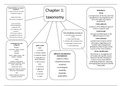
POLICE REPORTS: incomplete
complaints:
1. Failure of witness to testify
2. Aquittal of suspects
Chapter 1: Definitions:
Crime
a transgression of the law and if the
CRIME DETECTION
76% closed as undetected
taxonomy transgressor is found guilty by the
court, the state may impose
punishment.
Court convictions
Crime patterns
CONVICTION RATES:
residential: 21% incidence of the different types of
non-residential: 22% crime in a specific year.
forensics: Crime trends
27% forensic evidence Crime classification necessary to:
increases and decreases in the
unavailability of witness: 1. common factors shared by different types of crime
-33% witnessess with info crimes
2. data record of types Crime statistics
3. activities that constitute crime numbers that comprise all the
contemporary crime 4. why people commit crime information regarding crime,
catagories SAPS vs DCS 5. crime predictions scientifi cally arranged and
Bongers tabulated in order to give a total
SAPS:
economic, violent, sexual, picture of the crime problem.
political 1. contact
Crime classification
Stumpfl 2. contact-related
efficient classification the division or arrangement of
-heavy + light, young + old, 3. property related
encompasses: crime data into specific classes.
conflict + habitual 4. dependent on based on the fact that data on
careys police detection -uniform criteria certain crimes show definite
-violent, conventional, 5. other serious -comprehensiveness underlying similarities. descrube
professional, political, social unchanging phenomena to identify
order, white-collar DCS: -simplicity and predict
Schafer life trend 1. economic
-no ambuguity
- occasional, habitual, criminal, 2. aggressive
abnormal, conventional -durability
3. sexual
reid -feasibility
4. narcotics
- violent, property, business,
oranised, terrorism 5. other -applicability
,RSA SERIOUS CRIMES: affect of contact crimes: contact crime
- death associated with:
- Contact crimes
- Contact related -injury - alcohol
- Property related -psychological -substance abuse
- Crimes dependent on -loss or damage of
property
-informal settlements +
police detection
mega townships
- Other serious
- Subcategories of
aggravated
Chapter 1:
serious +
priority
Priority Crime Litigation Unit:
-nuclear weapons
-conventional (military)
weapons
RSA PRIORITY CRIMES: -terrorism
-involving firearms -mercenary + military activities
-white-collar -statute of rome
-intelligence-related
-against woman and children
-truth and rec committee
-intergroup and political listing ensures -missings person project
-vehicle theft and hijacking - police foci and -civil claims
-paramilitary action -NPS
-community projects -legal research
-crime prevention
measure
, most important activities:
definition:
- drug trade
-continuing enterprise that rationally works to
4 common elements of freudulent -vehicle theft
profit (albanese)
crime -smuggling
1. material false statement -money laundring
-collectivity of persons who use violence and
2. knowledge statement was false -people smuggling criminality to gain power and profit (glick)
3. reliance on false documents -organ smuggling
4. damages resulting -association who makes profit through illegal +
lifeblood: legal means (reid)
-economic field + money
laundring -m.o. = deception (wells)
Structure:
strategic goals of SAPS + JCPS
- Loose association of people
1. all RSA people are and feel Chapter 2: - Complex + adaptable
safe
Organised Crime - Business structure
- reduce crime incidence - Workers within structure
-prevent border crimes - -economic gain (primary
-increase court ready docets objective)
-increase detection rate
-increase conviction rate
2. ensure availability + access CATAGORIES:
to SAPS service points Characteristics
-provision of illicit sercives
-improve service delivery - organisational continuity
- provision of illicit goods
-Heirarchical structure
-conspiracy to commit crime
-Exclusive membership
-penetration of ligitamate
-Criminality/violence/power business
-Ligitimate business involvement - extortion
-use of specialists -corruption
complaints:
1. Failure of witness to testify
2. Aquittal of suspects
Chapter 1: Definitions:
Crime
a transgression of the law and if the
CRIME DETECTION
76% closed as undetected
taxonomy transgressor is found guilty by the
court, the state may impose
punishment.
Court convictions
Crime patterns
CONVICTION RATES:
residential: 21% incidence of the different types of
non-residential: 22% crime in a specific year.
forensics: Crime trends
27% forensic evidence Crime classification necessary to:
increases and decreases in the
unavailability of witness: 1. common factors shared by different types of crime
-33% witnessess with info crimes
2. data record of types Crime statistics
3. activities that constitute crime numbers that comprise all the
contemporary crime 4. why people commit crime information regarding crime,
catagories SAPS vs DCS 5. crime predictions scientifi cally arranged and
Bongers tabulated in order to give a total
SAPS:
economic, violent, sexual, picture of the crime problem.
political 1. contact
Crime classification
Stumpfl 2. contact-related
efficient classification the division or arrangement of
-heavy + light, young + old, 3. property related
encompasses: crime data into specific classes.
conflict + habitual 4. dependent on based on the fact that data on
careys police detection -uniform criteria certain crimes show definite
-violent, conventional, 5. other serious -comprehensiveness underlying similarities. descrube
professional, political, social unchanging phenomena to identify
order, white-collar DCS: -simplicity and predict
Schafer life trend 1. economic
-no ambuguity
- occasional, habitual, criminal, 2. aggressive
abnormal, conventional -durability
3. sexual
reid -feasibility
4. narcotics
- violent, property, business,
oranised, terrorism 5. other -applicability
,RSA SERIOUS CRIMES: affect of contact crimes: contact crime
- death associated with:
- Contact crimes
- Contact related -injury - alcohol
- Property related -psychological -substance abuse
- Crimes dependent on -loss or damage of
property
-informal settlements +
police detection
mega townships
- Other serious
- Subcategories of
aggravated
Chapter 1:
serious +
priority
Priority Crime Litigation Unit:
-nuclear weapons
-conventional (military)
weapons
RSA PRIORITY CRIMES: -terrorism
-involving firearms -mercenary + military activities
-white-collar -statute of rome
-intelligence-related
-against woman and children
-truth and rec committee
-intergroup and political listing ensures -missings person project
-vehicle theft and hijacking - police foci and -civil claims
-paramilitary action -NPS
-community projects -legal research
-crime prevention
measure
, most important activities:
definition:
- drug trade
-continuing enterprise that rationally works to
4 common elements of freudulent -vehicle theft
profit (albanese)
crime -smuggling
1. material false statement -money laundring
-collectivity of persons who use violence and
2. knowledge statement was false -people smuggling criminality to gain power and profit (glick)
3. reliance on false documents -organ smuggling
4. damages resulting -association who makes profit through illegal +
lifeblood: legal means (reid)
-economic field + money
laundring -m.o. = deception (wells)
Structure:
strategic goals of SAPS + JCPS
- Loose association of people
1. all RSA people are and feel Chapter 2: - Complex + adaptable
safe
Organised Crime - Business structure
- reduce crime incidence - Workers within structure
-prevent border crimes - -economic gain (primary
-increase court ready docets objective)
-increase detection rate
-increase conviction rate
2. ensure availability + access CATAGORIES:
to SAPS service points Characteristics
-provision of illicit sercives
-improve service delivery - organisational continuity
- provision of illicit goods
-Heirarchical structure
-conspiracy to commit crime
-Exclusive membership
-penetration of ligitamate
-Criminality/violence/power business
-Ligitimate business involvement - extortion
-use of specialists -corruption


