Final Exam PSY3171 Notes (helpful for the coming exams)
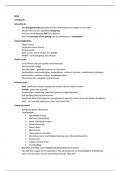
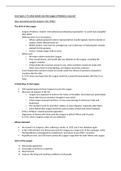
Final Exam PSY3171 Notes Chapter 5: Anxiety and OCD Anxiety ● Anxiety is very difficult to study ● We perform better when we are a little bit anxious ● Severe anxiety usually doesn’t go away ● Most people with anxiety disorders realize they have nothing to fear in the situation that makes them anxious ● Fear protects us by activating a massive response from the autonomic nervous system ● Fear and anxiety reactions differ both psychologically and physiologically ○ Anxiety is a future-related mood state while fear is an immediate emotional reaction 2 types of panic attacks: 1. Expected/cued panic attack- having a known fear of something and experiencing a panic attack when you encounter the fear 2. Unexpected/uncued panic attack- not knowing when or where the next panic attack will happen i. Important for panic disorder Biological Contributions to Anxiety ● We inherit a tendency to be tense, uptight and anxious ○ Probably genetic ○ But no single gene causes anxiety ● Contributions from several genes make us vulnerable when the psychological and social setting is in place ● Depleted levels of GABA are associated with anxiety ● The serotonergic NT system is also involved ● The corticotropin-releasing factor is central to the expression of anxiety and the groups of genes that increase the likelihood that the system will be turned on ○ The CRF activates the hypothalamic-pituitary-adrenocortical axis which affects the limbic system and GABA ○ The limbic system acts as a mediator between the brainstem and cortex ● The behavioural inhibition system is activated by signals from the brain stem of unexpected events that might signal danger ○ Activated by signals that arise from the brain stem ● The fight/flight system is for panic, and originates in the brain stem and goes to the midbrain structures ○ The circuit produces an immediate alarm-and-escape response that looks like panic ○ Activated partly by deficiencies in serotonin ● Environment can make you more or less susceptible to developing anxiety ● Correlation between smoking and developing anxiety ● Brain imaging has shown that the limbic system and amygdala are overly responsive to stimulation in people with anxiety disorders ○ Cognitive behaviour therapy can effectively treat these disorders Psychological Contributions ● Integrated model of anxiety ● Actions of parents in early childhood foster a sense of control or uncontrollability ● Parents who interact in a positive way, that respond to their child's needs teach children that they have control over their environment and that their responses cause an effect ● This is the psychological factor that makes us more or less vulnerable to anxiety ● Some people with panic disorder respond fearfully to anxiety symptoms ○ This strongly effects anxiety ● External and internal cues from a previous panic attack can induce another panic attack even if the feared stimulus is not present ○ External cues are places or situations similar to the first attack ○ Internal cues are increases in heart rate/breathing that can come from everyday activities
École, étude et sujet
- Établissement
-
Keiser University
- Cours
-
PSY 3171
Infos sur le Document
- Publié le
- 18 mai 2022
- Nombre de pages
- 71
- Écrit en
- 2021/2022
- Type
- Examen
- Contient
- Questions et réponses
Sujets