- As if = Problem is that if people are not capable of solving problem,
Economists act like as if they can
- Anti-antipaternalism = double negative because no positive argument. It is
impossible to help anyone make a better decision.
- Acquisition utility = equivalent to “consumer surplus”; surplus remaining after
opportunity cost., Only if a consumer values something much more than the
marketplace does
- The Save more Tomorrow, is now called “automatic escalation” which delinks
saving increases from pay increases. As a result of the high participation
rates, the development of a new law “Pension Protection”.
- Libertarian paternalism (asymmetric paternalism) = By paternalism: trying to
help people achieve their own goals. By libertarian: adjective trying to help
but in this way without any restricting choices.
o asymmetric paternalism = a regulation is asymmetrically paternalistic if
it created large benefits for those who make errors, while imposing little
or no harm on those who are fully rational
- anomalies = something that deviates from what is standard, normal or
expected
- automatic escalation = similar to save more tomorrow = it delinks saving
increases from pay increases
___________________________________________________________________
- Becker conjecture = in competitive labor markets, only people who are able to
perform their jobs like Econs are able to land on the key positions. The
question: How to choose employees. Once a year in late spring, the team
selects prospective players. When the contract runs out, the player is again a
free agent. Now why would anyone make such a trade: 1. People are
overconfident, 2. People make forecasts that are too extreme, 3. The winner’s
curse (auction won by highest bidder), 4. The false consensus effect (people
don’t always share the same experiences), 5. Present bias (teams want to win
now!)
- barter exchange = the direct exchange of goods or services - without an
intervening medium of exchange or money - either according to established
rates of exchange or by bargaining - oldest form of commerce
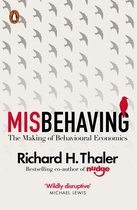
- BEHAVIORAL ECONOMICS: economics done with strong injections of good
psychology and other social science
- Behavioral game theory = the study of how people actually play games as
opposed to standard game theory, which studies how econs would play games
if they knew that everyone else playing was also an econ
- BIT = Behavioral Insights Team called it “nudge unit”. BIT was left broad and
wanted to achieve an impact on 2 major areas of policy: 1. Spread
understanding of behavioral approach across government 2. Achieve tenfold
return of cost of unit.
- BIG PEANUTS cooperation rates drop, as the stakes rise. Thaler calls it the
“big peanuts” hypothesis. Everything depends from context, 10 dollar when
buying a new TV seems like peanuts, nothing to worry about; p303
- biases=a preconceived opinion about something or someone
, - Break-Even Effect: when people are losing but have the chance to break even,
they are willing to take greater risks to erase their loss (i.e. another psychology
that is common on the gambling table. People would take bad risks simply for
the tiny chance to win back their lost money)
- Bounded rationality = that people lack the cognitive ability to solve complex
problems (logic)
- Binmore continuum = He thought that we would be better at making big
decisions than small one
o But he had it backward: we do small stuff often enough to learn to get it
right p 50
o Because learning takes practice, we are more likely to get things right
at small stakes than at large stakes
- Behavioral life-cycle hypothesis = we assume that a households consumption
in a given year will not depend just on its lifetime wealth, but also on the
mental accounts in which that wealth is held
___________________________________________________________________
- Conditional cooperators = people who are willing to cooperate but only if
enough others do as well.
- commitment strategy : limit your own choices to prevent self-destruction
- cashews phenomena = when there is a bowl of cashews on the table, when
you are waiting for dinner to be served, it is hard to keep yourself in control to
not eat too many cashews. especially when you are hungry. for econs it would
be very dumb (because you prefer to eat more, so why wouldnt you?) to put
the cashews away, but humans don’t have that same self-control and will put
the bowl aside
- Confirmation bias =
o People have a natural tendency to search for confirming rather than
disconfirming evidence
o the seeking or interpreting of evidence in ways that are partial to
existing beliefs, expectations, or a hypothesis in hand.
- Capital asset pricing model = describes the relationship between systematic
risk and expected return for assets, particularly stocks.
- Closed-end fund = from the moment you buy a share, no new money can be
invested and no money can be taken out.
- coase theorem p261 = the absence of transaction costs, meaning that people
could easily trade with one another, resources will flow to their highest-valued
use. Example of 2 roommates, one loves to study in silence but the other
roommate always plays loud music. PAGE 264
o judges often decide who owns a certain right, and if transaction costs
are low, then what the judge decides won't actually determine what
economic activities will take place, the judge will just decide who has to
pay
- Consumer sovereignty = notion that people make good choices, certainly
better than anyone else could make for them.
Economists act like as if they can
- Anti-antipaternalism = double negative because no positive argument. It is
impossible to help anyone make a better decision.
- Acquisition utility = equivalent to “consumer surplus”; surplus remaining after
opportunity cost., Only if a consumer values something much more than the
marketplace does
- The Save more Tomorrow, is now called “automatic escalation” which delinks
saving increases from pay increases. As a result of the high participation
rates, the development of a new law “Pension Protection”.
- Libertarian paternalism (asymmetric paternalism) = By paternalism: trying to
help people achieve their own goals. By libertarian: adjective trying to help
but in this way without any restricting choices.
o asymmetric paternalism = a regulation is asymmetrically paternalistic if
it created large benefits for those who make errors, while imposing little
or no harm on those who are fully rational
- anomalies = something that deviates from what is standard, normal or
expected
- automatic escalation = similar to save more tomorrow = it delinks saving
increases from pay increases
___________________________________________________________________
- Becker conjecture = in competitive labor markets, only people who are able to
perform their jobs like Econs are able to land on the key positions. The
question: How to choose employees. Once a year in late spring, the team
selects prospective players. When the contract runs out, the player is again a
free agent. Now why would anyone make such a trade: 1. People are
overconfident, 2. People make forecasts that are too extreme, 3. The winner’s
curse (auction won by highest bidder), 4. The false consensus effect (people
don’t always share the same experiences), 5. Present bias (teams want to win
now!)
- barter exchange = the direct exchange of goods or services - without an
intervening medium of exchange or money - either according to established
rates of exchange or by bargaining - oldest form of commerce
- BEHAVIORAL ECONOMICS: economics done with strong injections of good
psychology and other social science
- Behavioral game theory = the study of how people actually play games as
opposed to standard game theory, which studies how econs would play games
if they knew that everyone else playing was also an econ
- BIT = Behavioral Insights Team called it “nudge unit”. BIT was left broad and
wanted to achieve an impact on 2 major areas of policy: 1. Spread
understanding of behavioral approach across government 2. Achieve tenfold
return of cost of unit.
- BIG PEANUTS cooperation rates drop, as the stakes rise. Thaler calls it the
“big peanuts” hypothesis. Everything depends from context, 10 dollar when
buying a new TV seems like peanuts, nothing to worry about; p303
- biases=a preconceived opinion about something or someone
, - Break-Even Effect: when people are losing but have the chance to break even,
they are willing to take greater risks to erase their loss (i.e. another psychology
that is common on the gambling table. People would take bad risks simply for
the tiny chance to win back their lost money)
- Bounded rationality = that people lack the cognitive ability to solve complex
problems (logic)
- Binmore continuum = He thought that we would be better at making big
decisions than small one
o But he had it backward: we do small stuff often enough to learn to get it
right p 50
o Because learning takes practice, we are more likely to get things right
at small stakes than at large stakes
- Behavioral life-cycle hypothesis = we assume that a households consumption
in a given year will not depend just on its lifetime wealth, but also on the
mental accounts in which that wealth is held
___________________________________________________________________
- Conditional cooperators = people who are willing to cooperate but only if
enough others do as well.
- commitment strategy : limit your own choices to prevent self-destruction
- cashews phenomena = when there is a bowl of cashews on the table, when
you are waiting for dinner to be served, it is hard to keep yourself in control to
not eat too many cashews. especially when you are hungry. for econs it would
be very dumb (because you prefer to eat more, so why wouldnt you?) to put
the cashews away, but humans don’t have that same self-control and will put
the bowl aside
- Confirmation bias =
o People have a natural tendency to search for confirming rather than
disconfirming evidence
o the seeking or interpreting of evidence in ways that are partial to
existing beliefs, expectations, or a hypothesis in hand.
- Capital asset pricing model = describes the relationship between systematic
risk and expected return for assets, particularly stocks.
- Closed-end fund = from the moment you buy a share, no new money can be
invested and no money can be taken out.
- coase theorem p261 = the absence of transaction costs, meaning that people
could easily trade with one another, resources will flow to their highest-valued
use. Example of 2 roommates, one loves to study in silence but the other
roommate always plays loud music. PAGE 264
o judges often decide who owns a certain right, and if transaction costs
are low, then what the judge decides won't actually determine what
economic activities will take place, the judge will just decide who has to
pay
- Consumer sovereignty = notion that people make good choices, certainly
better than anyone else could make for them.