ACLS Practical Application
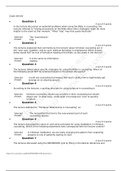
You are providing bag-mask ventilations to a patient in respiratory arrest. How often
should you provide ventilations? –
About every 5-6 seconds
A 45-year-old woman with a history of palpitations develops light headedness and
palpitations. She has recieved adenosine 6 mg IV for the rhythm shown here, without
conversion of the rhythm. She is now extremely apprehensive. Her blood pressure is
128/70 mm Hg. What is the next appropriate intervention? –
Administer adenosine 12 mg IV
A patients 12-lead ECG is transmitted by the paramedics and shows a STEMI. When
the patient arrives in the emergency department, the rhythm shown here is seen on the
cardiac monitor. The patient has resolution of moderate (5/10) chest pain after 3 doses
of sublingual nitroglycerin. Blood pressure is 104/70 mm hg. Which intervention is most
important in reducing this patient's in hospital and 30 day mortality rate? –
Reperfusion therapy
A patient becomes unresponsive. You are uncertain if a faint pulse is present. The
rhythm shown here is seen on the cardiac monitor. An IV is in place. Which action do
you take next? –
Start high-quality CPR
What action minimizes the risk of air entering the victim's stomach during bag-mask
ventilation? –
Ventilating until you see the chest rise
What is the recommended depth of chest compressions for an adult victim? –
At least 2 inches
Your patient is not responsive and is not breathing. You can palpate a carotid pulse.
Which action do you take next? –
Start rescue breathing
Your patient is a 56-year-old woman with a history of type 2 diabetes who reports
feeling dizzy. She is pale and diaphoretic. Her blood pressure is 80/60 mm Hg. The
cardiac monitor documents the rhythm shown here. She is receiving oxygen at 4L/min
by nasal cannula, and an IV has been established. What do you administer next? –
Atropine 0.5 mg IV
You are the code team leader and arrive to find a patient with CPR in progress. On the
next rhythm check, you see the rhythm shown here. Team members tell you that the
patient was well but reported chest discomfort and then collapsed. She has no pulse or
You are providing bag-mask ventilations to a patient in respiratory arrest. How often
should you provide ventilations? –
About every 5-6 seconds
A 45-year-old woman with a history of palpitations develops light headedness and
palpitations. She has recieved adenosine 6 mg IV for the rhythm shown here, without
conversion of the rhythm. She is now extremely apprehensive. Her blood pressure is
128/70 mm Hg. What is the next appropriate intervention? –
Administer adenosine 12 mg IV
A patients 12-lead ECG is transmitted by the paramedics and shows a STEMI. When
the patient arrives in the emergency department, the rhythm shown here is seen on the
cardiac monitor. The patient has resolution of moderate (5/10) chest pain after 3 doses
of sublingual nitroglycerin. Blood pressure is 104/70 mm hg. Which intervention is most
important in reducing this patient's in hospital and 30 day mortality rate? –
Reperfusion therapy
A patient becomes unresponsive. You are uncertain if a faint pulse is present. The
rhythm shown here is seen on the cardiac monitor. An IV is in place. Which action do
you take next? –
Start high-quality CPR
What action minimizes the risk of air entering the victim's stomach during bag-mask
ventilation? –
Ventilating until you see the chest rise
What is the recommended depth of chest compressions for an adult victim? –
At least 2 inches
Your patient is not responsive and is not breathing. You can palpate a carotid pulse.
Which action do you take next? –
Start rescue breathing
Your patient is a 56-year-old woman with a history of type 2 diabetes who reports
feeling dizzy. She is pale and diaphoretic. Her blood pressure is 80/60 mm Hg. The
cardiac monitor documents the rhythm shown here. She is receiving oxygen at 4L/min
by nasal cannula, and an IV has been established. What do you administer next? –
Atropine 0.5 mg IV
You are the code team leader and arrive to find a patient with CPR in progress. On the
next rhythm check, you see the rhythm shown here. Team members tell you that the
patient was well but reported chest discomfort and then collapsed. She has no pulse or