The major phenomena of operant conditioning is described as the method of learning where the
consequences of the behaviour or action will govern whether the same behaviour or action will
be performed again in future. B.F. Skinner, a psychologist who was heavily associated with this
method has stated that ‘operant conditioning is a method of learning that occurs through
rewards and punishments for behaviour. Through operant conditioning, an individual makes an
association between a particular behaviour and a consequence’ (Skinner, 1938).
(https://www.simplypsychology.org/operant-conditioning.html)
Edward Thorndike (1874-1949) studied whether non-human animals were able to show a sign
of intelligence. This involved featured a puzzle box, measuring the learning in animals. The
puzzle box had a trap door which would open if the animal performed a specific action, such as
pulling string, allowing access to food outside the cage. Each trial the animal would learn to
escape at a faster pace. Generalised in Thorndike’s law of effect, that any behaviour which
results in a satisfying consequence will most likely happen again any behaviour that leads to an
unpleasant state of affairs will be less likely to occur again. (The Law of Effect Author(s):
Edward L. Thorndike Source: The American Journal of Psychology)
Both operant and classical conditioning feature behaviours that are controlled by stimuli in their
environment, operant behaviour is described as voluntary while classical conditioning involves
behaviour that is involuntary and reflexive. Classical conditioning involves the predictive
associations that animals will make between types of stimuli, no matter what behaviour they
produce. Skinner felt a successful way to understand behaviour was to study both the causes
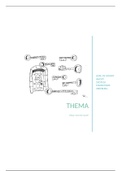
and consequences of an action. The skinner box was an experiment, influenced by Thorndike’s
puzzle box, which featured rats being placed in a box where the behaviour was pressing a lever
to be released to access the food, the reward, outside the box. This experiment can reflect the
altering of human behaviour through the idea that humans will also change their behaviour for a
reward for example, an employee working hard in work so they can be rewarded by a
promotion. https://www.verywellmind.com/what-is-a-skinner-box-2795875
Primary reinforcers are used to satisfy the biological needs which are needed to survive for
example, food or water. Primary reinforcers don’t need the individual to learn any process for it
to work, it is naturally occurring. A stimuli that can be used as a reinforcer but is not necessary
to gratify biological needs is called a secondary reinforcer. These are associated with classical
conditioning and associate a stimulus that is neutral with something like a reward. For example,
in society, associating money, a conditioned stimulus, with rewards like food, an unconditioned
stimulus.
A principle of operant conditioning is positive and negative reinforcement. A behaviour will
always increase when a reinforcement is applied. According to (Gazzinga, M. (2018), pg 229)
positive reinforcement, is ‘the administration of a stimulus to increase the probability of a
behaviour’s being repeated’. Positive behaviour features something behind added. An example
of positive reinforcement altering human behaviour is a study where token economy was used
as an approach for psychiatric patients. Tokens were used as secondary reinforcers and given
to patients as positive reinforcers for good behaviour such as brushing their teeth. This showed
how positive reinforcement can be used to increase behaviour for psychiatric patients, altering
their behaviour to make them better behaved. (Glynn, S.M. (1990). Token economy approaches
for psychiatric patients: 14, 383-407.) Negative reinforcement refers to taking away a stimulus
that is deemed to be unpleasant, increasing the chances of a behaviour occurring once again.
Such as altering human behaviour through teaching a child with autism to communicate with
pictures. The child will use a ‘NO’ picture when he does not want something, resulting in the
consequences of the behaviour or action will govern whether the same behaviour or action will
be performed again in future. B.F. Skinner, a psychologist who was heavily associated with this
method has stated that ‘operant conditioning is a method of learning that occurs through
rewards and punishments for behaviour. Through operant conditioning, an individual makes an
association between a particular behaviour and a consequence’ (Skinner, 1938).
(https://www.simplypsychology.org/operant-conditioning.html)
Edward Thorndike (1874-1949) studied whether non-human animals were able to show a sign
of intelligence. This involved featured a puzzle box, measuring the learning in animals. The
puzzle box had a trap door which would open if the animal performed a specific action, such as
pulling string, allowing access to food outside the cage. Each trial the animal would learn to
escape at a faster pace. Generalised in Thorndike’s law of effect, that any behaviour which
results in a satisfying consequence will most likely happen again any behaviour that leads to an
unpleasant state of affairs will be less likely to occur again. (The Law of Effect Author(s):
Edward L. Thorndike Source: The American Journal of Psychology)
Both operant and classical conditioning feature behaviours that are controlled by stimuli in their
environment, operant behaviour is described as voluntary while classical conditioning involves
behaviour that is involuntary and reflexive. Classical conditioning involves the predictive
associations that animals will make between types of stimuli, no matter what behaviour they
produce. Skinner felt a successful way to understand behaviour was to study both the causes
and consequences of an action. The skinner box was an experiment, influenced by Thorndike’s
puzzle box, which featured rats being placed in a box where the behaviour was pressing a lever
to be released to access the food, the reward, outside the box. This experiment can reflect the
altering of human behaviour through the idea that humans will also change their behaviour for a
reward for example, an employee working hard in work so they can be rewarded by a
promotion. https://www.verywellmind.com/what-is-a-skinner-box-2795875
Primary reinforcers are used to satisfy the biological needs which are needed to survive for
example, food or water. Primary reinforcers don’t need the individual to learn any process for it
to work, it is naturally occurring. A stimuli that can be used as a reinforcer but is not necessary
to gratify biological needs is called a secondary reinforcer. These are associated with classical
conditioning and associate a stimulus that is neutral with something like a reward. For example,
in society, associating money, a conditioned stimulus, with rewards like food, an unconditioned
stimulus.
A principle of operant conditioning is positive and negative reinforcement. A behaviour will
always increase when a reinforcement is applied. According to (Gazzinga, M. (2018), pg 229)
positive reinforcement, is ‘the administration of a stimulus to increase the probability of a
behaviour’s being repeated’. Positive behaviour features something behind added. An example
of positive reinforcement altering human behaviour is a study where token economy was used
as an approach for psychiatric patients. Tokens were used as secondary reinforcers and given
to patients as positive reinforcers for good behaviour such as brushing their teeth. This showed
how positive reinforcement can be used to increase behaviour for psychiatric patients, altering
their behaviour to make them better behaved. (Glynn, S.M. (1990). Token economy approaches
for psychiatric patients: 14, 383-407.) Negative reinforcement refers to taking away a stimulus
that is deemed to be unpleasant, increasing the chances of a behaviour occurring once again.
Such as altering human behaviour through teaching a child with autism to communicate with
pictures. The child will use a ‘NO’ picture when he does not want something, resulting in the