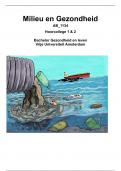
Milieu & Gezondheid
Dose-response en risk assessment
Toxicologie
Chemische sto en, biociden, pesticiden in huishoudartikelen, cosmetica, voeding en drinkwater,
voedingsadditieven, medicijnen, etc —> zijn niet allemaal schadelijk
Doelen van risico analyse:
• Risico - baten afweging
• Risico waarden vaststellen
• Prioritisering
• Risico monitoring
Wetenschappelijke basis:
• Risico beoordeling —> karakteriseren van hazard, blootstelling en risico
Beleidsmatige afweging:
• Risico management —> selecteren en implementeren van beperkende maatregelen
Risico communicatie = de interactieve uitwisseling van informatie en meningen over risico
Toxicologie = de wetenschap die ongewenste en schadelijke e ecten van biologische, fysische of
chemische agentia op een organisme bestudeert
Farmacologie = de wetenschap die gunstige e ecten van agentia op levende organismen
bestudeert
Toxicologische risicobeoordeling:
• Vaststellen van de blootstelling
• Identi catie van intrinsieke gevaarlijke eigenschap van een stof (“hazard”)
• Karakterisering eigenschap (dosis-e ect)
• Vaststellen van het risico, de waarschijnlijkheid dat de hazard tot uiting komt
Hazard x blootstelling = risico
Karakteristieken van blootstelling
Soorten blootstelling:
• Ingestie: blootstelling via gastrointestinal tract (bioavailability)
• Inhalatie: blootstelling via longen (directe opname in bloed)
• Huid
• Experimenteel: intravenous, intraperitoneal, subcutaan
Duur en frequentie blootstelling:
• Eenmalige (acuut) —> bloedwaarde neemt steeds meer af
• Herhaaldelijk (chronisch) —> bloedwaarde neemt steeds meer toe
Kinetiek
Kinetiek = wat het lichaam tegen de chemische stof doet
• Blootstelling: external/internal
• Dosis: intake/uptake
• Biokinetiek (ADME):
fi ff ff ff ff
, Absorption (oral, dermal, inhalation)
Distribution
Metabolism (biotransformation)
Elimination
Dynamiek = wat de chemische stof doet tegen het lichaam
Biotransformatie:
• Fase I: toevoegen polaire groepen, voorbereiden op fase II
N- en Odealkylation, aliphatic and aromatic hydroxylation, N- en Soxidation, and deamination
• Fase II: sto en beter wateroplosbaar maken zodat ze makkelijker kunnen worden uitgescheiden
Glucuronidation, sulfation, methylation, acetylation, glutathione conjugation, and amino acid
conjugation
• Fase III: actief transport de cel uit
ATP-binding cassette (ABC) family (e.g. PgP, MDR, BCRP)
Toxische stof
Toxine = toxische stof geproduceerd door biologische systemen, zoals planten, dieren, schimmels
of bacteriën
Toxicant = toxische stof geproduceerd door/bijproduct van menselijke activiteit
Therapeutisch = alles behalve primaire doel van therapie —> ongewenst e ect
Adverse, schadelijk of toxisch e ect = schadelijk voor gezondheid van mens, dier en milieu
Ongewenste, toxische e ecten:
• Chemische allergie
Immuun-gemedieerd adverse reactie op chemische stof (na eerdere blootstelling, sensitizatie)
• Idiosyncratisch reactie
Abnormale reactie op chemische stof door genetische gevoeligheid van individu
(polymorphisms)
• Acuut vs “vertraagde” toxiciteit
Carcinogenese: 20-30 jaar
Degeneratie van zenuwcellen door sommige pesticiden (Parkinson)
• Reversibel vs irreversibel
Hangt af van regeneratief vermogen van orgaan (bv lever en zenuwcellen)
• Locaal vs systemisch toxiciteit
Direct op doelorgaan (long, huid) vs opname in het lichaam waarbij kinetiek belangrijke rol
speelt (bioactivatie/detoxi catie)
• Interactie van chemische sto en: mengsels
Additivity (1+2=3); synergism (1+2=4); antagonism (1+2=2)
• Tolerantie na eerdere blootstelling
Afname in distributie (bv drug transporters), afname gevoeligheid target
Celdood: cytotoxiciteit
• Reactieve intermediairen (binding/schade aan DNA, eiwitten, vetzuren)
• Verandering in cel fysiologie
• Necrose en apoptose
Beschermende mechanismes: “overvloed” van fysiologische systemen, anti-oxidanten (e.g.
glutathionine, vitamins), fase II biotransformatie, reductive (vs oxidative), adaptatie, gen expressie
Dose-respons
Threshold = drempelwaarde
ff ff fi ff ff ff
Dose-response en risk assessment
Toxicologie
Chemische sto en, biociden, pesticiden in huishoudartikelen, cosmetica, voeding en drinkwater,
voedingsadditieven, medicijnen, etc —> zijn niet allemaal schadelijk
Doelen van risico analyse:
• Risico - baten afweging
• Risico waarden vaststellen
• Prioritisering
• Risico monitoring
Wetenschappelijke basis:
• Risico beoordeling —> karakteriseren van hazard, blootstelling en risico
Beleidsmatige afweging:
• Risico management —> selecteren en implementeren van beperkende maatregelen
Risico communicatie = de interactieve uitwisseling van informatie en meningen over risico
Toxicologie = de wetenschap die ongewenste en schadelijke e ecten van biologische, fysische of
chemische agentia op een organisme bestudeert
Farmacologie = de wetenschap die gunstige e ecten van agentia op levende organismen
bestudeert
Toxicologische risicobeoordeling:
• Vaststellen van de blootstelling
• Identi catie van intrinsieke gevaarlijke eigenschap van een stof (“hazard”)
• Karakterisering eigenschap (dosis-e ect)
• Vaststellen van het risico, de waarschijnlijkheid dat de hazard tot uiting komt
Hazard x blootstelling = risico
Karakteristieken van blootstelling
Soorten blootstelling:
• Ingestie: blootstelling via gastrointestinal tract (bioavailability)
• Inhalatie: blootstelling via longen (directe opname in bloed)
• Huid
• Experimenteel: intravenous, intraperitoneal, subcutaan
Duur en frequentie blootstelling:
• Eenmalige (acuut) —> bloedwaarde neemt steeds meer af
• Herhaaldelijk (chronisch) —> bloedwaarde neemt steeds meer toe
Kinetiek
Kinetiek = wat het lichaam tegen de chemische stof doet
• Blootstelling: external/internal
• Dosis: intake/uptake
• Biokinetiek (ADME):
fi ff ff ff ff
, Absorption (oral, dermal, inhalation)
Distribution
Metabolism (biotransformation)
Elimination
Dynamiek = wat de chemische stof doet tegen het lichaam
Biotransformatie:
• Fase I: toevoegen polaire groepen, voorbereiden op fase II
N- en Odealkylation, aliphatic and aromatic hydroxylation, N- en Soxidation, and deamination
• Fase II: sto en beter wateroplosbaar maken zodat ze makkelijker kunnen worden uitgescheiden
Glucuronidation, sulfation, methylation, acetylation, glutathione conjugation, and amino acid
conjugation
• Fase III: actief transport de cel uit
ATP-binding cassette (ABC) family (e.g. PgP, MDR, BCRP)
Toxische stof
Toxine = toxische stof geproduceerd door biologische systemen, zoals planten, dieren, schimmels
of bacteriën
Toxicant = toxische stof geproduceerd door/bijproduct van menselijke activiteit
Therapeutisch = alles behalve primaire doel van therapie —> ongewenst e ect
Adverse, schadelijk of toxisch e ect = schadelijk voor gezondheid van mens, dier en milieu
Ongewenste, toxische e ecten:
• Chemische allergie
Immuun-gemedieerd adverse reactie op chemische stof (na eerdere blootstelling, sensitizatie)
• Idiosyncratisch reactie
Abnormale reactie op chemische stof door genetische gevoeligheid van individu
(polymorphisms)
• Acuut vs “vertraagde” toxiciteit
Carcinogenese: 20-30 jaar
Degeneratie van zenuwcellen door sommige pesticiden (Parkinson)
• Reversibel vs irreversibel
Hangt af van regeneratief vermogen van orgaan (bv lever en zenuwcellen)
• Locaal vs systemisch toxiciteit
Direct op doelorgaan (long, huid) vs opname in het lichaam waarbij kinetiek belangrijke rol
speelt (bioactivatie/detoxi catie)
• Interactie van chemische sto en: mengsels
Additivity (1+2=3); synergism (1+2=4); antagonism (1+2=2)
• Tolerantie na eerdere blootstelling
Afname in distributie (bv drug transporters), afname gevoeligheid target
Celdood: cytotoxiciteit
• Reactieve intermediairen (binding/schade aan DNA, eiwitten, vetzuren)
• Verandering in cel fysiologie
• Necrose en apoptose
Beschermende mechanismes: “overvloed” van fysiologische systemen, anti-oxidanten (e.g.
glutathionine, vitamins), fase II biotransformatie, reductive (vs oxidative), adaptatie, gen expressie
Dose-respons
Threshold = drempelwaarde
ff ff fi ff ff ff