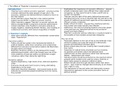
1 The effect of Thatcher’s economic policies
Introduction - Highlighted the importance of economic efficiency – argued
- Thatcher had a radical economic approach – previous prime private companies were more efficient than state-owned
ministers believed the state played a huge role in the companies, as they were forced to make a profit and so
economy, whereas she believed Britain needed to return to couldn’t be wasteful
the free market - Thatcher and the right of the party believed government
- Some historians argue Thatcher’s free market policies spending had to be cut as it required high tax and led to the
helped reverse Britain’s relative economic decline growth of inefficient government agencies at the expense of
- Other historians suggest Thatcher’s economic policies did efficient private companies
little to change Britain’s long-term economic performance - Highly critical of unions – argued they interfered with the
- Certain historians view Thatcher’s economic policies as free market and made industry less efficient
largely negative, weakening British industry, and creating an - Inefficiency, the result of growing taxation and union power
unbalanced economy with radical inequalities of wealth in the post-war era, believed had led to low economic
growth and high inflation
1 Thatcher’s beliefs - Thatcher’s economic policies reflected a consistent belief in
- Ideas were radically different from mainstream conservative the benefits of free markets and private enterprise
ideas ‘Thatcherism’
The rule of law
Conviction politics - Passionate believer in the rule of law as she believed it was
- Politics should be rooted in the fundamental beliefs of central to politics as it was the result of a democratic
political leaders, rather than consensus and compromise process and defended individual rights
- Differed from previous Conservative leaders like Macmillan, - Britons should obey the law, trusting that it would protect
Douglas-Home and Heath their rights
- Rejected consensus politics as she believed this meant - Suspicious of radical forms of protest such as marches,
abandoning principles, which she thought was one of the occupations and strikes which she believed were
main problems of post-war politics as politicians sought undemocratic as they used force rather than democratic
consensus rather than doing the right thing debate – lawlessness and violent
- Individual rights should be protected as she rejected radical
Economic outlook protests which tended to be used by unions, feminist or
- Against dependency, high levels of tax, debt and powerful black rights groups to advance collective rights
union - Reform should come through elections rather than direct
- Everyone should work hard to earn a living, eliminating action – laws could be changed democratically as all citizens
dependency on the state had a right to vote
- Hard work should be rewarded – low income taxes as she - The importance of law and order and democratic manner
believed tax prevented people benefiting from the money informed her approach to the unions and other forms of
they earned political protest
, 1 The effect of Thatcher’s economic policies
- Key to economic growth was individual enterprise and so Nationalism
wanted to foster a new generation of entrepreneurs, - Firm believer in the virtues of Britain and Britishness –
increasing individual creativity by scaling back the state’s fundamentally civilised values of individual rights, hard
economic role works and democracy and so should celebrate their culture
2 Economic change, 1979-90 and rights
- Commonly regarded as a period of revolution - Opposed international interference in British affairs
- Thatcher overturned the economic policies the government - Became increasingly concerned about interference
had relied on since 1945 European in the 1980s
- Her policies were underpinned by new economic Spending cuts
assumptions - Public spending dropped from £11 billion in 1980 to £9
- Policies to significant changes in the economy by 1997, but billion in 1981 to help rebalance the economy so the
evolved over time government did less to encourage the private sector to do
more
Monetarism, 1980-82 - Thatcher’s 1981 budget (deflationary budget when the
- Theory that inflation can be defeated by increasing the value economy was shrinking and unemployment was rising) –
of money through reducing its supply raised income tax in the middle of the recession, increased
- Inflation – ‘too much money chasing too few goods’, indirect taxes (e.g. price of packet of cigarettes rose by
increase in the amount of money that is larger than an 14p), taxes went up by £4 billion in total, cuts in education
increase in goods and services that could be bought and welfare and benefits were degraded
- Previous governments prioritised low employment and so - Previous governments increased spending in recessions to
were willing to allow rising inflation to preserve jobs boost growth and safeguard jobs
- Thatcher and Howe (her first chancellor) believed excessive - Highly controversial budget – 364 economists wrote to The
state spending and large pay rises for industry resulted in Times protesting at the policy
too much money in the economy, inefficient industries - Divisions in the Conservative party
produced too few goods resulting in price rises - Labour’s shadow chancellor regarded the policy as ‘sado
- Howe set out targets for reducing the amount of money in monetarism’ due to the pain it was cause
circulation to control inflation - Policy softened in mid 1981 a cabinet rebellion in July 1981
- Initial measure included tax rises and spending cuts rejected a further £5 billion of spending cuts as they feared
it would make the recession deeper
Taxation
- Howe raised VAT from 8% to 15% - indirect tax Nationalised industry, 1979-82
- Lowered direct taxation, cutting the standard rate of income - Thatcher suspicious of state-run industries – believed they
tax from 33% to 30%, and the top rate from 83% to 60% were less efficient than private industries and government
- Thatcher’s reasons were that if tax went down then there money should not be used to help failing industries survive
would be more incentive to work hard in the long term
- Increasing VAT hit the poor harder than the rich as it - Joseph (secretary of state for industry) allowed some of
Introduction - Highlighted the importance of economic efficiency – argued
- Thatcher had a radical economic approach – previous prime private companies were more efficient than state-owned
ministers believed the state played a huge role in the companies, as they were forced to make a profit and so
economy, whereas she believed Britain needed to return to couldn’t be wasteful
the free market - Thatcher and the right of the party believed government
- Some historians argue Thatcher’s free market policies spending had to be cut as it required high tax and led to the
helped reverse Britain’s relative economic decline growth of inefficient government agencies at the expense of
- Other historians suggest Thatcher’s economic policies did efficient private companies
little to change Britain’s long-term economic performance - Highly critical of unions – argued they interfered with the
- Certain historians view Thatcher’s economic policies as free market and made industry less efficient
largely negative, weakening British industry, and creating an - Inefficiency, the result of growing taxation and union power
unbalanced economy with radical inequalities of wealth in the post-war era, believed had led to low economic
growth and high inflation
1 Thatcher’s beliefs - Thatcher’s economic policies reflected a consistent belief in
- Ideas were radically different from mainstream conservative the benefits of free markets and private enterprise
ideas ‘Thatcherism’
The rule of law
Conviction politics - Passionate believer in the rule of law as she believed it was
- Politics should be rooted in the fundamental beliefs of central to politics as it was the result of a democratic
political leaders, rather than consensus and compromise process and defended individual rights
- Differed from previous Conservative leaders like Macmillan, - Britons should obey the law, trusting that it would protect
Douglas-Home and Heath their rights
- Rejected consensus politics as she believed this meant - Suspicious of radical forms of protest such as marches,
abandoning principles, which she thought was one of the occupations and strikes which she believed were
main problems of post-war politics as politicians sought undemocratic as they used force rather than democratic
consensus rather than doing the right thing debate – lawlessness and violent
- Individual rights should be protected as she rejected radical
Economic outlook protests which tended to be used by unions, feminist or
- Against dependency, high levels of tax, debt and powerful black rights groups to advance collective rights
union - Reform should come through elections rather than direct
- Everyone should work hard to earn a living, eliminating action – laws could be changed democratically as all citizens
dependency on the state had a right to vote
- Hard work should be rewarded – low income taxes as she - The importance of law and order and democratic manner
believed tax prevented people benefiting from the money informed her approach to the unions and other forms of
they earned political protest
, 1 The effect of Thatcher’s economic policies
- Key to economic growth was individual enterprise and so Nationalism
wanted to foster a new generation of entrepreneurs, - Firm believer in the virtues of Britain and Britishness –
increasing individual creativity by scaling back the state’s fundamentally civilised values of individual rights, hard
economic role works and democracy and so should celebrate their culture
2 Economic change, 1979-90 and rights
- Commonly regarded as a period of revolution - Opposed international interference in British affairs
- Thatcher overturned the economic policies the government - Became increasingly concerned about interference
had relied on since 1945 European in the 1980s
- Her policies were underpinned by new economic Spending cuts
assumptions - Public spending dropped from £11 billion in 1980 to £9
- Policies to significant changes in the economy by 1997, but billion in 1981 to help rebalance the economy so the
evolved over time government did less to encourage the private sector to do
more
Monetarism, 1980-82 - Thatcher’s 1981 budget (deflationary budget when the
- Theory that inflation can be defeated by increasing the value economy was shrinking and unemployment was rising) –
of money through reducing its supply raised income tax in the middle of the recession, increased
- Inflation – ‘too much money chasing too few goods’, indirect taxes (e.g. price of packet of cigarettes rose by
increase in the amount of money that is larger than an 14p), taxes went up by £4 billion in total, cuts in education
increase in goods and services that could be bought and welfare and benefits were degraded
- Previous governments prioritised low employment and so - Previous governments increased spending in recessions to
were willing to allow rising inflation to preserve jobs boost growth and safeguard jobs
- Thatcher and Howe (her first chancellor) believed excessive - Highly controversial budget – 364 economists wrote to The
state spending and large pay rises for industry resulted in Times protesting at the policy
too much money in the economy, inefficient industries - Divisions in the Conservative party
produced too few goods resulting in price rises - Labour’s shadow chancellor regarded the policy as ‘sado
- Howe set out targets for reducing the amount of money in monetarism’ due to the pain it was cause
circulation to control inflation - Policy softened in mid 1981 a cabinet rebellion in July 1981
- Initial measure included tax rises and spending cuts rejected a further £5 billion of spending cuts as they feared
it would make the recession deeper
Taxation
- Howe raised VAT from 8% to 15% - indirect tax Nationalised industry, 1979-82
- Lowered direct taxation, cutting the standard rate of income - Thatcher suspicious of state-run industries – believed they
tax from 33% to 30%, and the top rate from 83% to 60% were less efficient than private industries and government
- Thatcher’s reasons were that if tax went down then there money should not be used to help failing industries survive
would be more incentive to work hard in the long term
- Increasing VAT hit the poor harder than the rich as it - Joseph (secretary of state for industry) allowed some of