Hox genes and segmentation
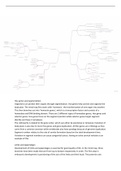
Organisms can protect their organs through segmentation. Hox genes help control and organise the
body plan. The mind map first starts with ‘homeosis’, the transformation of one organ into another.
This then branches out into ‘homeotic genes’, which is a transcription factor and consists of a
homeobox and DNA binding domain. There are 2 different types of homeobox genes, Hox genes and
selector genes. Hox genes focus on the segment position while selector genes target segment
identity and have 2 complexes.
The collinearity is related to the gene order, which can either be positional or temporal. Evolution of
body plans is also due to more Hox genes and gene duplication. All Hox genes are orthologs as they
come from a common ancestor while vertebrates also have paralogs because of genome duplication.
Segment number relates to the rate of somite formation based on the total development time.
Variation in segment numbers can cause congenital cancer, having an extra cervical vertebra is an
example of this.
Limbs and appendages
Development of limbs and appendages is essential for good quality of life. In the mind map, three
branches have been made that are from top to bottom respectively in order. The first step in
embryonic development is positioning of the axis of the limbs and their buds. The posterior axis
Organisms can protect their organs through segmentation. Hox genes help control and organise the
body plan. The mind map first starts with ‘homeosis’, the transformation of one organ into another.
This then branches out into ‘homeotic genes’, which is a transcription factor and consists of a
homeobox and DNA binding domain. There are 2 different types of homeobox genes, Hox genes and
selector genes. Hox genes focus on the segment position while selector genes target segment
identity and have 2 complexes.
The collinearity is related to the gene order, which can either be positional or temporal. Evolution of
body plans is also due to more Hox genes and gene duplication. All Hox genes are orthologs as they
come from a common ancestor while vertebrates also have paralogs because of genome duplication.
Segment number relates to the rate of somite formation based on the total development time.
Variation in segment numbers can cause congenital cancer, having an extra cervical vertebra is an
example of this.
Limbs and appendages
Development of limbs and appendages is essential for good quality of life. In the mind map, three
branches have been made that are from top to bottom respectively in order. The first step in
embryonic development is positioning of the axis of the limbs and their buds. The posterior axis