
NUR 2356 Multidimensional Care I / MDC 1 Exam 1 Lecture Notes
Module 1
Apply strategies for safe, effective multidimensional nursing practice when providing basic care and
comfort for clients.
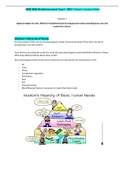
Maslow’s Hierarchy of Needs
For the purpose of this course, the physiological, safety, and security needs of the client are met to
provide basic care and comfort.
Start the hour by asking the student to recall the basic physiological needs identified by Maslow’s theory.
What does Maslow believe about these needs?
Basic physiological needs include those needs that are essential for the maintenance of life.
• Air
• Food
• Water
• Temperature regulation
• Elimination
• Rest
• Sex
• Physical Activity
• Blood flow (perfusion) is necessary to meet other basic needs
, Safety and security needs would include what type of necessities?
• Protection from physical harm
• Adequate shelter
• Freedom from fear and anxiety
Vital Signs
For this course, the focus will be on protecting the client from physical harm. Examples would be falls
and infections.
One of the most critical nursing interventions the nurse has is the ability to monitor and interpret the
client’s vital signs.
1) Temperature
• Regulation or thermoregulation is determined using the client’s temperature.
• Review the normal temperature.
• Explain the different methods a temperature can be taken.
• Describe hypothermia and hyperthermia and interventions for each condition.
2) Perfusion
• Pulse
• Review normal values
• Describe rate, rhythm, and quality
3) Blood Pressure
• Review normal values
• Describe selecting the appropriate cuff size for the patient.
Hypotension related to dehydration from inadequate fluid intake, from diarrhea, elevated temp fits
well with this unit. Include nursing interventions for these related factors.
➢ Interventions:
• Vital signs Initially increase HR and BP
• Discuss other signs and symptoms associated with fluid loss
• Identify high-risk populations
• I & O, daily weights as examples
4) Respirations
• Review normal values
• Describe the rate, rhythm, and depth of the respiration
• Determine the client’s respiratory effort: nasal flaring; use of accessory muscles, and body
positioning
Module 1
Apply strategies for safe, effective multidimensional nursing practice when providing basic care and
comfort for clients.
Maslow’s Hierarchy of Needs
For the purpose of this course, the physiological, safety, and security needs of the client are met to
provide basic care and comfort.
Start the hour by asking the student to recall the basic physiological needs identified by Maslow’s theory.
What does Maslow believe about these needs?
Basic physiological needs include those needs that are essential for the maintenance of life.
• Air
• Food
• Water
• Temperature regulation
• Elimination
• Rest
• Sex
• Physical Activity
• Blood flow (perfusion) is necessary to meet other basic needs
, Safety and security needs would include what type of necessities?
• Protection from physical harm
• Adequate shelter
• Freedom from fear and anxiety
Vital Signs
For this course, the focus will be on protecting the client from physical harm. Examples would be falls
and infections.
One of the most critical nursing interventions the nurse has is the ability to monitor and interpret the
client’s vital signs.
1) Temperature
• Regulation or thermoregulation is determined using the client’s temperature.
• Review the normal temperature.
• Explain the different methods a temperature can be taken.
• Describe hypothermia and hyperthermia and interventions for each condition.
2) Perfusion
• Pulse
• Review normal values
• Describe rate, rhythm, and quality
3) Blood Pressure
• Review normal values
• Describe selecting the appropriate cuff size for the patient.
Hypotension related to dehydration from inadequate fluid intake, from diarrhea, elevated temp fits
well with this unit. Include nursing interventions for these related factors.
➢ Interventions:
• Vital signs Initially increase HR and BP
• Discuss other signs and symptoms associated with fluid loss
• Identify high-risk populations
• I & O, daily weights as examples
4) Respirations
• Review normal values
• Describe the rate, rhythm, and depth of the respiration
• Determine the client’s respiratory effort: nasal flaring; use of accessory muscles, and body
positioning


