New Media Challenges Lectures
Lecture 1 07-02-2022
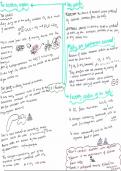
Mobile/ online communication is rapidly increasing in comparison with the mainstream/
traditional media. Thinking of radio, television, newspapers, magazines, etc.
Media consumption: (change in consumption during the pandemic)
- Gen Z
- Millenials
- Gen X
- Boomer
Trends in media and media-use:
From push to pull: consumers choosing from large offering of media content
Dissolving media boundaries: browsing internet on phone, listen radio on laptop
Increasing interactivity (online multiplayer games, chat functions on webpages)
Content creation by “consumers”: social media (writing reviews, blogs, vlogs)
Utopia: a community or society that possesses highly desirable or nearly perfect qualities for
its citizens.
Dystopia: a community or society that is undesirable or frightening.
Functions of utopian worldview:
- Optimism about the future
- Strong belief in technological development
- Push to invest in technological developments
- Cultural change toward individuation and individual empowerment
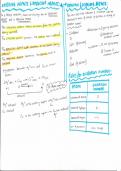
Industrial revolution: definition
A rapid major change in an economy marked by the general introduction of power-driven
machinery or by an important change in the prevailing types and methods of use of such
machines.
4 industrial revolutions:
1. 1784: mechanical production, railroads, and steam power
Utopian view because people became more mobile.
2. 1870: mass production, electrical power, and the advent of the assembly line
Same thing happened in the second revolution. More and more people would be able
to afford cars, more people would be able to buy mass products. More jobs.
3. 1969: automated production, electronics, and computers
Computers were able to make calculations, science would benefit from this revolution.
Calculations could be done that wouldn’t be able to be done by humans. Communicate
with the computers. Computers took away some jobs from humans.
4. Now: artificial intelligence, big data, robotics, and more to come
Everything is still a bit vague because we don’t know what’s going happen in the
future. Its going to be better but we don’t know how this will happen.
1
,Lecture 2 09-02-2022
What is privacy?
- Privacy is defined by cultures
- Privacy is defined by times
- Privacy is defined by individuals
Uncertainty avoidance (Hofstede): the extent to which a society, or group relies on social
norms, rules, and procedures to minimize the unpredictability of future events.
Three theoretical perspectives:
1. Westin, 1967: Political-scientific approach:
Privacy in interaction with others
Privacy is a basic need which helps us adjust to day-to-day interpersonal interactions. Privacy
is:
A dynamic process (we regulate privacy so as to serve momentary needs and role
requirements)
Non-monotonic (you can have such a thing as too little, just enough, or not enough
privacy)
Privacy is “the claim of individuals, groups, or institutions to determine for themselves when,
how, and to what extent information about hem is communicated to others”. Privacy has four
proposes (or objectives) and four states.
- Purposes of Privacy: functions of privacy
- States of Privacy: means behind the functions
Four purposes of privacy (Westin)
1. Personal autonomy: not being manipulated
Realization of individual choices, personal development, stable relationships.
2. Emotional release: freedom from roles and outside expectations
Opportunities to relax/ to let go, to escape from stress, to be oneself and being able to
be have anger, grief, frustration, etc.
3. Self-evaluation: freedom to think, process information and make plans
Process and evaluate information, make/ change plans and be creative.
4. Limited and protected boundaries: ability to limit who has access to what information
What to share, with whom to share and when to share.
2
,Four states of privacy (Westin)
1. Solitude: no observation from others
2. Reserve: the right not to share some information, respected by others
3. Intimacy: small group of people with a strong bond
4. Anonymity: the right not to be identified
2. Altman, 1975: Psychological approach:
Privacy for the self (wellbeing and identity regulation)
Irwin Altman formulated the Privacy Regulation Theory, which aimed at understanding
why individuals alternate between states of sociality and solitude.
Privacy is “a selective control of access to the self or to one’s group”.
Five elements of privacy:
1. Dynamic process
Individuals regulate what they (do or not) want to share differently, depending on the
situational or social context.
2. Individual vs. group levels
Individuals perceive their own privacy differently from that of their community/family
3. Desired vs. actual level
Desired level of privacy might be lower/ higher than the one other individuals have in
the given context.
4. Non-monotonic
There is such a thing as both too much and not sufficient privacy.
5. By-Directional (inwards and outwards)
Individuals might have different sensitivities for their actions towards others’ privacy
and others’ actions towards them.
The “stranger on the train” principle: it’s easier to share personal things with strangers than in
an intimate relationship.
The sauna principle: it’s easier to disclose by strangers than with people then you know a little
bit. And it gets easier again with people you know very well.
3. Petronio, 2002: Communication approach:
Privacy as information ownership and sharing
Communication Privacy Management. Originally known as Communication Boundary
Management. Privacy is “the selective control of access to the self”. We need to regulate
boundaries we put between ourselves and others.
How do we manage our privacy? From physical privacy to information privacy.
According to Smith, Deniv, Xu (2011) one of the big shifts in how we understand, and
measure privacy has been that of:
- … progressively speaking less of physical privacy (sharing things, spaced)
- … and more about information privacy.
- … and more and more about what we do “online”.
Context collapse: the “flattening out of multiple distinct audiences in one’s social network,
such that people from different contexts become part of a singular group of message
recipients”.
3
, In practice, this means that while audiences online are diverse and complex the
information users share tends to present a single, individual identity.
Imagined audiences
In 2013, an experiment carried out by Facebook on over 30 million viewers compared their
perceived audience with their actual audience. Results indicated that the vast majority of users
vastly underestimates their post and general audience.
Lecture 3 10-02-2022
From physical privacy to information privacy
Privacy as a right privacy as a commodity
While privacy stays a basic human right, we are progressively more likely to consider it as a
commodity, like time or money.
Management of private information
1. Anonymity 3. Transparency
2. Secrecy 4. Confidentiality
From trade-off to Calculus
Especially in the context of online communication, privacy has been studied as an absolute
concept, but in economic terms. This leads to the idea that before disclosing personal
information, users might carefully evaluate benefits and risks.
“Individuals are assumed to behave in ways that they believe will result in the most favorable
net level of outcomes.”
4
Lecture 1 07-02-2022
Mobile/ online communication is rapidly increasing in comparison with the mainstream/
traditional media. Thinking of radio, television, newspapers, magazines, etc.
Media consumption: (change in consumption during the pandemic)
- Gen Z
- Millenials
- Gen X
- Boomer
Trends in media and media-use:
From push to pull: consumers choosing from large offering of media content
Dissolving media boundaries: browsing internet on phone, listen radio on laptop
Increasing interactivity (online multiplayer games, chat functions on webpages)
Content creation by “consumers”: social media (writing reviews, blogs, vlogs)
Utopia: a community or society that possesses highly desirable or nearly perfect qualities for
its citizens.
Dystopia: a community or society that is undesirable or frightening.
Functions of utopian worldview:
- Optimism about the future
- Strong belief in technological development
- Push to invest in technological developments
- Cultural change toward individuation and individual empowerment
Industrial revolution: definition
A rapid major change in an economy marked by the general introduction of power-driven
machinery or by an important change in the prevailing types and methods of use of such
machines.
4 industrial revolutions:
1. 1784: mechanical production, railroads, and steam power
Utopian view because people became more mobile.
2. 1870: mass production, electrical power, and the advent of the assembly line
Same thing happened in the second revolution. More and more people would be able
to afford cars, more people would be able to buy mass products. More jobs.
3. 1969: automated production, electronics, and computers
Computers were able to make calculations, science would benefit from this revolution.
Calculations could be done that wouldn’t be able to be done by humans. Communicate
with the computers. Computers took away some jobs from humans.
4. Now: artificial intelligence, big data, robotics, and more to come
Everything is still a bit vague because we don’t know what’s going happen in the
future. Its going to be better but we don’t know how this will happen.
1
,Lecture 2 09-02-2022
What is privacy?
- Privacy is defined by cultures
- Privacy is defined by times
- Privacy is defined by individuals
Uncertainty avoidance (Hofstede): the extent to which a society, or group relies on social
norms, rules, and procedures to minimize the unpredictability of future events.
Three theoretical perspectives:
1. Westin, 1967: Political-scientific approach:
Privacy in interaction with others
Privacy is a basic need which helps us adjust to day-to-day interpersonal interactions. Privacy
is:
A dynamic process (we regulate privacy so as to serve momentary needs and role
requirements)
Non-monotonic (you can have such a thing as too little, just enough, or not enough
privacy)
Privacy is “the claim of individuals, groups, or institutions to determine for themselves when,
how, and to what extent information about hem is communicated to others”. Privacy has four
proposes (or objectives) and four states.
- Purposes of Privacy: functions of privacy
- States of Privacy: means behind the functions
Four purposes of privacy (Westin)
1. Personal autonomy: not being manipulated
Realization of individual choices, personal development, stable relationships.
2. Emotional release: freedom from roles and outside expectations
Opportunities to relax/ to let go, to escape from stress, to be oneself and being able to
be have anger, grief, frustration, etc.
3. Self-evaluation: freedom to think, process information and make plans
Process and evaluate information, make/ change plans and be creative.
4. Limited and protected boundaries: ability to limit who has access to what information
What to share, with whom to share and when to share.
2
,Four states of privacy (Westin)
1. Solitude: no observation from others
2. Reserve: the right not to share some information, respected by others
3. Intimacy: small group of people with a strong bond
4. Anonymity: the right not to be identified
2. Altman, 1975: Psychological approach:
Privacy for the self (wellbeing and identity regulation)
Irwin Altman formulated the Privacy Regulation Theory, which aimed at understanding
why individuals alternate between states of sociality and solitude.
Privacy is “a selective control of access to the self or to one’s group”.
Five elements of privacy:
1. Dynamic process
Individuals regulate what they (do or not) want to share differently, depending on the
situational or social context.
2. Individual vs. group levels
Individuals perceive their own privacy differently from that of their community/family
3. Desired vs. actual level
Desired level of privacy might be lower/ higher than the one other individuals have in
the given context.
4. Non-monotonic
There is such a thing as both too much and not sufficient privacy.
5. By-Directional (inwards and outwards)
Individuals might have different sensitivities for their actions towards others’ privacy
and others’ actions towards them.
The “stranger on the train” principle: it’s easier to share personal things with strangers than in
an intimate relationship.
The sauna principle: it’s easier to disclose by strangers than with people then you know a little
bit. And it gets easier again with people you know very well.
3. Petronio, 2002: Communication approach:
Privacy as information ownership and sharing
Communication Privacy Management. Originally known as Communication Boundary
Management. Privacy is “the selective control of access to the self”. We need to regulate
boundaries we put between ourselves and others.
How do we manage our privacy? From physical privacy to information privacy.
According to Smith, Deniv, Xu (2011) one of the big shifts in how we understand, and
measure privacy has been that of:
- … progressively speaking less of physical privacy (sharing things, spaced)
- … and more about information privacy.
- … and more and more about what we do “online”.
Context collapse: the “flattening out of multiple distinct audiences in one’s social network,
such that people from different contexts become part of a singular group of message
recipients”.
3
, In practice, this means that while audiences online are diverse and complex the
information users share tends to present a single, individual identity.
Imagined audiences
In 2013, an experiment carried out by Facebook on over 30 million viewers compared their
perceived audience with their actual audience. Results indicated that the vast majority of users
vastly underestimates their post and general audience.
Lecture 3 10-02-2022
From physical privacy to information privacy
Privacy as a right privacy as a commodity
While privacy stays a basic human right, we are progressively more likely to consider it as a
commodity, like time or money.
Management of private information
1. Anonymity 3. Transparency
2. Secrecy 4. Confidentiality
From trade-off to Calculus
Especially in the context of online communication, privacy has been studied as an absolute
concept, but in economic terms. This leads to the idea that before disclosing personal
information, users might carefully evaluate benefits and risks.
“Individuals are assumed to behave in ways that they believe will result in the most favorable
net level of outcomes.”
4