WEEK 1 OB FALL 2019
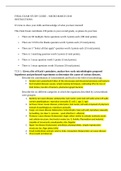
WHAT ARE BABIES MADE OF? - mom and dad, sperm and egg - DNA, cells, - It matters because we are made out of DNA. We are gonna take care of a woman in her pregnancy. She is gonna grow a person made out of DNA. We need to know the things that deal with mom (all her medical hx) - Half of DNA from mom, half from dad. - Ask questions from dad as well. GENES DNA (deoxyribonucleic acid) is a biomolecule that holds the blueprint for how living organisms are built. A gene is a segment of DNA that is passed down from parents to children and confers a trait to the offspring. Genes are organized and packaged in units called “chromosomes.” Humans have 23 pairs of chromosomes. One set of chromosomes for each pair comes from each parent. We do chromosomal analysis to see the genetic disease XX vs XY 22 pairs of homologous pairs of chromosomes and one pair of sex chromosomes Chromosome analysis: X (females), Y (males) You might have a pt in the clinical setting, mom has hx of sickle cell and she was sent to the genetic counselor and she was reading the results of counselor’s report and that patient knows what they’re having based on their chromosome. DOMINANT VS RECESSIVE Genes are either dominant or recessive When there is both a dominant and a recessive gene in the pair, the traits of dominant gene are present The traits of the recessive gene are present when both genes of the pair are recessive Genetic diseases or disorders are usually related to a defective recessive gene and present in the developing fetus when both pairs of the gene have the same defect. MENDELIAN INHERITANCE (we get in this more in depth when we have a pt who has a genetic disorder and we want to find out if its an autosomal dominant or autosomal recessive) Autosomal Dominant Affected person has affected parent (if you have huntington’s one of your parents has huntington’s disease as well) 50% chance of passing the trait Males & females equally affected--dad can pass to son Autosomal Recessive Can have clinically normal parents, but both parents must be carriers 25% chance of having an affected child 50% chance that the child is a carrier Males & females affected equally COMMON RECESSIVE GENETIC DISORDERS (ask parents who have first prenatal visits if they had this in their family hx) Sickle Cell Anemia Cystic Fibrosis Tay-Sachs Disease Thalassemia Phenylketonuria (PKU) a lot of genetic disorders are recessive. With the recessive genetic disorders, they are not passed on from generation to generation. That’s a good thing because that means we can’t keep on passing it. If you have a recessive gene, it has a small chance of finding a partner that has recessive gene too. Ask mom and dad what kind of genetic disorders they have in their family. MATERNAL AGE AND CHROMOSOMES “Advanced Maternal Age” is age 35 and older when she’s pregnant – geriatric pregnancy Increased risk of chromosomal abnormalities (we worry about their chromosomes) Down syndrome Deletion Translocation We also worry about their medical conditions (more at risk for HTN, DM, etc) We worry about their body being able to handle the pregnancy
Geschreven voor
Documentinformatie
- Geüpload op
- 21 maart 2022
- Aantal pagina's
- 9
- Geschreven in
- 2021/2022
- Type
- Tentamen (uitwerkingen)
- Bevat
- Vragen en antwoorden
Onderwerpen
- conception
-
week 1 ob fall 2019 document subtitle week 1 ob fall 2019 week 1 ob camille olandez chapter 3 genetics
-
fetal development and reproductive technology what are babies made of mo