BIOCHEMISTRY | PROTEIN STRUCTURE AND FUNCTION | GLOBULAR PROTEIN | NOTED BY FAKHRY (IG @SFAKHRYM)
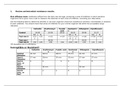
v Hemoglobin VS Myoglobin
1
, BIOCHEMISTRY | PROTEIN STRUCTURE AND FUNCTION | GLOBULAR PROTEIN | NOTED BY FAKHRY (IG @SFAKHRYM)
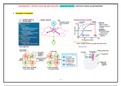
v GLOBULAR HEMEPROTEINS
o They are a group of specialized proteins that contain heme as a tightly bound prosthetic group.
o Heme structure
• Heme is a complex of protoporphyrin IX and ferrous iron (Fe2+).
• The iron is held in the center of the heme molecule by bonds to the four nitrogens of the porphyrin
• The heme Fe2+ can form two additional bonds, one on each side of the planar porphyrin ring
o Myoglobin structure and function
• It is a hemeprotein present in heart and skeletal muscle, function as an oxygen reservoir and as an oxygen carrier
• It consists of a single polypeptide chain that is structurally similar to the individual polypeptide chains of the tetrameric hemoglobin
molecule
• α-helical content
§ Myoglobin is a compact molecule, with ~80% of its polypeptide chain folded into eight stretches of α-helix
§ These α-helical regions are terminated either by the presence of proline, whose five-membered ring can not be accommodated in
an α-helix, or by β-bends and loops stabilized by hydrogen bonds and ionic bonds
• Location of polar and nonpolar amino acid residues
§ The interior of the globular myoglobin molecule is composed almost entirely of nonpolar aas
• They are packed closely together forming a structure stabilized by hydrophobic interactions between these clustered
residues
§ In contrast, polar aas are located almost exclusively on the surface, where they can not form hydrogen bond, both with each other
and with water
• Binding of the heme group
§ The heme group of the myoglobin molecule sits in a crevice, which is lined with nonpolar amino acids
• Exceptions of two histidine residues.
• The proximal histidine, binds directly to the Fe2+ of heme
• The distal histidine, does not directly interact with the heme group, but helps stabilize the binding of O2 to Fe2+
• Thus, the protein, or globin, portion of myoglobin creates a special microenvironment for the heme that permits the
reversible binding of one oxygen molecule (oxygenation)
• The simultaneous loss of electrons by Fe2+ (oxidation to the ferric [Fe3+] form) occurs only rarely.
2
v Hemoglobin VS Myoglobin
1
, BIOCHEMISTRY | PROTEIN STRUCTURE AND FUNCTION | GLOBULAR PROTEIN | NOTED BY FAKHRY (IG @SFAKHRYM)
v GLOBULAR HEMEPROTEINS
o They are a group of specialized proteins that contain heme as a tightly bound prosthetic group.
o Heme structure
• Heme is a complex of protoporphyrin IX and ferrous iron (Fe2+).
• The iron is held in the center of the heme molecule by bonds to the four nitrogens of the porphyrin
• The heme Fe2+ can form two additional bonds, one on each side of the planar porphyrin ring
o Myoglobin structure and function
• It is a hemeprotein present in heart and skeletal muscle, function as an oxygen reservoir and as an oxygen carrier
• It consists of a single polypeptide chain that is structurally similar to the individual polypeptide chains of the tetrameric hemoglobin
molecule
• α-helical content
§ Myoglobin is a compact molecule, with ~80% of its polypeptide chain folded into eight stretches of α-helix
§ These α-helical regions are terminated either by the presence of proline, whose five-membered ring can not be accommodated in
an α-helix, or by β-bends and loops stabilized by hydrogen bonds and ionic bonds
• Location of polar and nonpolar amino acid residues
§ The interior of the globular myoglobin molecule is composed almost entirely of nonpolar aas
• They are packed closely together forming a structure stabilized by hydrophobic interactions between these clustered
residues
§ In contrast, polar aas are located almost exclusively on the surface, where they can not form hydrogen bond, both with each other
and with water
• Binding of the heme group
§ The heme group of the myoglobin molecule sits in a crevice, which is lined with nonpolar amino acids
• Exceptions of two histidine residues.
• The proximal histidine, binds directly to the Fe2+ of heme
• The distal histidine, does not directly interact with the heme group, but helps stabilize the binding of O2 to Fe2+
• Thus, the protein, or globin, portion of myoglobin creates a special microenvironment for the heme that permits the
reversible binding of one oxygen molecule (oxygenation)
• The simultaneous loss of electrons by Fe2+ (oxidation to the ferric [Fe3+] form) occurs only rarely.
2