6/3/2020 Feedback Log & Score — Juan Carlos Nov 05, 2019 12:36 PM
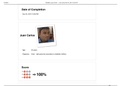
Date of Completion
Nov 05, 2019 12:36 PM
Juan Carlos
Age: 52 years
Diagnosis: Ulcer - right great toe secondary to diabetes mellitus
Score
0
0
100%
0
1/5
, 6/3/2020 Feedback Log & Score — Juan Carlos Nov 05, 2019 12:36 PM
Feedback Log
0:00 You arrived at the patient's side.
0:00 You reviewed the patient information.
0:00 You introduced yourself.
0:04 You washed your hands. To maintain patient safety, it is important to wash your
hands as soon as you enter the room.
0:10 Patient status - ECG: Sinus rhythm. Heart rate: 82. Pulse: Present. Blood pressure: 123/73
mm Hg. Respiration: 12. Conscious state: Appropriate. SpO2: 97%. Temp: 100 F (37.6 C)
1:10 Patient status - ECG: Sinus rhythm. Heart rate: 83. Pulse: Present. Blood pressure: 122/73
mm Hg. Respiration: 12. Conscious state: Appropriate. SpO2: 97%. Temp: 99 F (37.5 C)
1:22 You identified the patient. To maintain patient safety, it is important that you
quickly identify the patient.
1:40 You attached the automatic noninvasive blood pressure (NIBP) measurement
cuff. This will allow you to reassess the patient continuously.
1:56 You attached the <Pulseoximeter>pulse oximeter.<> It is a good idea to
monitor the saturation and pulse here. This will allow you to reassess the patient
continuously.
1:59 You looked for normal breathing. He is breathing at 12 breaths per minute. The
chest is moving equally.
2:10 Patient status - ECG: Sinus rhythm. Heart rate: 83. Pulse: Present. Blood pressure: 124/74
mm Hg. Respiration: 12. Conscious state: Appropriate. SpO2: 97%. Temp: 99 F (37.4 C)
2:18 You checked the radial pulse. The pulse is strong, 85 per minute, and regular. It is
correct to assess the patient's vital signs.
2:32 You asked the patient if he had any pain. He replied: 'Yes, I have some
pain.'
2:36 You asked the patient if he could describe his pain. He replied: 'My right
2/5
Date of Completion
Nov 05, 2019 12:36 PM
Juan Carlos
Age: 52 years
Diagnosis: Ulcer - right great toe secondary to diabetes mellitus
Score
0
0
100%
0
1/5
, 6/3/2020 Feedback Log & Score — Juan Carlos Nov 05, 2019 12:36 PM
Feedback Log
0:00 You arrived at the patient's side.
0:00 You reviewed the patient information.
0:00 You introduced yourself.
0:04 You washed your hands. To maintain patient safety, it is important to wash your
hands as soon as you enter the room.
0:10 Patient status - ECG: Sinus rhythm. Heart rate: 82. Pulse: Present. Blood pressure: 123/73
mm Hg. Respiration: 12. Conscious state: Appropriate. SpO2: 97%. Temp: 100 F (37.6 C)
1:10 Patient status - ECG: Sinus rhythm. Heart rate: 83. Pulse: Present. Blood pressure: 122/73
mm Hg. Respiration: 12. Conscious state: Appropriate. SpO2: 97%. Temp: 99 F (37.5 C)
1:22 You identified the patient. To maintain patient safety, it is important that you
quickly identify the patient.
1:40 You attached the automatic noninvasive blood pressure (NIBP) measurement
cuff. This will allow you to reassess the patient continuously.
1:56 You attached the <Pulseoximeter>pulse oximeter.<> It is a good idea to
monitor the saturation and pulse here. This will allow you to reassess the patient
continuously.
1:59 You looked for normal breathing. He is breathing at 12 breaths per minute. The
chest is moving equally.
2:10 Patient status - ECG: Sinus rhythm. Heart rate: 83. Pulse: Present. Blood pressure: 124/74
mm Hg. Respiration: 12. Conscious state: Appropriate. SpO2: 97%. Temp: 99 F (37.4 C)
2:18 You checked the radial pulse. The pulse is strong, 85 per minute, and regular. It is
correct to assess the patient's vital signs.
2:32 You asked the patient if he had any pain. He replied: 'Yes, I have some
pain.'
2:36 You asked the patient if he could describe his pain. He replied: 'My right
2/5