CLINICALBIOCHEMISTRY
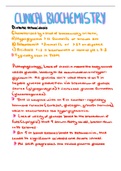
Diabetic ketoacidosis
Characterised by a triad of biochemistry criteria
A Hyperglycemia 7 11 0mmol l L or known DM
B Ketonaemia 33mmol IL or S 2 t on
dipstick
c Acidosis is 0 bicarbonate or venous pH C 7.3
in
Typically seen TIDM
Pathophysiology Lack of insulin means the
body cannot
utiliseglucose leading to its accumulation and
hyper
glycaemia As glucose isn't used there is an T in
hepatic glucose production via breakdown of glucose
stores glycogen dysis t increased glucose formations
gluconeogenesis
This is coupled with an T in counter regulatory
hormone release cortisol glucagon growth hormone
which exacerbates the
hyperglycaemia
Lack of utility of glucose leads to the breakdown of
fats lipolysis that T serum fatty acids broken down
into ketones
An T in blood ketones leads to Ketonaemia this
leads to significant acidosis and severe illness
AS DILA progresses the raised plasma glucose
, leads to osmotic diuresis and profound hypovalaemia
that is worsened by vomiting Leads to electrolyte
derangement5 I consiousness and death
Typical symptoms Drowsiness vomiting dehydration
Do glucose if pt has unexplained vomiting abdo pain
Poly urial di psia lethargy I cetoic breath coma
hyper
ventilation
Severe DK A One of Blood ketones 36 Venous bicarb
LS 02 Sats C 92
Venous pH L 7 O GCS C 12 S B P CAO
Dulse 100 260
Treat with fluid replacement t insulin etc
Diabetic ketoacidosis
Characterised by a triad of biochemistry criteria
A Hyperglycemia 7 11 0mmol l L or known DM
B Ketonaemia 33mmol IL or S 2 t on
dipstick
c Acidosis is 0 bicarbonate or venous pH C 7.3
in
Typically seen TIDM
Pathophysiology Lack of insulin means the
body cannot
utiliseglucose leading to its accumulation and
hyper
glycaemia As glucose isn't used there is an T in
hepatic glucose production via breakdown of glucose
stores glycogen dysis t increased glucose formations
gluconeogenesis
This is coupled with an T in counter regulatory
hormone release cortisol glucagon growth hormone
which exacerbates the
hyperglycaemia
Lack of utility of glucose leads to the breakdown of
fats lipolysis that T serum fatty acids broken down
into ketones
An T in blood ketones leads to Ketonaemia this
leads to significant acidosis and severe illness
AS DILA progresses the raised plasma glucose
, leads to osmotic diuresis and profound hypovalaemia
that is worsened by vomiting Leads to electrolyte
derangement5 I consiousness and death
Typical symptoms Drowsiness vomiting dehydration
Do glucose if pt has unexplained vomiting abdo pain
Poly urial di psia lethargy I cetoic breath coma
hyper
ventilation
Severe DK A One of Blood ketones 36 Venous bicarb
LS 02 Sats C 92
Venous pH L 7 O GCS C 12 S B P CAO
Dulse 100 260
Treat with fluid replacement t insulin etc