ANGINATACS
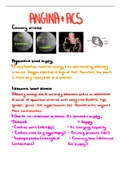
Coronary arteries
Myocardial blood supply
Pump function requires energy to 2 delivered
by coronary
arteries Oxygen e traction is high at rest Therefore the heart
is
relatively susceptible to ischaemic
Ischaemic heart disease
atheroma and is obstructive
Nearlyalways due to coronary an
disease of epicardial arteries with many risk factors age
gender genes DM hypertension etc Results in Mi angina 1
their consequences
Due to an imbalance between 02 demand supply
Demand Supply
Cardiac work HR Bp 02 Carrying capacity
Cardiac mass Ce g hypertrophy Driving pressure CBP
Inotropicstatus strength of Coronary tone Cdetermine
contractions 02 supply
, Testing for angina11 HD
Exercise ECG C assess for ischaemic changes
either cardiac CT with contrast
Angiography or
trans catheter angiography
Functional imaging Ce g echo
C CG usually normal may show ST depression flat 1
inverted T waves
Angina pectoris
Features symptoms
1 Constricting heavy discomfort to the chest jaw neck
shoulder or arms
2 Symptoms brought on by exercise
3 Symptoms relieved
by C TN spray1 rest I 5 mins
3 typical angina 2 atypicalangina 0 I non
angina 1 chest pain
Associated symptoms dyspnea sweating nausea
dizziness
Features makingangina L likely Contino us pain pleuritic
or worse on
swallowing pain associated with palpitation
Types of angina Stable angina CT unstable angina
C crescendo angina Angina of T frequency or severity
Coronary arteries
Myocardial blood supply
Pump function requires energy to 2 delivered
by coronary
arteries Oxygen e traction is high at rest Therefore the heart
is
relatively susceptible to ischaemic
Ischaemic heart disease
atheroma and is obstructive
Nearlyalways due to coronary an
disease of epicardial arteries with many risk factors age
gender genes DM hypertension etc Results in Mi angina 1
their consequences
Due to an imbalance between 02 demand supply
Demand Supply
Cardiac work HR Bp 02 Carrying capacity
Cardiac mass Ce g hypertrophy Driving pressure CBP
Inotropicstatus strength of Coronary tone Cdetermine
contractions 02 supply
, Testing for angina11 HD
Exercise ECG C assess for ischaemic changes
either cardiac CT with contrast
Angiography or
trans catheter angiography
Functional imaging Ce g echo
C CG usually normal may show ST depression flat 1
inverted T waves
Angina pectoris
Features symptoms
1 Constricting heavy discomfort to the chest jaw neck
shoulder or arms
2 Symptoms brought on by exercise
3 Symptoms relieved
by C TN spray1 rest I 5 mins
3 typical angina 2 atypicalangina 0 I non
angina 1 chest pain
Associated symptoms dyspnea sweating nausea
dizziness
Features makingangina L likely Contino us pain pleuritic
or worse on
swallowing pain associated with palpitation
Types of angina Stable angina CT unstable angina
C crescendo angina Angina of T frequency or severity