Uses of chromatography.
Chromatography1 is a technique where you investigate and analyse the separation of
substances from a mixture, conducted in a laboratory. In every chromatography
there is a stationary phase - which can be either solid or a thick liquid. This is where
no movement occurs.
The mobile phase is the solvent that can be either liquid or gas which flows and
moves the material that has been plotted on the line of origin. It separated the
material at different rates which can be based on the solubility and affinity. As it flows
through the chromatogram through the stationary phase.
If the substance has an affinity to the mobile phase it is carried further to the solvent
front.
There are many different types of chromatography for example gas chromatography,
liquid chromatography, paper Chromatography and thin-layer chromatography. Each
of these are used in industries to analyse specific substances. Chromatography is
widely used in industries as it is easy and quick to analyse separation of mixtures
that is not time consuming to get results.
Uses2 and purposes of chromatography in industries.
There are many uses of chromatography in the industry for different purposes. For
example, it is used in the pharmaceutical industry to test traces of drug in a person’s
blood. This is commonly used in people who take part in competitive sports to make
sure there are no traces of drugs to enhance their performance.
Chromatography is also used in forensic science specifically using paper
chromatography for a crime scene where they can match evidence found at the
scene. When a person is deceased, forensics run a chromatography test to see is
the person had any sorts of drug, alcohol or poisoning in their system, this process
requires gas chromatography -this is where a sample is split into their individual
components showing relevant match traces.
1
Bmcbride
https://www.peakscientific.com/discover/news/5-everyday-uses-for-chromatography/
2
Ask A Scientist Staff (2019).
https://www.thermofisher.com/blog/ask-a-scientist/what-is-chromatography/
Benedette Cuffari
https://www.news-medical.net/life-sciences/How-Can-Affinity-Chromatography-be-Used-to-Manufacture-
Vaccines.aspx#:~:text=For%20example%2C%20immunoaffinity%20chromatography%20(IAC,viruses%2C
%20toxins%2C%20and%20proteins.
1
,Moreover, chromatography is used in the food industry, specifically gas-liquid
chromatography which is used to analyse substances in food, for example
pesticides, additives, or mould. Also used to analyse the quality of food.
In the beverage industry chromatography testing is used for products such as
alcohol, milk, juice, beer and more. This ensures that when they are manufactured it
contains the same amount of substances. This is very important in in beverage
industries to ensure all products taste the same.
Scientists use chromatography in development of vaccines, where they analyse
antibodies that are suitable to work as a vaccine, to prevent or neutralise a specific
virus or bacteria. In all these industries mentioned chromatogram analysis is used to
ensure safety and measures of products for uses of people.
Paper chromatography
There are various types of chromatography that are used to separate mixtures. One
example is paper chromatography.
Paper chromatography works by separating mixtures based on how soluble the
substance is. This process involves having a chromatography paper (which we
identify as the stationary phase as it does not move). You place the chromatography
paper in a non-aqueous solvent making sure it does not touch the spots and place a
lid on top to prevent solvent evaporating.
Solvents that can be used as the mobile phase is petroleum ether, cyclohexane and
propanone as they can be absorbed by the paper (stationary) and carries the
substances with it. The more soluble it is, the further it would travel. The less soluble
it is; the least it will travel or may even remain on the line of origin.
Paper chromatography is used to separate mixtures or substances, for example,
scientists may use it to identify unknown substance for example tracing for drugs, or
mould in food and many more. They use paper chromatography to help them to
identify substances in mixtures.
2
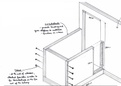
,Here are the 3main components for paper chromatography:
Lid (to stop solvent from evaporating),
Chromatography paper- which is the stationary phase, as it does not move.
Solvent front- a marked like where the water stops at
Beaker- where the chromatogram is placed in with the solvent.
Mobile phase- solvent.
4
Thin layer chromatography
Another type of chromatography is thin layer chromatography (TLC). This is an
experiment taken place when you want to separate a mixture and analyse the
different components it contains. As with all chromatography it has a mobile phase
and the stationary phase. The mobile phase is the solvent for example, petroleum
ether, acetate or acetone, and the stationary phase is the thin layer applied on the
TLC plate. This layer is usually silica gel.
3
Sansanorth
4
https://www.shutterstock.com/search/chromatography
3
, When analysing the spots on the chromatogram, if the substance has moved closer
to the solvent front it shows it is more attractive to the mobile phase, therefore has
more affinity towards the mobile phase.
If it is closer to the stationary phase or has not moved from the line of origin, it shows
that it has more affinity to the stationary phase.
Uses of TLC in the industry
TLC has many use and purposes in the industry. For example, in phytochemistry
(study of chemicals secreted by plants), thin layer chromatography is used in plant-
based medicine to separate different components in it and to analyse the plants
metabolic rate.
TLC can be used to analyse how pure a mixture or substance is. If the
chromatogram appears with extra spots it shows that the substance is impure.
Additionally, TLC is used in biochemistry industry where they analyse substances
such as urine or blood. They use results from TLC to compare their findings. When
using urine with TLC, you can also test for the presents of drugs. In this case the
experimenter would have to use silica gel as the stationary phase because it is able
to identify any signs of drugs.
Moreover, cosmetic industries use TLC to separate different compounds and colours
in the mixture they use this as it is time efficient and not too complicated to use, so it
is very beneficial for many industries.
Gas-liquid chromatography
Gas5 chromatography is another type of chromatography used to separate and
identify different volatile substances (with low boiling point) in a mixture and as with
all chromatography there is a mobile and stationary phase. In this one, the mobile
phase is the carrier gas that carries components with it. The stationary phase is the
non-volatile liquid as it traps components.
This works by the volatile substance being injected into the oven. The carrier gas
moves components in the sample along. The carrier gas could be examples of
helium or nitrogen. The sample is boiled by the oven to produce a vapour which is
then carried by the inert gas along the column. This column is made from steel tube
packed with porous rock so that the non-volatile liquid is adsorbed. The molecules of
the samples would spread out as it interacts with the stationary phase and hit the
5
Dr Diane Turner
https://www.technologynetworks.com/analysis/articles/gas-chromatography-how-a-gas-chromatography-machine-works-
how-to-read-a-chromatograph-and-gcxgc-335168#:~:text=Gas%20chromatography%20(GC)%20is%20an,usually
%20organic%20molecules%20or%20gases
4
Chromatography1 is a technique where you investigate and analyse the separation of
substances from a mixture, conducted in a laboratory. In every chromatography
there is a stationary phase - which can be either solid or a thick liquid. This is where
no movement occurs.
The mobile phase is the solvent that can be either liquid or gas which flows and
moves the material that has been plotted on the line of origin. It separated the
material at different rates which can be based on the solubility and affinity. As it flows
through the chromatogram through the stationary phase.
If the substance has an affinity to the mobile phase it is carried further to the solvent
front.
There are many different types of chromatography for example gas chromatography,
liquid chromatography, paper Chromatography and thin-layer chromatography. Each
of these are used in industries to analyse specific substances. Chromatography is
widely used in industries as it is easy and quick to analyse separation of mixtures
that is not time consuming to get results.
Uses2 and purposes of chromatography in industries.
There are many uses of chromatography in the industry for different purposes. For
example, it is used in the pharmaceutical industry to test traces of drug in a person’s
blood. This is commonly used in people who take part in competitive sports to make
sure there are no traces of drugs to enhance their performance.
Chromatography is also used in forensic science specifically using paper
chromatography for a crime scene where they can match evidence found at the
scene. When a person is deceased, forensics run a chromatography test to see is
the person had any sorts of drug, alcohol or poisoning in their system, this process
requires gas chromatography -this is where a sample is split into their individual
components showing relevant match traces.
1
Bmcbride
https://www.peakscientific.com/discover/news/5-everyday-uses-for-chromatography/
2
Ask A Scientist Staff (2019).
https://www.thermofisher.com/blog/ask-a-scientist/what-is-chromatography/
Benedette Cuffari
https://www.news-medical.net/life-sciences/How-Can-Affinity-Chromatography-be-Used-to-Manufacture-
Vaccines.aspx#:~:text=For%20example%2C%20immunoaffinity%20chromatography%20(IAC,viruses%2C
%20toxins%2C%20and%20proteins.
1
,Moreover, chromatography is used in the food industry, specifically gas-liquid
chromatography which is used to analyse substances in food, for example
pesticides, additives, or mould. Also used to analyse the quality of food.
In the beverage industry chromatography testing is used for products such as
alcohol, milk, juice, beer and more. This ensures that when they are manufactured it
contains the same amount of substances. This is very important in in beverage
industries to ensure all products taste the same.
Scientists use chromatography in development of vaccines, where they analyse
antibodies that are suitable to work as a vaccine, to prevent or neutralise a specific
virus or bacteria. In all these industries mentioned chromatogram analysis is used to
ensure safety and measures of products for uses of people.
Paper chromatography
There are various types of chromatography that are used to separate mixtures. One
example is paper chromatography.
Paper chromatography works by separating mixtures based on how soluble the
substance is. This process involves having a chromatography paper (which we
identify as the stationary phase as it does not move). You place the chromatography
paper in a non-aqueous solvent making sure it does not touch the spots and place a
lid on top to prevent solvent evaporating.
Solvents that can be used as the mobile phase is petroleum ether, cyclohexane and
propanone as they can be absorbed by the paper (stationary) and carries the
substances with it. The more soluble it is, the further it would travel. The less soluble
it is; the least it will travel or may even remain on the line of origin.
Paper chromatography is used to separate mixtures or substances, for example,
scientists may use it to identify unknown substance for example tracing for drugs, or
mould in food and many more. They use paper chromatography to help them to
identify substances in mixtures.
2
,Here are the 3main components for paper chromatography:
Lid (to stop solvent from evaporating),
Chromatography paper- which is the stationary phase, as it does not move.
Solvent front- a marked like where the water stops at
Beaker- where the chromatogram is placed in with the solvent.
Mobile phase- solvent.
4
Thin layer chromatography
Another type of chromatography is thin layer chromatography (TLC). This is an
experiment taken place when you want to separate a mixture and analyse the
different components it contains. As with all chromatography it has a mobile phase
and the stationary phase. The mobile phase is the solvent for example, petroleum
ether, acetate or acetone, and the stationary phase is the thin layer applied on the
TLC plate. This layer is usually silica gel.
3
Sansanorth
4
https://www.shutterstock.com/search/chromatography
3
, When analysing the spots on the chromatogram, if the substance has moved closer
to the solvent front it shows it is more attractive to the mobile phase, therefore has
more affinity towards the mobile phase.
If it is closer to the stationary phase or has not moved from the line of origin, it shows
that it has more affinity to the stationary phase.
Uses of TLC in the industry
TLC has many use and purposes in the industry. For example, in phytochemistry
(study of chemicals secreted by plants), thin layer chromatography is used in plant-
based medicine to separate different components in it and to analyse the plants
metabolic rate.
TLC can be used to analyse how pure a mixture or substance is. If the
chromatogram appears with extra spots it shows that the substance is impure.
Additionally, TLC is used in biochemistry industry where they analyse substances
such as urine or blood. They use results from TLC to compare their findings. When
using urine with TLC, you can also test for the presents of drugs. In this case the
experimenter would have to use silica gel as the stationary phase because it is able
to identify any signs of drugs.
Moreover, cosmetic industries use TLC to separate different compounds and colours
in the mixture they use this as it is time efficient and not too complicated to use, so it
is very beneficial for many industries.
Gas-liquid chromatography
Gas5 chromatography is another type of chromatography used to separate and
identify different volatile substances (with low boiling point) in a mixture and as with
all chromatography there is a mobile and stationary phase. In this one, the mobile
phase is the carrier gas that carries components with it. The stationary phase is the
non-volatile liquid as it traps components.
This works by the volatile substance being injected into the oven. The carrier gas
moves components in the sample along. The carrier gas could be examples of
helium or nitrogen. The sample is boiled by the oven to produce a vapour which is
then carried by the inert gas along the column. This column is made from steel tube
packed with porous rock so that the non-volatile liquid is adsorbed. The molecules of
the samples would spread out as it interacts with the stationary phase and hit the
5
Dr Diane Turner
https://www.technologynetworks.com/analysis/articles/gas-chromatography-how-a-gas-chromatography-machine-works-
how-to-read-a-chromatograph-and-gcxgc-335168#:~:text=Gas%20chromatography%20(GC)%20is%20an,usually
%20organic%20molecules%20or%20gases
4