Hi§ .+
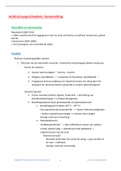
osteoarthritis (OA)
most common form of joint disease in NA ( 3M Canadians
noninflammatory disorder of diarthro dial joints
slowly progressive and
carnage go . .. ☐ one on ☐ one .
not normal part of the process
a
aging
but
growing older is a risk factor
www.wu.n.n.an.y.ag.w.o.mg.n.y.a.u.am.ee. .
.
symptoms generally not experienced until age 50 or 60
more than half clients 65 have radiographic evidence of 0A at least 1
>
in joint
after age 55 , more common in women than men
etiology & pathophysiology >
caused by a known event or condition that
directly damages cartilage
or causes joint instability
linked factors :
estrogen reduction
genetic factors *
regular moderate exercise
decreases risk
obesity
Results from cartilage becomes : dull yellow and
# granular
cartilage damage that triggers a , ,
metabolic response at level of chondrocytes soft and less elastic
less able to resist wear with
heavy us
the body cannot repair
cartilage because of
ongoing distraction > continued
changes in collagen structure of
cartilage lead to f- and erosion of articular surfaces central cartilage becomes thinner , and
issuing cartilage
> as
bony growth increase at joint margins >
resulting incongruity in joint surfaces
-
inflammation is not characteristic of 0A , but a secondary synovitis may result
inflammatory change contributes to
early pain and stiffness .
pain later in disease results from contact between exposed bony joint surfaces after articular cartilage has
completely deteriorated
n
.
clinical manifestations
vertebrae
systemic :
fatigue fever , , and organ involvement
not characteristic of 0A
lumbar
joints :
range from mild discomfort to significant carpometacarpal
disability ; localized pain and stiffness ,
*
crepitations interphalangeal
÷÷÷
deformity :
specific to joint involved
interphalangeal
can appear as early as 40
years of age
.
osteoarthritis (OA)
most common form of joint disease in NA ( 3M Canadians
noninflammatory disorder of diarthro dial joints
slowly progressive and
carnage go . .. ☐ one on ☐ one .
not normal part of the process
a
aging
but
growing older is a risk factor
www.wu.n.n.an.y.ag.w.o.mg.n.y.a.u.am.ee. .
.
symptoms generally not experienced until age 50 or 60
more than half clients 65 have radiographic evidence of 0A at least 1
>
in joint
after age 55 , more common in women than men
etiology & pathophysiology >
caused by a known event or condition that
directly damages cartilage
or causes joint instability
linked factors :
estrogen reduction
genetic factors *
regular moderate exercise
decreases risk
obesity
Results from cartilage becomes : dull yellow and
# granular
cartilage damage that triggers a , ,
metabolic response at level of chondrocytes soft and less elastic
less able to resist wear with
heavy us
the body cannot repair
cartilage because of
ongoing distraction > continued
changes in collagen structure of
cartilage lead to f- and erosion of articular surfaces central cartilage becomes thinner , and
issuing cartilage
> as
bony growth increase at joint margins >
resulting incongruity in joint surfaces
-
inflammation is not characteristic of 0A , but a secondary synovitis may result
inflammatory change contributes to
early pain and stiffness .
pain later in disease results from contact between exposed bony joint surfaces after articular cartilage has
completely deteriorated
n
.
clinical manifestations
vertebrae
systemic :
fatigue fever , , and organ involvement
not characteristic of 0A
lumbar
joints :
range from mild discomfort to significant carpometacarpal
disability ; localized pain and stiffness ,
*
crepitations interphalangeal
÷÷÷
deformity :
specific to joint involved
interphalangeal
can appear as early as 40
years of age
.