
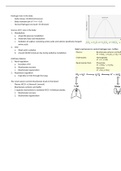
Hydrogen ions in the body:
- Daily release: 40-60mmol (excess)
- Body maintains pH of 7.4 +/- 0.05
- Normal Hydrogen ions level: 35-45nmol/L
Sources of H+ ions in the body:
1. Metabolism:
a. Anaerobic glucose metabolism
b. Anaerobic fatty acid metabolism
c. Oxidation of sulphur-containing amino acids and cationic (positively charged)
amino acids
2. CO2:
a. Weak acid in solution
b. Around 20,000 mmol per day during oxidative metabolism
Acid-base balance
1. Renal regulation:
a. Excretion of H+
b. Bicarbonate recovery
c. Bicarbonate regeneration
2. Respiratory regulation
a. Expiration of CO2 through the lungs
The renal system controls bicarbonate levels in the blood:
- Plasma HCO3- is 24mmol/L (normal)
- Bicarbonate-carbonic acid buffer
- 2 separate mechanisms to maintain HCO3- in kidneys tubules:
1. Bicarbonate recovery
2. Bicarbonate regeneration
- Daily release: 40-60mmol (excess)
- Body maintains pH of 7.4 +/- 0.05
- Normal Hydrogen ions level: 35-45nmol/L
Sources of H+ ions in the body:
1. Metabolism:
a. Anaerobic glucose metabolism
b. Anaerobic fatty acid metabolism
c. Oxidation of sulphur-containing amino acids and cationic (positively charged)
amino acids
2. CO2:
a. Weak acid in solution
b. Around 20,000 mmol per day during oxidative metabolism
Acid-base balance
1. Renal regulation:
a. Excretion of H+
b. Bicarbonate recovery
c. Bicarbonate regeneration
2. Respiratory regulation
a. Expiration of CO2 through the lungs
The renal system controls bicarbonate levels in the blood:
- Plasma HCO3- is 24mmol/L (normal)
- Bicarbonate-carbonic acid buffer
- 2 separate mechanisms to maintain HCO3- in kidneys tubules:
1. Bicarbonate recovery
2. Bicarbonate regeneration


