
PBL: CHAPTER 10 – CO-OPERATIVE GOVERNMENT (co-op gov)
Introduction
• Before 1994, the concept of co-op gov was foreign to the SA consti legal framework
• As a strictly unitary system, the national gov was supreme and always had final say.
The hierarchal levels in the state reflected a top-down approach rather than a
cooperative approach
• The concept of co-op gov is federal in nature
• The new consti incorporates the principles of co-op gov and inter-governmental
relations and ultimately allows for a more federal gov
• Although SA is still a unitary state, it has some federal characteristics (e.g. the system
of co-op gov)
• *Aim of co-op gov principles (purpose of co-op between spheres of gov):
o Facilitate inter-gov relations
o Foster cooperation and coordination between all spheres of gov
o Prevent non-competitive political conduct
• The term ‘sphere’ is used rather than ‘level’ -> this illustrates the type of relationship
between the different gov institutions (partners rather than opponents). This
relationship is regulated by the consti (S40 + S41) and determined by principles of
co-op gov
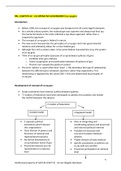
Development of concept of co-op gov:
• States sometimes have internal conflict between spheres
• *2 models of federalism have been developed to address this problem and handle
the conflict between the spheres
2 models of federalism
Divided model Integrated model
• 2 separate political • Aims at integrating and
institutions which interact coordinating spheres and provincial
thru negotiations and national political interests
• Clear division of powers and • Provides for exclusive and
functions of national and concurrent powers between
regional/provincial govs spheres
• No formal mechanisms of • Proper division of state revenue
co-op between levels of gov • Specific procedures so spheres can
• Provincial interests are not co-op with one another
represented on a national • Provincial participation at national
level level
5
Intellectual property of CAITLIN LEAHY © - do not illegally distribute
Introduction
• Before 1994, the concept of co-op gov was foreign to the SA consti legal framework
• As a strictly unitary system, the national gov was supreme and always had final say.
The hierarchal levels in the state reflected a top-down approach rather than a
cooperative approach
• The concept of co-op gov is federal in nature
• The new consti incorporates the principles of co-op gov and inter-governmental
relations and ultimately allows for a more federal gov
• Although SA is still a unitary state, it has some federal characteristics (e.g. the system
of co-op gov)
• *Aim of co-op gov principles (purpose of co-op between spheres of gov):
o Facilitate inter-gov relations
o Foster cooperation and coordination between all spheres of gov
o Prevent non-competitive political conduct
• The term ‘sphere’ is used rather than ‘level’ -> this illustrates the type of relationship
between the different gov institutions (partners rather than opponents). This
relationship is regulated by the consti (S40 + S41) and determined by principles of
co-op gov
Development of concept of co-op gov:
• States sometimes have internal conflict between spheres
• *2 models of federalism have been developed to address this problem and handle
the conflict between the spheres
2 models of federalism
Divided model Integrated model
• 2 separate political • Aims at integrating and
institutions which interact coordinating spheres and provincial
thru negotiations and national political interests
• Clear division of powers and • Provides for exclusive and
functions of national and concurrent powers between
regional/provincial govs spheres
• No formal mechanisms of • Proper division of state revenue
co-op between levels of gov • Specific procedures so spheres can
• Provincial interests are not co-op with one another
represented on a national • Provincial participation at national
level level
5
Intellectual property of CAITLIN LEAHY © - do not illegally distribute


