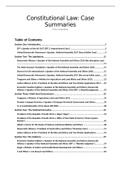
Constitutional Law: Content
First Semester
Table of Contents
Section One: Introduction...................................................................................................2
Introductory Concepts..................................................................................................................3
Basic Principles of Constitutional Law...........................................................................................3
Constitutional Supremacy...............................................................................................................................3
Separation of Powers......................................................................................................................................5
The Rule of Law...............................................................................................................................................6
Transformative Constitutionalism..................................................................................................................7
Section Two: The Legislature..............................................................................................9
Election and Composition.............................................................................................................9
The Powers of Parliament...........................................................................................................10
The Functions of Parliament.......................................................................................................12
Limits on Parliament’s Power.....................................................................................................14
The Legislative Process...............................................................................................................15
Legislative Process for Section 75 Bills (Bills Not Affecting the Provinces)..................................................16
Legislative Process for Section 76 Bills (Bills Affecting the Provinces).........................................................17
Section Three: Multi-level Government............................................................................18
Background: The Nature and Importance of Co-operation between the Local, Provincial and
National Spheres of Government...............................................................................................18
The Legislative Competence of the National and Provincial Spheres..........................................20
Competence and Tagging Tests...................................................................................................23
The Liquor Bill Case: In re Constitutionality of the Liquor Bill 2000.............................................................23
The difference between 'pith and substance' and the 'substantial measure' tests - from Liquor
Bill to Tongoane............................................................................................................................................24
Answering Technique: Resolving Conflicts..................................................................................26
Step One: Are both pieces of legislation valid?............................................................................................27
Step Two: If they are both validly passed, establish whether there is an actual conflict or can we obey
both simultaneously? (The threshold question)..........................................................................................28
Step Three: Conflict resolution.....................................................................................................................29
Resolve the conflict.......................................................................................................................................29
Section Four: The National Executive................................................................................30
Introduction...............................................................................................................................30
Powers and Functions of the President.......................................................................................32
The president as both head of state and head of the executive..................................................................33
Checks and Balances and the Separation of Powers...................................................................36
Is the president a constitutional ‘being’?.....................................................................................................36
The NA’s Executive Removal Mechanisms (Section 89 and 102(2))............................................................38
The NA’s Other Powers of Restraint.............................................................................................................39
, Methods of Judicial Review..........................................................................................................................40
Section Five: The Judiciary................................................................................................45
Guiding Principles on the Role of the Judiciary...........................................................................45
Independence...............................................................................................................................................45
Impartiality....................................................................................................................................................46
The Past and Present Role of Courts: Potential Judicial Crisis, Extended Judicial Review and
Judicial Overreach......................................................................................................................47
Overview.......................................................................................................................................................47
The Judiciary within the SOP........................................................................................................................48
Judicial Appointments................................................................................................................51
The Judicial Services Commission.................................................................................................................51
The Appointment Criteria.............................................................................................................................53
Section Six: Chapter 9 Institutions....................................................................................58
The Nature, Powers and Functions of Selected Chapter 9 Institutions........................................58
Chapter 9 Institutions in the Broader Scheme of the SOP...........................................................................59
Securing the Independence of Chapter 9 Institutions.................................................................60
The Public Protector...................................................................................................................64
Section One: Introduction
,Introductory Concepts
Constitutionalism
A constitution is the foundational legal document that sets out how the country ought to be
governed. Constitutionalism is the principle that the government is bound by this document
and is intended to solve the problem of abuses of state power
The ambit of SA con law is generally seen as made up of two branches:
o First, there is the body of law that regulates how powers are separated
between various arms and organs of state.
o Second, there is the body of law that grants persons within the jurisdiction of
South Africa certain rights.
These two arrays of rules are considered as the fundamental laws
establishing the Republic of South Africa.
Thus there are usually two grounds that you can argue the unconstitutionality of law
or conduct:
o That the law or conduct is unconstitutional because it violates a right in the
Bill of Rights (BoR)
o That the law or conduct can be unconstitutional because it exceeds a power
or falls short of a duty assigned to organs of the state by the constitution
Basic Principles of Constitutional Law
Constitutional Supremacy
Section 1 of the Constitution provides that South Africa is a republic founded on the value
of constitutional supremacy. Section 2 of the Constitution provides that the Constitution
is ‘supreme law in the Republic; law or conduct inconsistent with it is invalid, and the
obligations imposed by it must be fulfilled’
The effect of Section 1 and 2 is constitutional supremacy which means that the rules
in the Constitution thus trump all other rules contained in statutes, common law and
custom.
o Any rule inconsistent with a constitutional rule is an invalid rule.
, o Any conduct that contradicts the constitution, including failing to fulfil an
obligation imposed by the Constitution, is similarly invalid.
This can give rise to the counter-majoritarian dilemma
A democracy can allow parliament to represent the majority and make whichever
rule it wants, thereby maximizing representation but preventing there from being
any supreme rules or constitution (parliamentary sovereignty) OR it can restrain
parliament by having supreme rules, thereby protecting democratic and
constitutional principles (e.g. protecting minority groups) but compromising on
majority rule
The counter-majoritarian dilemma is particularly relevant to the role of the judiciary
as it is a branch of government that is not as representative of the majority as
parliament but is given the final say over the meaning of the constitution, including
the powers of the legislature.
o This problem was highlighted in Makwanyane where the majority judgment
notes that while a purely representative understanding of democracy is
incompatible with constitutional supremacy, our democracy does not have to
entail majority rule in every decision on every aspect of the state
o There are sound reasons for entrusting another arm of state to interpret a
constitution: specifically, members of the judiciary are experts in legal
interpretation, may provide objectivity in resolving disputes about the
legislature’s power and may operate as an important check on the
legislature’s power.
In this sense, the counter- majoritarian dilemma is not resolved, but
its significance can be diminished.
First Semester
Table of Contents
Section One: Introduction...................................................................................................2
Introductory Concepts..................................................................................................................3
Basic Principles of Constitutional Law...........................................................................................3
Constitutional Supremacy...............................................................................................................................3
Separation of Powers......................................................................................................................................5
The Rule of Law...............................................................................................................................................6
Transformative Constitutionalism..................................................................................................................7
Section Two: The Legislature..............................................................................................9
Election and Composition.............................................................................................................9
The Powers of Parliament...........................................................................................................10
The Functions of Parliament.......................................................................................................12
Limits on Parliament’s Power.....................................................................................................14
The Legislative Process...............................................................................................................15
Legislative Process for Section 75 Bills (Bills Not Affecting the Provinces)..................................................16
Legislative Process for Section 76 Bills (Bills Affecting the Provinces).........................................................17
Section Three: Multi-level Government............................................................................18
Background: The Nature and Importance of Co-operation between the Local, Provincial and
National Spheres of Government...............................................................................................18
The Legislative Competence of the National and Provincial Spheres..........................................20
Competence and Tagging Tests...................................................................................................23
The Liquor Bill Case: In re Constitutionality of the Liquor Bill 2000.............................................................23
The difference between 'pith and substance' and the 'substantial measure' tests - from Liquor
Bill to Tongoane............................................................................................................................................24
Answering Technique: Resolving Conflicts..................................................................................26
Step One: Are both pieces of legislation valid?............................................................................................27
Step Two: If they are both validly passed, establish whether there is an actual conflict or can we obey
both simultaneously? (The threshold question)..........................................................................................28
Step Three: Conflict resolution.....................................................................................................................29
Resolve the conflict.......................................................................................................................................29
Section Four: The National Executive................................................................................30
Introduction...............................................................................................................................30
Powers and Functions of the President.......................................................................................32
The president as both head of state and head of the executive..................................................................33
Checks and Balances and the Separation of Powers...................................................................36
Is the president a constitutional ‘being’?.....................................................................................................36
The NA’s Executive Removal Mechanisms (Section 89 and 102(2))............................................................38
The NA’s Other Powers of Restraint.............................................................................................................39
, Methods of Judicial Review..........................................................................................................................40
Section Five: The Judiciary................................................................................................45
Guiding Principles on the Role of the Judiciary...........................................................................45
Independence...............................................................................................................................................45
Impartiality....................................................................................................................................................46
The Past and Present Role of Courts: Potential Judicial Crisis, Extended Judicial Review and
Judicial Overreach......................................................................................................................47
Overview.......................................................................................................................................................47
The Judiciary within the SOP........................................................................................................................48
Judicial Appointments................................................................................................................51
The Judicial Services Commission.................................................................................................................51
The Appointment Criteria.............................................................................................................................53
Section Six: Chapter 9 Institutions....................................................................................58
The Nature, Powers and Functions of Selected Chapter 9 Institutions........................................58
Chapter 9 Institutions in the Broader Scheme of the SOP...........................................................................59
Securing the Independence of Chapter 9 Institutions.................................................................60
The Public Protector...................................................................................................................64
Section One: Introduction
,Introductory Concepts
Constitutionalism
A constitution is the foundational legal document that sets out how the country ought to be
governed. Constitutionalism is the principle that the government is bound by this document
and is intended to solve the problem of abuses of state power
The ambit of SA con law is generally seen as made up of two branches:
o First, there is the body of law that regulates how powers are separated
between various arms and organs of state.
o Second, there is the body of law that grants persons within the jurisdiction of
South Africa certain rights.
These two arrays of rules are considered as the fundamental laws
establishing the Republic of South Africa.
Thus there are usually two grounds that you can argue the unconstitutionality of law
or conduct:
o That the law or conduct is unconstitutional because it violates a right in the
Bill of Rights (BoR)
o That the law or conduct can be unconstitutional because it exceeds a power
or falls short of a duty assigned to organs of the state by the constitution
Basic Principles of Constitutional Law
Constitutional Supremacy
Section 1 of the Constitution provides that South Africa is a republic founded on the value
of constitutional supremacy. Section 2 of the Constitution provides that the Constitution
is ‘supreme law in the Republic; law or conduct inconsistent with it is invalid, and the
obligations imposed by it must be fulfilled’
The effect of Section 1 and 2 is constitutional supremacy which means that the rules
in the Constitution thus trump all other rules contained in statutes, common law and
custom.
o Any rule inconsistent with a constitutional rule is an invalid rule.
, o Any conduct that contradicts the constitution, including failing to fulfil an
obligation imposed by the Constitution, is similarly invalid.
This can give rise to the counter-majoritarian dilemma
A democracy can allow parliament to represent the majority and make whichever
rule it wants, thereby maximizing representation but preventing there from being
any supreme rules or constitution (parliamentary sovereignty) OR it can restrain
parliament by having supreme rules, thereby protecting democratic and
constitutional principles (e.g. protecting minority groups) but compromising on
majority rule
The counter-majoritarian dilemma is particularly relevant to the role of the judiciary
as it is a branch of government that is not as representative of the majority as
parliament but is given the final say over the meaning of the constitution, including
the powers of the legislature.
o This problem was highlighted in Makwanyane where the majority judgment
notes that while a purely representative understanding of democracy is
incompatible with constitutional supremacy, our democracy does not have to
entail majority rule in every decision on every aspect of the state
o There are sound reasons for entrusting another arm of state to interpret a
constitution: specifically, members of the judiciary are experts in legal
interpretation, may provide objectivity in resolving disputes about the
legislature’s power and may operate as an important check on the
legislature’s power.
In this sense, the counter- majoritarian dilemma is not resolved, but
its significance can be diminished.