

Year 3 week 3 Physiology
Muscle protein synthesis and degradation during exercise and their role in training
adaptation
Aims
● Define the metabolic pathways that lead to protein synthesis (PS) and protein
degradation (PD)
● Understand the mechanisms behind changes in PS and PD that occur during dynamic
endurance exercise (cycling and running), one leg knee extensor kicking exercise and
resistance exercise
The maximum number of amino acids in proteins is 20; there are 20 different R groups
Formation of peptide bond = protein synthesis
Each formation of a peptide bond leads to a release of 1 water molecule
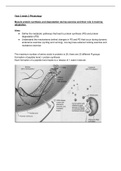
, ● The small ribosomal subunit (40s) is the decoder that reads the genetic code in mRNAs
● The large ribosomal subunit (60s) is the protein generator that catalyses peptide bond
formation
● The human genome contains 20,500 genes
● How is it possible that there are more than 40,000 proteins?
Muscle protein synthesis and degradation during exercise and their role in training
adaptation
Aims
● Define the metabolic pathways that lead to protein synthesis (PS) and protein
degradation (PD)
● Understand the mechanisms behind changes in PS and PD that occur during dynamic
endurance exercise (cycling and running), one leg knee extensor kicking exercise and
resistance exercise
The maximum number of amino acids in proteins is 20; there are 20 different R groups
Formation of peptide bond = protein synthesis
Each formation of a peptide bond leads to a release of 1 water molecule
, ● The small ribosomal subunit (40s) is the decoder that reads the genetic code in mRNAs
● The large ribosomal subunit (60s) is the protein generator that catalyses peptide bond
formation
● The human genome contains 20,500 genes
● How is it possible that there are more than 40,000 proteins?


