Monika Kirloskar-Steinbach & Leah Kalmanson:
Knowledge Claims and Locality: The Grand
Narrative of Universal Knowledge
Info sites:
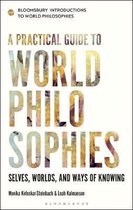
About the whole book:
Traditions throughout the world and across history have tackled fundamental questions about the
human condition. This one-of-a-kind guide shows how these different philosophies can be
effectively studied together. Monika Kirloskar-Steinbach's and Leah Kalmanson's introduction
marks a break from conventional approaches. Instead of assuming philosophy has always operated
with a single, easily identifiable conceptual framework across space and time, which we call-and
have always called-philosophy, they attest to the plurality of concepts and methods adopted at
different times and places. The book serves as a practical teaching guide to the theoretical and
methodological diversification of philosophy as practiced in academia today. Complementing the
Bloomsbury Introductions to World Philosophies series, it covers a variety of traditions featured in
the book series, exploring how Anglo-American, Chinese, Indian, African, Islamicate, and Maori
thinkers have all addressed fundamental questions such as: * How do we understand ourselves
and our relations to others? * How do we understand our world? * How do we seek knowledge,
share knowledge, and, importantly, intervene in the norms of received knowledge when needed
Samenvatting
The grand narrative of universal knowledge
Effects of knowing world philosophy relationally:
- Affects the manner in which we study world philosophies
- Would impact upon some standard notions of conceiving philosophical practice
Take, for example, the view that true philosophy decontextualized, culturally invariant mode of
inquiry, meaning that its tools remain detached from their place of origin and that these tools are
applicable to complex phenomena of philosophical significance across the globe. A closer study of
this practice would reveal how philosophical beliefs, suppositions, and theories were formed and
influenced by specific sociopolitical factors at particular moments in time. The belief in an ahistorical,
transcendental, and universal mode of philosophical operation is itself a particular development
specific to a sociopolitical context.
To the point that the current self-positioning of academic philosophy may be directly
related to relatively recent historical developments may be abumbrated by drawing on parts of
Marshall G.S. Hodgson’s work. One result of the self-positioning of Western Europe was that
Western Europe's practices of scientific or artistic borrowing became invisible. To put it differently:
this world region extracted itself from the process of interregional exchange with the help of a
narrative that was conveniently "lifted out of its context and elevated into a self-creating entity unto
itself".
Hodgson notes one curious feature of this self-centering: Western Europe's self-affirmation
as being a unique civilization in human history is widely accepted across the globe today.
Furthermore, historical and geographical terms emanating from this self-positioning are taken as
being "indiscriminately scientific" by people located outside Western Europe. In consequence,
Western Europe's narrative of itself, and its place in the world, have become relatively universal
background presumptions in academic inquiry. Hodgson urges us not to accept this standard view.
Knowledge Claims and Locality: The Grand
Narrative of Universal Knowledge
Info sites:
About the whole book:
Traditions throughout the world and across history have tackled fundamental questions about the
human condition. This one-of-a-kind guide shows how these different philosophies can be
effectively studied together. Monika Kirloskar-Steinbach's and Leah Kalmanson's introduction
marks a break from conventional approaches. Instead of assuming philosophy has always operated
with a single, easily identifiable conceptual framework across space and time, which we call-and
have always called-philosophy, they attest to the plurality of concepts and methods adopted at
different times and places. The book serves as a practical teaching guide to the theoretical and
methodological diversification of philosophy as practiced in academia today. Complementing the
Bloomsbury Introductions to World Philosophies series, it covers a variety of traditions featured in
the book series, exploring how Anglo-American, Chinese, Indian, African, Islamicate, and Maori
thinkers have all addressed fundamental questions such as: * How do we understand ourselves
and our relations to others? * How do we understand our world? * How do we seek knowledge,
share knowledge, and, importantly, intervene in the norms of received knowledge when needed
Samenvatting
The grand narrative of universal knowledge
Effects of knowing world philosophy relationally:
- Affects the manner in which we study world philosophies
- Would impact upon some standard notions of conceiving philosophical practice
Take, for example, the view that true philosophy decontextualized, culturally invariant mode of
inquiry, meaning that its tools remain detached from their place of origin and that these tools are
applicable to complex phenomena of philosophical significance across the globe. A closer study of
this practice would reveal how philosophical beliefs, suppositions, and theories were formed and
influenced by specific sociopolitical factors at particular moments in time. The belief in an ahistorical,
transcendental, and universal mode of philosophical operation is itself a particular development
specific to a sociopolitical context.
To the point that the current self-positioning of academic philosophy may be directly
related to relatively recent historical developments may be abumbrated by drawing on parts of
Marshall G.S. Hodgson’s work. One result of the self-positioning of Western Europe was that
Western Europe's practices of scientific or artistic borrowing became invisible. To put it differently:
this world region extracted itself from the process of interregional exchange with the help of a
narrative that was conveniently "lifted out of its context and elevated into a self-creating entity unto
itself".
Hodgson notes one curious feature of this self-centering: Western Europe's self-affirmation
as being a unique civilization in human history is widely accepted across the globe today.
Furthermore, historical and geographical terms emanating from this self-positioning are taken as
being "indiscriminately scientific" by people located outside Western Europe. In consequence,
Western Europe's narrative of itself, and its place in the world, have become relatively universal
background presumptions in academic inquiry. Hodgson urges us not to accept this standard view.