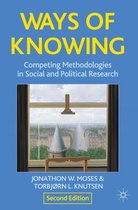
M O S E S
&
K N U T S E N
W A Y S
O F
K N O W I N G :
C O M P E T I N G
M E T H O D O L O G I E S
I N
S O C I A L
A N D
P O L I T I C A L
R E S E A R C H
SUMMARY
RENÉE
HUNTER
Jonathon
W.
Moses
and
Torbjørn
L.
Knutsen
(2012),
Ways
of
Knowing:
Competing
Methodologies
in
Social
and
Political
Research,
second
edition,
Palgrave:
Basingstoke.
1
, CONTENTS
1. Introduction
3
2. The
naturalist
philosophy
of
science
5
3. The
experimental
method
12
4. The
statistical
method
14
5. The
comparative
method
17
6. History,
interviews
and
case
studies
21
7. Sowing
doubts
about
naturalist
methodology
25
8. A
constructivist
philosophy
of
science
29
9. From
story
telling
to
telling
histories
35
10. Comparing
contexts
39
11. Contextualizing
statistics
42
12. Interpretive
experiments
45
13. Conclusion
47
2
, 1:
INTRODUCTION
Beneath
any
given
research
design
and
choice
of
methods
lies
a
researcher’s
(often
implicit)
understanding
of
the
nature
of
the
world
and
how
it
should
be
studies.
Two
central
methodological
perspectives
are:
naturalism
&
constructivism.
METHODOLOGICAL
FOUNDATIONS
Methodologies
are
not
the
same
as
methods.
Methods
are
tools,
and
methodologies
are
well-‐equipped
toolboxes
–
once
a
methodology
has
been
chosen,
the
choice
of
methods
becomes
merely
a
tactical
matter.
Sometimes,
different
methodologies
use
the
same
methods
for
different
purposes.
Ontology:
the
study
of
being.
What
is
the
world
really
made
of?
Epistemology:
the
(philosophical)
study
of
knowledge.
What
is
knowledge?
Methodology:
the
study
of
the
way
in
which
we
acquire
knowledge.
How
do
we
know?
(applied
epistemology)
sometimes
wrongfully
used
as
a
fancy
word
for
‘method’
*
method
=
research
techniques
or
technical
procedures
of
a
discipline
*
methodology
=
investigation
of
the
concepts,
theories
and
basic
principles
of
reasoning
on
a
subject
Marsh
&
Furlong:
‘Ontology
and
epistemologies
are
skins,
not
sweaters.’
Moses
&
Knutsen:
Ontology
and
epistemology
are
jackets
that
you
can
change,
depending
on
your
purpose
and
question
under
study.
It
is
actually
better
if
researchers
master
several
methods
and
methodologies,
so
they
can
consciously
choose.
The
world
can
be
perceived
in
different
and
contrasting
ways
and
Moses
&
Knutsen
advocate
a
pluralistic
approach
to
knowledge.
NATURALISM
Six
principle
features
of
naturalism:
1. Regularities
and
patterns
exist
in
an
independent
Real
World.
2. These
patterns
can
be
experienced/observed
directly
and
described
objectively.
3. Statements
can
be
tested
based
on
the
falsification
principle
and
correspondence
theory
of
truth.
4. There
is
a
distinction
between
value-‐laden
and
factual
statements.
5. The
aim
of
science
is
general/nomothetic
at
the
expense
of
the
particular/idiographic.
6. Human
knowledge
is
singular
and
cumulative.
3
, CONSTRUCTIVISM
Six
principles
of
constructivism:
1. The
world
is
not
independent
–
it
includes
social
facts.
2. Observations
depend
on
the
perspective
of
the
observer.
3. Observational
statements
may
contain
bias.
4. Even
factual
statements
are
value
laden.
5. Idiographic
knowledge
has
value
in
its
own
right.
6. There
is
value
in
understanding,
and
there
are
more
than
one
ways
to
understand.
Bottom
line
of
differences
with
naturalism:
the
recognition
that
people
are
intelligent,
reflective
and
willful,
and
that
these
characteristics
matter
for
how
we
understand
the
world.
There
is
a
possibility
of
multiple
worlds/experiences.
Don’t
think
that
constructivists
are
all
relativists
–
there
can
be
better
and
worse
constructivist
accounts.
Rather:
constructivists
are
more
hesitant
to
claim
truth
as
their
own.
SCIENTIFIC
REALISM
Blends
some
of
the
most
attractive
features
of
both
naturalist
and
constructivist
approaches.
In
ontology:
closest
to
naturalism
(but
agree
with
Weber:
man
is
an
animal
suspended
in
webs
of
meaning
he
himself
has
spun).
Many
layers,
but
a
Real
World
nonetheless
(ontology:
world
on
top
of
a
tiger
on
an
elephant
on
infinite
turtles).
The
best
way
to
access
these
layers
is
through
naturalist
approaches.
Ian
Shapiro:
the
core
commitment
of
scientific
realism
is
the
twofold
conviction
that
the
world
consists
of
causal
mechanisms
that
exist
independently
of
our
study
–
or
even
awareness
–
of
them,
and
that
the
methods
of
science
hold
the
best
possibility
of
our
grasping
their
true
character.
BUT:
there
are
no
universal
laws
there
can
be
no
neutrality
of
scientist
or
language.
Moses
&
Knutsen
identify
with
scientific
realism.
Good
science
should
be
driven
by
questions,
not
methods
–
methods
should
be
tailored
to
the
problems.
à
Where
they
differ
with
scientific
realism:
they
don’t
want
to
be
a
universal
ap-‐
proach,
but
want
methodological
pluralism.
4
&
K N U T S E N
W A Y S
O F
K N O W I N G :
C O M P E T I N G
M E T H O D O L O G I E S
I N
S O C I A L
A N D
P O L I T I C A L
R E S E A R C H
SUMMARY
RENÉE
HUNTER
Jonathon
W.
Moses
and
Torbjørn
L.
Knutsen
(2012),
Ways
of
Knowing:
Competing
Methodologies
in
Social
and
Political
Research,
second
edition,
Palgrave:
Basingstoke.
1
, CONTENTS
1. Introduction
3
2. The
naturalist
philosophy
of
science
5
3. The
experimental
method
12
4. The
statistical
method
14
5. The
comparative
method
17
6. History,
interviews
and
case
studies
21
7. Sowing
doubts
about
naturalist
methodology
25
8. A
constructivist
philosophy
of
science
29
9. From
story
telling
to
telling
histories
35
10. Comparing
contexts
39
11. Contextualizing
statistics
42
12. Interpretive
experiments
45
13. Conclusion
47
2
, 1:
INTRODUCTION
Beneath
any
given
research
design
and
choice
of
methods
lies
a
researcher’s
(often
implicit)
understanding
of
the
nature
of
the
world
and
how
it
should
be
studies.
Two
central
methodological
perspectives
are:
naturalism
&
constructivism.
METHODOLOGICAL
FOUNDATIONS
Methodologies
are
not
the
same
as
methods.
Methods
are
tools,
and
methodologies
are
well-‐equipped
toolboxes
–
once
a
methodology
has
been
chosen,
the
choice
of
methods
becomes
merely
a
tactical
matter.
Sometimes,
different
methodologies
use
the
same
methods
for
different
purposes.
Ontology:
the
study
of
being.
What
is
the
world
really
made
of?
Epistemology:
the
(philosophical)
study
of
knowledge.
What
is
knowledge?
Methodology:
the
study
of
the
way
in
which
we
acquire
knowledge.
How
do
we
know?
(applied
epistemology)
sometimes
wrongfully
used
as
a
fancy
word
for
‘method’
*
method
=
research
techniques
or
technical
procedures
of
a
discipline
*
methodology
=
investigation
of
the
concepts,
theories
and
basic
principles
of
reasoning
on
a
subject
Marsh
&
Furlong:
‘Ontology
and
epistemologies
are
skins,
not
sweaters.’
Moses
&
Knutsen:
Ontology
and
epistemology
are
jackets
that
you
can
change,
depending
on
your
purpose
and
question
under
study.
It
is
actually
better
if
researchers
master
several
methods
and
methodologies,
so
they
can
consciously
choose.
The
world
can
be
perceived
in
different
and
contrasting
ways
and
Moses
&
Knutsen
advocate
a
pluralistic
approach
to
knowledge.
NATURALISM
Six
principle
features
of
naturalism:
1. Regularities
and
patterns
exist
in
an
independent
Real
World.
2. These
patterns
can
be
experienced/observed
directly
and
described
objectively.
3. Statements
can
be
tested
based
on
the
falsification
principle
and
correspondence
theory
of
truth.
4. There
is
a
distinction
between
value-‐laden
and
factual
statements.
5. The
aim
of
science
is
general/nomothetic
at
the
expense
of
the
particular/idiographic.
6. Human
knowledge
is
singular
and
cumulative.
3
, CONSTRUCTIVISM
Six
principles
of
constructivism:
1. The
world
is
not
independent
–
it
includes
social
facts.
2. Observations
depend
on
the
perspective
of
the
observer.
3. Observational
statements
may
contain
bias.
4. Even
factual
statements
are
value
laden.
5. Idiographic
knowledge
has
value
in
its
own
right.
6. There
is
value
in
understanding,
and
there
are
more
than
one
ways
to
understand.
Bottom
line
of
differences
with
naturalism:
the
recognition
that
people
are
intelligent,
reflective
and
willful,
and
that
these
characteristics
matter
for
how
we
understand
the
world.
There
is
a
possibility
of
multiple
worlds/experiences.
Don’t
think
that
constructivists
are
all
relativists
–
there
can
be
better
and
worse
constructivist
accounts.
Rather:
constructivists
are
more
hesitant
to
claim
truth
as
their
own.
SCIENTIFIC
REALISM
Blends
some
of
the
most
attractive
features
of
both
naturalist
and
constructivist
approaches.
In
ontology:
closest
to
naturalism
(but
agree
with
Weber:
man
is
an
animal
suspended
in
webs
of
meaning
he
himself
has
spun).
Many
layers,
but
a
Real
World
nonetheless
(ontology:
world
on
top
of
a
tiger
on
an
elephant
on
infinite
turtles).
The
best
way
to
access
these
layers
is
through
naturalist
approaches.
Ian
Shapiro:
the
core
commitment
of
scientific
realism
is
the
twofold
conviction
that
the
world
consists
of
causal
mechanisms
that
exist
independently
of
our
study
–
or
even
awareness
–
of
them,
and
that
the
methods
of
science
hold
the
best
possibility
of
our
grasping
their
true
character.
BUT:
there
are
no
universal
laws
there
can
be
no
neutrality
of
scientist
or
language.
Moses
&
Knutsen
identify
with
scientific
realism.
Good
science
should
be
driven
by
questions,
not
methods
–
methods
should
be
tailored
to
the
problems.
à
Where
they
differ
with
scientific
realism:
they
don’t
want
to
be
a
universal
ap-‐
proach,
but
want
methodological
pluralism.
4