Vocabulary unit 1-46
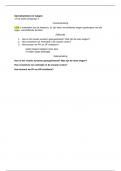
1 Work and jobs
1.1 What do you do?
In charge of + noun
Responsible for + verb +
-ing
Responsibility + infinitive
+ -ing
One of my responsibilities is to make sure that …
One of my responsibilities is making sure that …
You don’t say : ‘I’m a responsible’
1.2 Word combinations with ‘work’
If you work or have work, you have a job.
You don’t say someone has ‘a work’, you say ‘a job’.
Work is a place where you do your job.
You don’t say ‘at the work’ or ‘to the work’.
1.3 Types of job and types of work
A full-time job or is one for the whole of the normal week.
A part-time job or someone who works part-time works for less time
than a normal week.
A permanent job does not finish after a fixed period (=permanent
work)
A temporary job finishes after a fixed period (=temporary work)
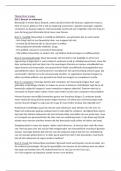
2 Ways of working
2.1 Working hours
“I am an office worker, it’s a nine-to-five job with regular working
hours”
“You need a swipe card to get into the office”
You can also say clock in and
clock out
Flexitime : working when I want within certain limits - as long as I do
enough hours each month
“I work in shifts and I have to clock on and clock off at the beginning
and the end of every shift”- day shifts and night shifts
Working overtime : working more hours than usual for more money
“Unlike most other people in my department who commute to work
every day, I work from home and avoid the long journeys that some
commuters do every day” = teleworking or telecommuting
2.2 Nice work if you can get it
Words used in front of job and work :
Satisfying, stimulating, fascinating, exciting : the work is
interesting and gives you positive feelings
Dull, boring, uninteresting, unstimulating : the work is not
interesting
1
, Repetitive, routine : the work involves doing the same things again
and again
Tiring, tough, hard, demanding : the work is difficult and makes
you tired
2
,2.3 Nature of work
+ noun
human contact
long hours
teamwork
My work involves
+ -ing
I like / dislike /
working with
prefer / enjoy
figures
dealing with
customers
solving problems
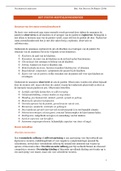
3 Recruitment and selection
3.1 Recruitment
Recruitment (BrE) / hiring (AmE) : the process of finding people for
particular jobs
A recruit / a hire : someone who has been recruited
To join a company : the company employs or hires someone
Recruiters, recruitment agencies, employment agencies :
interimkantoor
Headhunters = outside specialists : used to find people for very
important jobs and to persuade them to leave the organization they
already work for
Headhunted / in a process of headhunting : key people recruited
3.2 Applying for a job
Situations vacant : where you can see a job advertisement
Applying for a job = solliciteren voor een job
An application form = een sollicitatiebrief
“looking for a job on a jobs website”
“He made an application, sending in his CV (curriculum vitae – a
document describing your education, qualifications and previous jobs,
that you send to a prospective employer) and a covering letter
(explaining why he wanted the job and why he was the right person for
it)”
3.3 Selection procedures
Selection process : the methods that the company uses to recruit
people
1) Background of applicants : their experience of different jobs and
their educational qualifications
2) Invite interesting candidates to a group discussion, with individual
interviews with each candidate. Give candidates written
psychometric tests to assess their intelligence and personality
3) Shortlist 3-4 candidates, checking their references by writing to
their referees (previous employers, teachers, …)
Offer the job to someone, and if they turn it down we have to think
again (if an applicant gets another job offer), if they accept we hire
them. Only if we find the right person we appoint someone.
4 Skills and qualifications
3
, 4.1 Education and training
Graduates : people who’ve just left university – have good paper
qualifications but no work experience
“Education should not train students for a particular job”
“Graduated from Oxford University with a degree in philosophy”
“It’s more useful to do training in a practical subject : train as a
scientist, and qualify as a biologist or a doctor”
In-house training : courses within the company
Into management development, where managers regularly go on
specialized courses in leadership
Acquire experience : get knowledge trough doing things
a master’s degree a qualification you can get after one or
two years of graduate study
a Master’s of Business a master’s degree in advanced
Administration (MBA) business studies.
4.2 Skilled and unskilled
A skill : a particular ability to do something well, especially because you
have learned and practised it
Jobs and people who do them can be described as :
Highly skilled (ex. car designer)
Skilled (ex. car production manager)
Semi-skilled (ex. taxi driver)
Unskilled (ex. car cleaner)
Someone is :
+ noun + -ing
skilled at or customer communicati
skilled in care ng
electronics using excel
computers
good
figures
with
people
4.3 The right person
Companies look for people who are :
Methodical, systematic, organized : working in a planned, orderly
way
Computer-literate : good with computers
Numerate : good with numbers
Motivated : very keen to do well in their job because they find it
interesting
Talented : very good at what they do
Self-starters : they must be proactive, self-motivated or self-
driven – good at working on their own
Team players : people who work well with other people
4
1 Work and jobs
1.1 What do you do?
In charge of + noun
Responsible for + verb +
-ing
Responsibility + infinitive
+ -ing
One of my responsibilities is to make sure that …
One of my responsibilities is making sure that …
You don’t say : ‘I’m a responsible’
1.2 Word combinations with ‘work’
If you work or have work, you have a job.
You don’t say someone has ‘a work’, you say ‘a job’.
Work is a place where you do your job.
You don’t say ‘at the work’ or ‘to the work’.
1.3 Types of job and types of work
A full-time job or is one for the whole of the normal week.
A part-time job or someone who works part-time works for less time
than a normal week.
A permanent job does not finish after a fixed period (=permanent
work)
A temporary job finishes after a fixed period (=temporary work)
2 Ways of working
2.1 Working hours
“I am an office worker, it’s a nine-to-five job with regular working
hours”
“You need a swipe card to get into the office”
You can also say clock in and
clock out
Flexitime : working when I want within certain limits - as long as I do
enough hours each month
“I work in shifts and I have to clock on and clock off at the beginning
and the end of every shift”- day shifts and night shifts
Working overtime : working more hours than usual for more money
“Unlike most other people in my department who commute to work
every day, I work from home and avoid the long journeys that some
commuters do every day” = teleworking or telecommuting
2.2 Nice work if you can get it
Words used in front of job and work :
Satisfying, stimulating, fascinating, exciting : the work is
interesting and gives you positive feelings
Dull, boring, uninteresting, unstimulating : the work is not
interesting
1
, Repetitive, routine : the work involves doing the same things again
and again
Tiring, tough, hard, demanding : the work is difficult and makes
you tired
2
,2.3 Nature of work
+ noun
human contact
long hours
teamwork
My work involves
+ -ing
I like / dislike /
working with
prefer / enjoy
figures
dealing with
customers
solving problems
3 Recruitment and selection
3.1 Recruitment
Recruitment (BrE) / hiring (AmE) : the process of finding people for
particular jobs
A recruit / a hire : someone who has been recruited
To join a company : the company employs or hires someone
Recruiters, recruitment agencies, employment agencies :
interimkantoor
Headhunters = outside specialists : used to find people for very
important jobs and to persuade them to leave the organization they
already work for
Headhunted / in a process of headhunting : key people recruited
3.2 Applying for a job
Situations vacant : where you can see a job advertisement
Applying for a job = solliciteren voor een job
An application form = een sollicitatiebrief
“looking for a job on a jobs website”
“He made an application, sending in his CV (curriculum vitae – a
document describing your education, qualifications and previous jobs,
that you send to a prospective employer) and a covering letter
(explaining why he wanted the job and why he was the right person for
it)”
3.3 Selection procedures
Selection process : the methods that the company uses to recruit
people
1) Background of applicants : their experience of different jobs and
their educational qualifications
2) Invite interesting candidates to a group discussion, with individual
interviews with each candidate. Give candidates written
psychometric tests to assess their intelligence and personality
3) Shortlist 3-4 candidates, checking their references by writing to
their referees (previous employers, teachers, …)
Offer the job to someone, and if they turn it down we have to think
again (if an applicant gets another job offer), if they accept we hire
them. Only if we find the right person we appoint someone.
4 Skills and qualifications
3
, 4.1 Education and training
Graduates : people who’ve just left university – have good paper
qualifications but no work experience
“Education should not train students for a particular job”
“Graduated from Oxford University with a degree in philosophy”
“It’s more useful to do training in a practical subject : train as a
scientist, and qualify as a biologist or a doctor”
In-house training : courses within the company
Into management development, where managers regularly go on
specialized courses in leadership
Acquire experience : get knowledge trough doing things
a master’s degree a qualification you can get after one or
two years of graduate study
a Master’s of Business a master’s degree in advanced
Administration (MBA) business studies.
4.2 Skilled and unskilled
A skill : a particular ability to do something well, especially because you
have learned and practised it
Jobs and people who do them can be described as :
Highly skilled (ex. car designer)
Skilled (ex. car production manager)
Semi-skilled (ex. taxi driver)
Unskilled (ex. car cleaner)
Someone is :
+ noun + -ing
skilled at or customer communicati
skilled in care ng
electronics using excel
computers
good
figures
with
people
4.3 The right person
Companies look for people who are :
Methodical, systematic, organized : working in a planned, orderly
way
Computer-literate : good with computers
Numerate : good with numbers
Motivated : very keen to do well in their job because they find it
interesting
Talented : very good at what they do
Self-starters : they must be proactive, self-motivated or self-
driven – good at working on their own
Team players : people who work well with other people
4