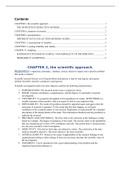
Contents
CHAPTER 2, the scientific approach....................................................................................................1
THE HYPOTETICO-DEDUCTIVE METHOD................................................................................2
CHAPTER 6, elements of research........................................................................................................2
CHAPTER 9, questionnaires.................................................................................................................3
DIFFERENT DATA COLLECTION METHODS AD/DIS..............................................................4
CHAPTER 11, measurement of variables..............................................................................................5
CHAPTER 12, scaling reliability and validity.......................................................................................5
CHAPER 13, sampling..........................................................................................................................7
RAPRESENTATIVENESS OF SAMPLE AND NORMALITY OF DISTRIBUTION....................7
PROBABILITY SAMPPLING..........................................................................................................8
CHAPTER 2, the scientific approach.
RESEARCH = organized, systematic, database, critical, objective inquiry into a specific problem
that needs a solution.
Scientific research focuses on solving problems and pursues a step-by-step logical, and rigours
method. Scientific research is purposive and rigorous.
Scientific investigation tend to be more objective and has the following characteristics.
1. PURPOSIVENESS. The research needs to have a purposive focus.
2. RIGOR. Connotes carefulness, scrupulousness, and the degree of exactitude in research
investigation.
3. TESTABILITY. Is a property that applies to the hypotheses of a study. HYPOTHESIS is a
testable statement which predicts what you expect to find in your empirical data.
4. REPLICABILITY. The result of hypotheses should be supported again and again when the
same type of research is repeated. To the extent that this does happen, we will gain
confidence in the scientific nature of our research. Replication is made possible by a detailed
description of the design details of the study. This information should create the possibility to
replicate the research.
5. PRECISION AND CONFIDENCE. The first, refer to the closeness of the findings to reality
based on a sample. The degree of assurance of the result. The second, refers to the probability
that our estimations are correct. (95% confidence interval). The greater these 2 characteristics
are, the more scientific is the investigation.
6. OBJECTIVITY. This deriver from data, not subjective values. The conclusion of the data
analysis should be objective. The more objective, the more scientific…
7. GENERALIZABILITY. Refers to the scope of applicability of the research findings in one
organizational setting to other settings. It does not necessary decrease the scientific value of
the investigation.
8. PARSIMONY. Can be introduced with a good understanding of the problem and the
important factors that influence it.
, THE HYPOTETICO-DEDUCTIVE METHOD
= provides a useful, systematic approach for generating knowledge to solve basic and managerial
problems. By the philosopher Karl Popper. It has 7 steps.
1. IDENTIFY A BROAD PROBLEM AREA.
2. DEFINE THE PROBLEM STATEMENT. It includes the general objectives and the research
question. Preliminary information gathering.
3. DEVELOP HYPOTHESES. Variables are examined in explaining why the problem occurs.
The network of associations identified among variables is then theoretically woven. Certain
hypotheses can be generated. This must meet 2 requirements: must be testable and falsifiable.
4. DETERMINE MEASURES.
5. DATA COLLECTION. Data with respect to each variable in the hyp. need to be obtained.
These data then form the basis for data analysis.
6. DATA ANALYSIS. The data gathered are statistically analyzed to see if the hipotheses have
been supported. Hyp. are tested through appropriate statistical analysis.
7. INTERPRETATION OF DATA. Here we must decide whether our hyp. are supported or not
by interpreting the meaning of the results of the data.
DEDUCTIVE REASONING = to test a theory
INDUCTIVE REASONING = the opposite. Observe a phenomena and arrive to a conclusion.
In management and behavioural areas is not always possible to conduct investigations that are 100%
scientific. There are alternative approaches:
POSITIVISM = the world operates by laws of cause-effect. There is an objective truth.
CONSTRUCTIONISM = the world is fundamentally mentally constructed. They aim to
research not the truth but the rules people use to make sense of the world by investing what
happen in people’s mind.
CRITICAL REALISM = is a combination of the belief in an external reality, with the
rejection that this reality can be objectively measured. Observations will always be subject of
interpretations. We need to use triangulation across multiple methods, observations, and
researches to get a better idea of what is happening around us.
PRAGMATISM = describe the research as a process where concepts and meaning are
generalizations of our past actions. Truth is a tentative and change over time. Different
researchers may have different ideas about what is happening around us.
CHAPTER 6, elements of research
RESEARCH DESIGN = plan for collection, measurement, and analysis of data, created to
answer the research question. Help you meet your research objectives.
RESEARCH STRATEGY
EXPERIMENTS = associated with the hypo-deductive method. The purpose is to study
casual relationships between variables. In an experiment, the researcher manipulate the
variable to study the effect of this manipulation.
SURVEY RESEARCH = is a system of collecting information from or about people to
describe, or explain their knowledge and behaviour. Subject ad costumer satisfaction. It allow
to collect quantitative and qualitative data among different type of researches.
ETHNOGRAPHY = the researcher observe records and engage the daily life of another
culture. Involves the immersion in the culture that is being study.
CHAPTER 2, the scientific approach....................................................................................................1
THE HYPOTETICO-DEDUCTIVE METHOD................................................................................2
CHAPTER 6, elements of research........................................................................................................2
CHAPTER 9, questionnaires.................................................................................................................3
DIFFERENT DATA COLLECTION METHODS AD/DIS..............................................................4
CHAPTER 11, measurement of variables..............................................................................................5
CHAPTER 12, scaling reliability and validity.......................................................................................5
CHAPER 13, sampling..........................................................................................................................7
RAPRESENTATIVENESS OF SAMPLE AND NORMALITY OF DISTRIBUTION....................7
PROBABILITY SAMPPLING..........................................................................................................8
CHAPTER 2, the scientific approach.
RESEARCH = organized, systematic, database, critical, objective inquiry into a specific problem
that needs a solution.
Scientific research focuses on solving problems and pursues a step-by-step logical, and rigours
method. Scientific research is purposive and rigorous.
Scientific investigation tend to be more objective and has the following characteristics.
1. PURPOSIVENESS. The research needs to have a purposive focus.
2. RIGOR. Connotes carefulness, scrupulousness, and the degree of exactitude in research
investigation.
3. TESTABILITY. Is a property that applies to the hypotheses of a study. HYPOTHESIS is a
testable statement which predicts what you expect to find in your empirical data.
4. REPLICABILITY. The result of hypotheses should be supported again and again when the
same type of research is repeated. To the extent that this does happen, we will gain
confidence in the scientific nature of our research. Replication is made possible by a detailed
description of the design details of the study. This information should create the possibility to
replicate the research.
5. PRECISION AND CONFIDENCE. The first, refer to the closeness of the findings to reality
based on a sample. The degree of assurance of the result. The second, refers to the probability
that our estimations are correct. (95% confidence interval). The greater these 2 characteristics
are, the more scientific is the investigation.
6. OBJECTIVITY. This deriver from data, not subjective values. The conclusion of the data
analysis should be objective. The more objective, the more scientific…
7. GENERALIZABILITY. Refers to the scope of applicability of the research findings in one
organizational setting to other settings. It does not necessary decrease the scientific value of
the investigation.
8. PARSIMONY. Can be introduced with a good understanding of the problem and the
important factors that influence it.
, THE HYPOTETICO-DEDUCTIVE METHOD
= provides a useful, systematic approach for generating knowledge to solve basic and managerial
problems. By the philosopher Karl Popper. It has 7 steps.
1. IDENTIFY A BROAD PROBLEM AREA.
2. DEFINE THE PROBLEM STATEMENT. It includes the general objectives and the research
question. Preliminary information gathering.
3. DEVELOP HYPOTHESES. Variables are examined in explaining why the problem occurs.
The network of associations identified among variables is then theoretically woven. Certain
hypotheses can be generated. This must meet 2 requirements: must be testable and falsifiable.
4. DETERMINE MEASURES.
5. DATA COLLECTION. Data with respect to each variable in the hyp. need to be obtained.
These data then form the basis for data analysis.
6. DATA ANALYSIS. The data gathered are statistically analyzed to see if the hipotheses have
been supported. Hyp. are tested through appropriate statistical analysis.
7. INTERPRETATION OF DATA. Here we must decide whether our hyp. are supported or not
by interpreting the meaning of the results of the data.
DEDUCTIVE REASONING = to test a theory
INDUCTIVE REASONING = the opposite. Observe a phenomena and arrive to a conclusion.
In management and behavioural areas is not always possible to conduct investigations that are 100%
scientific. There are alternative approaches:
POSITIVISM = the world operates by laws of cause-effect. There is an objective truth.
CONSTRUCTIONISM = the world is fundamentally mentally constructed. They aim to
research not the truth but the rules people use to make sense of the world by investing what
happen in people’s mind.
CRITICAL REALISM = is a combination of the belief in an external reality, with the
rejection that this reality can be objectively measured. Observations will always be subject of
interpretations. We need to use triangulation across multiple methods, observations, and
researches to get a better idea of what is happening around us.
PRAGMATISM = describe the research as a process where concepts and meaning are
generalizations of our past actions. Truth is a tentative and change over time. Different
researchers may have different ideas about what is happening around us.
CHAPTER 6, elements of research
RESEARCH DESIGN = plan for collection, measurement, and analysis of data, created to
answer the research question. Help you meet your research objectives.
RESEARCH STRATEGY
EXPERIMENTS = associated with the hypo-deductive method. The purpose is to study
casual relationships between variables. In an experiment, the researcher manipulate the
variable to study the effect of this manipulation.
SURVEY RESEARCH = is a system of collecting information from or about people to
describe, or explain their knowledge and behaviour. Subject ad costumer satisfaction. It allow
to collect quantitative and qualitative data among different type of researches.
ETHNOGRAPHY = the researcher observe records and engage the daily life of another
culture. Involves the immersion in the culture that is being study.