NR 566 Week 5 Assignment: Immunization – Hepatitis B | 100% CORRECT
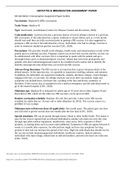
NR 566 Week 5 Immunization Assignment Paper Outline Vaccination: Hepatitis B (HB) vaccination Trade Name: Heplisav-B Type: Inactivated, recombinant (Centers for Disease Control and Prevention, 2020) Contraindication: A person who has a previous history of severe allergic reaction to a previous HB vaccination. If the individual has a minor, moderate or severe illness such as a cold, he/she should wait until they are fully recovered prior to getting a HB vaccine. It is also suggested to postpone a HB vaccine if the individual has a fever. Individuals who had an allergic reaction to yeast or neomycin should not get this vaccine (CDC, 2020). Precautions: The provider should verify allergies, health status and immunization records of the patient prior to ordering vaccines. Pregnant women can receive this vaccine and this vaccine can be administered with other vaccines, but it is important to speak with the patient and get a thorough history prior to administering the vaccines. Infants that were born prematurely and patients who have immunosuppression need to be considered with caution and to identify the benefits outweigh the risks before they can receive the HB vaccine. Adverse Drug Reactions: The HB vaccine is an injection that is given intramuscularly in the deltoid muscle. At the injection site, it is possible to experience swelling, redness, and soreness. In addition, the individual can experience headache, malaise, dizziness, fatigue, vision changes, ringing in the ears, or can faint. An allergic reaction can occur after vaccination. Signs and symptoms can include hives, fast heart rate, swelling of the face and throat, weakness, or dizziness. If this occurs, this is considered to be a medical emergency and the individual needs to go to the nearest hospital (CDC, 2020). Minimum age: Heplisav-B is indicated for adults age of 18 years old or older. Engerix-B and Recombivax HB, which are the other two HB vaccines, can be given at birth. Routine vaccination schedule: Heplisav-B is the first and only 2-dose series HB vaccine available for adults that are 18 years old or older (Heplisav-B, 2019). The vaccine comes in a prefilled 0.5 mL syringe. Minimum interval between doses (if applicable): One month apart. The patient gets one dose and will need to get the second dose one month after the first dose (CDC, 2020). Special situations: HB can be spread through semen, blood or other bodily fluids. This makes it easy for the virus to spread from an infected individual to another who does not carry the virus through injectable medical equipment, needlesticks, intercourse, birth, exposure to blood products, or sharing items such as razors and toothbrush. Symptoms of HB can appear between 8 weeks to 5 months after exposure. An infected host might not have any symptoms for long periods of time and can increase the spread of the virus. High risk individuals that should receive the vaccine include immunosuppressed individuals, healthcare workers, dialysis patients, individuals who inject drugs, infants born to infected mothers, and men who have sex with men (CDC, 2019).
Written for
- Institution
-
Chamberlain College Of Nursing
- Course
-
NR 566 / NR566
Document information
- Uploaded on
- January 4, 2022
- Number of pages
- 3
- Written in
- 2021/2022
- Type
- Case
- Professor(s)
- Uinknown
- Grade
- A+
Subjects
-
nr 566 week 5 assignment immunization – hepatitis b | 100 correct

Also available in package deal