Sociology Revision Notes
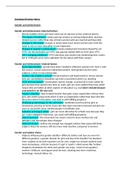
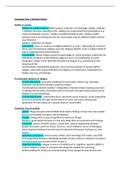
Gender and Achievement
Gender and Achievement- External factors
- Recent statistics show girls have come out on top due to four external factors:
- The impact of feminism= media portrays women as having independent, business
related success rather than stay at home women who are married and have kids
- Changes in the family= changes in family types have meant women don’t feel the
need to rely on man, education is now important
- Changes in women’s employment= female employment increased, Equal Pay act
1970, sex discrimination act 1975, pay gap has halved (30% to 15%) since 1975
- Girl’s changing ambitions= 1970 interviews saw women not mentioning their career,
but in 1990 girls were more optimistic for the future with their careers
Gender and Achievement- Internal factors
- Equal opportunities= groups have been created to influence women into ‘men’s’ jobs
like science, school visits from influential women, both genders do the same
subjects, school is now meritocratic
- Positive role models in school= female teachers and head teachers, shows women
who are committed to education can have a successful career e.g. teaching
- GCSE and coursework= examination system change, coursework is more suited for
girls because they spend more time on work, girls are more patient than boys which
means they are better at other aspects of education e.g. oral (don’t include because
coursework is on the way out)
- Teacher attention= boys treated harsher than girls, lower expectation of boys than
girls, girls prefer group work which is seen as cooperative rather than boys who like
discussion which is disruptive, may lead to self-fulfilling prophecy
- Challenging stereotypes in the curriculum= textbooks used to portray girls as
housewives and stay at home mums but they have now been removed and girls are
seen as successful career minded people in textbooks now
- Selection and league tables= girls are more attractive for schools now because they
are ‘more intelligent’ than boys, can cause self-fulfilling prophecy
- Liberal feminists= this movement has meant school is more meritocratic and
attitudes and stereotypes have changed
- Radical feminists= believe not enough has changed, believe that school still limits
subject choice for women, still too many male teachers compared to women.
Gender and subject choice
- Subjects influenced by gender identity= different clothes and toys are worn for
different genders, a gender domain for girls and boys that shouldn’t be deviated
from, subjects to do with machines are for men, single-sex schools students have
more stereotypes, criticism by peers if a girl is ‘sporty’ called names like ‘lesbian’,
imaginary boundaries for what each gender can enjoy, careers have genders,
women= childcare, nursing personal services, cleaning and men= machines,
technology, manual labour etc.
Gender and Achievement
Gender and Achievement- External factors
- Recent statistics show girls have come out on top due to four external factors:
- The impact of feminism= media portrays women as having independent, business
related success rather than stay at home women who are married and have kids
- Changes in the family= changes in family types have meant women don’t feel the
need to rely on man, education is now important
- Changes in women’s employment= female employment increased, Equal Pay act
1970, sex discrimination act 1975, pay gap has halved (30% to 15%) since 1975
- Girl’s changing ambitions= 1970 interviews saw women not mentioning their career,
but in 1990 girls were more optimistic for the future with their careers
Gender and Achievement- Internal factors
- Equal opportunities= groups have been created to influence women into ‘men’s’ jobs
like science, school visits from influential women, both genders do the same
subjects, school is now meritocratic
- Positive role models in school= female teachers and head teachers, shows women
who are committed to education can have a successful career e.g. teaching
- GCSE and coursework= examination system change, coursework is more suited for
girls because they spend more time on work, girls are more patient than boys which
means they are better at other aspects of education e.g. oral (don’t include because
coursework is on the way out)
- Teacher attention= boys treated harsher than girls, lower expectation of boys than
girls, girls prefer group work which is seen as cooperative rather than boys who like
discussion which is disruptive, may lead to self-fulfilling prophecy
- Challenging stereotypes in the curriculum= textbooks used to portray girls as
housewives and stay at home mums but they have now been removed and girls are
seen as successful career minded people in textbooks now
- Selection and league tables= girls are more attractive for schools now because they
are ‘more intelligent’ than boys, can cause self-fulfilling prophecy
- Liberal feminists= this movement has meant school is more meritocratic and
attitudes and stereotypes have changed
- Radical feminists= believe not enough has changed, believe that school still limits
subject choice for women, still too many male teachers compared to women.
Gender and subject choice
- Subjects influenced by gender identity= different clothes and toys are worn for
different genders, a gender domain for girls and boys that shouldn’t be deviated
from, subjects to do with machines are for men, single-sex schools students have
more stereotypes, criticism by peers if a girl is ‘sporty’ called names like ‘lesbian’,
imaginary boundaries for what each gender can enjoy, careers have genders,
women= childcare, nursing personal services, cleaning and men= machines,
technology, manual labour etc.