Reproduction
A where
biological process a
living organism produces offspring
'
.
Genes transferred essential for survival i. evolution
-
are =
.
*
Reproductive success =
number of viable offspring an individual produces .
*
Reproductive strategy depends on how well an organism utilises energy to produce i. care for
offspring .
i. r -
strategy
More energy to produce MANY offspring
9
Little energy / time in
parental care
•
.
'
Many offspring die before adulthood but sufficient numbers survive to reproduce .
K
2
strategy
-
.
Fewer offspring produced
•
•
More in parental care
energy
Offspring better chance of survival
•
=
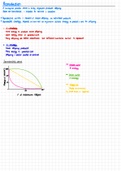
survivorship curve
concave curve
R strategy
-
-
is
1000 -
•
§
5
-
s Convex curve
n 100 -
* K strategy
-
-
§
E 10 -
-
z
Straight line
Steady survivorship
'
150
0
100
Eg small birds or squirrels .
% of maximum lifespan
, Courtship behavioural patterns that lead to mating and then offspring .
Purposes : I . Ensures both sexes are ready for mating
2. Saves
energy
=
help identify mates from same species (avoids unsuccessful mating )
Choose suitable mate [ males T chance of survival)
3. that are larger & stronger =
offspring
* Visual stimuli
E.g. Peacocks tail feathers
'
Fireflies flash specific light pattern .
* sound stimuli
E.
g Frogs and birds
* chemical stimuli
Females secrete pheromones :
signals they are sexually mature
E.g. Moths, dogs, female lions
*
Physical movement
Scorpions dance
•
Male tortoises t head
message
'
Male does aerobatics
eagle
'
Male weaver birds nests
•
make
⑨
• Environmental changes can affect mating .
'
Mammals = short mating season : births occur at most favourable times .
A where
biological process a
living organism produces offspring
'
.
Genes transferred essential for survival i. evolution
-
are =
.
*
Reproductive success =
number of viable offspring an individual produces .
*
Reproductive strategy depends on how well an organism utilises energy to produce i. care for
offspring .
i. r -
strategy
More energy to produce MANY offspring
9
Little energy / time in
parental care
•
.
'
Many offspring die before adulthood but sufficient numbers survive to reproduce .
K
2
strategy
-
.
Fewer offspring produced
•
•
More in parental care
energy
Offspring better chance of survival
•
=
survivorship curve
concave curve
R strategy
-
-
is
1000 -
•
§
5
-
s Convex curve
n 100 -
* K strategy
-
-
§
E 10 -
-
z
Straight line
Steady survivorship
'
150
0
100
Eg small birds or squirrels .
% of maximum lifespan
, Courtship behavioural patterns that lead to mating and then offspring .
Purposes : I . Ensures both sexes are ready for mating
2. Saves
energy
=
help identify mates from same species (avoids unsuccessful mating )
Choose suitable mate [ males T chance of survival)
3. that are larger & stronger =
offspring
* Visual stimuli
E.g. Peacocks tail feathers
'
Fireflies flash specific light pattern .
* sound stimuli
E.
g Frogs and birds
* chemical stimuli
Females secrete pheromones :
signals they are sexually mature
E.g. Moths, dogs, female lions
*
Physical movement
Scorpions dance
•
Male tortoises t head
message
'
Male does aerobatics
eagle
'
Male weaver birds nests
•
make
⑨
• Environmental changes can affect mating .
'
Mammals = short mating season : births occur at most favourable times .