NR 325 FINAL STUDY GUIDE Neurology(GRADED A)
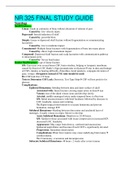
NR 325 FINAL STUDY GUIDE Neurology Skull Fractures- Linear- break in continuity of bone without alteration of relation of part. Caused by- low velocity injury Depressed- Inward indention of skull Caused by- powerful blow Simple- Linear or depressed skull fracture without fragmentation or communicating lacerations. Caused by- low to moderate impact Comminuted- Multiple linear fractures with fragmentation of bone into many pieces Caused by- direct, high momentum impact Compound- Depressed skull fracture and scalp laceration with communication pathway to intracranial cavity Caused by- Severe head injury Basilar Skull fracture- type of linear fracture. S/S: Can occur over several hours CSF, brain otorrhea, bulging or tympanic membrane caused by blood or CSF, Battle’s Sign (postauricular ecchymosis→ tear in dura and leakage of CSF), tinnitus or hearing difficulty, rhinorrhea, facial paralysis, conjugate deviation of gaze, vertigo. (Orogastric instead of NG tube should be used) Dx: CSF leak first, CT Scan. Tests to Determine CSF Leak: Destrosix, Test Tape Strip→ CSF will test positive for glucose. Complications: Epidural Hematoma- bleeding between dura and inner surface of skull Associated with: linear fracture crossing major artery in dura→ tear Venous: tear of the dural venous sinus and develop slowly. Arterial: middle meningeal artery under temporal bone is often torn S/S: Initial unconsciousness with brief lucidness followed by decrease in LOC, headache, nausea and vomiting. Tx: Rapid surgical intervention to evacuate hematoma and prevent herniation, manage ICP. Subdural Hematoma- bleeding between dura mater and arachnoid layer of meninges. Usually venous in origin. Slower to develop. Acute Subdural Hematoma- Manifests in 24-48 hours. S/S: Similar to those associated with tissue compression in increased ICP, decreased LOC, headache. Appearance: May range from drowsy, confused and unconscious. Ipsilateral pupil dilates and becomes fixed if ICP is significantly elevated. Progression: Immediate deterioration Complications: Blunt force injuries may cause underlying brain injury→ cerebral edema. Tx: Craniotomy, evacuation and decompression Subacute Subdural Hematoma- 48 hours- 2 weeks after severe trauma
Written for
- Institution
-
Chamberlain College Of Nursing
- Course
-
NR 325
Document information
- Uploaded on
- December 15, 2021
- Number of pages
- 42
- Written in
- 2021/2022
- Type
- Exam (elaborations)
- Contains
- Questions & answers
Subjects
-
nr 325 final study guide neurology skull fractures linear break in continuity of bone without alteration of relation of part caused by low velocity injury depressed inward indention of skull caus

Document also available in package deal