AQA GCSE Biology notes Topic 2 – Organisation
Topic 2 – Organisation
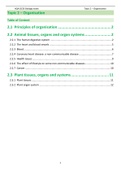
Table of Content
2.1 Principles of organisation ................................................. 2
2.2 Animal tissues, organs and organ systems ........................ 2
2.2.1 The human digestive system ......................................................................................2
2.2.2 The heart and blood vessels .......................................................................................5
2.2.3 Blood ...........................................................................................................................6
2.2.4 Coronary heart disease: a non-communicable disease ..............................................7
2.2.5 Health issues ...............................................................................................................9
2.2.6 The effect of lifestyle on some non-communicable diseases ...................................10
2.2.7 Cancer .......................................................................................................................10
2.3 Plant tissues, organs and systems ................................... 11
2.3.1 Plant tissues ..............................................................................................................11
2.3.2 Plant organ system ...................................................................................................12
1
, AQA GCSE Biology notes Topic 2 – Organisation
2.1 Principles of organisation
Cells → tissues → organs → organ system → organism
Cells - basic structural & functional units of living organisms
Muscular • Contracts to move things attached to it
• In stomach, contracts to move food
Glandular • Contains secretory cells
• Produce & release substances (enzymes, hormones)
Epithelial • Covers outside of body & internal organs
Tissues - a group of cells with similar structure & function working tgt
In stomach
Muscular • Contract to churn food
Glandular • Produce digestive juice to digest food with enzyme & HCl
Epithelial • Covers outside & inside of stomach
Organs - a group of different tissues working together to perform specific function
Organ system - a group of organs working together to perform specific functions
Organisms - a group of organ system working together
2.2 Animal tissues, organs and organ systems
2.2.1 The human digestive system
Balanced diet - right amount of nutrients & energy for needs
2
, AQA GCSE Biology notes Topic 2 – Organisation
What is the function of digestive system?
• An organ system in which several organs work tgt to digest & absorb food
Mouth How can mouth break down starchy foods?
• Teeth break down food
• Saliva contains amylase
Salivary • Produce saliva containing amylase
gland
Oesophagus • Muscular tube which move food to stomach
Stomach • Pummels food with muscular wall
• Produce protease, pepsin & HCl
• Gastric juice
• Water to moisten food
• HCl (pH2) to kill bacteria & help protease to work
• Pepsin to break proteins into amino acid
• Mucus to lubricate surface & protect from digestive enzyme & HCl
Bile • Made in liver & store in gall bladder
(alkaline) • Neutralise HCl from stomach to provide alkaline condition
• Emulsifies fats to break large lipid droplets into small droplets to ↑SA to ↑rate of
fat breakdown by lipase
Small • Digestion completed
intestine • Absorb digested food & nutrients to blood
• Small molecules diffuse through villi walls into blood for respiration
Adaptation
• Small intestine is very long, which gives plenty of time to complete absorption
• Villi are covered with microvilli, which increases SA to absorb quicker
• Villi contain blood capillaries, which provide rich blood supply to maintain a steep
concentration gradient to assist quick absorption
• Villi have thin walls for short diffusion pathways into blood
• Have lots of mitochondria to provide energy from respiration
Coeliac disease
• Damage villi ↓SA for absorption
• ↓ amino acid & glucose absorb
• ↓ amino acid available to build new tissues
• ↓ glucose ↓energy transfer from respiration
Large • Absorb excess water from blood
intestine • Form faeces
Rectum • Store faeces
Food chemistry
Carbohydrates
Use • Provide energy for metabolic reactions in cells in cellular respiration
Digestion • Starch → amylase → maltose + simple sugars
Made in • Salivary glands, pancreas & small intestine
Digestion sites • Mouth & small intestine
3
Topic 2 – Organisation
Table of Content
2.1 Principles of organisation ................................................. 2
2.2 Animal tissues, organs and organ systems ........................ 2
2.2.1 The human digestive system ......................................................................................2
2.2.2 The heart and blood vessels .......................................................................................5
2.2.3 Blood ...........................................................................................................................6
2.2.4 Coronary heart disease: a non-communicable disease ..............................................7
2.2.5 Health issues ...............................................................................................................9
2.2.6 The effect of lifestyle on some non-communicable diseases ...................................10
2.2.7 Cancer .......................................................................................................................10
2.3 Plant tissues, organs and systems ................................... 11
2.3.1 Plant tissues ..............................................................................................................11
2.3.2 Plant organ system ...................................................................................................12
1
, AQA GCSE Biology notes Topic 2 – Organisation
2.1 Principles of organisation
Cells → tissues → organs → organ system → organism
Cells - basic structural & functional units of living organisms
Muscular • Contracts to move things attached to it
• In stomach, contracts to move food
Glandular • Contains secretory cells
• Produce & release substances (enzymes, hormones)
Epithelial • Covers outside of body & internal organs
Tissues - a group of cells with similar structure & function working tgt
In stomach
Muscular • Contract to churn food
Glandular • Produce digestive juice to digest food with enzyme & HCl
Epithelial • Covers outside & inside of stomach
Organs - a group of different tissues working together to perform specific function
Organ system - a group of organs working together to perform specific functions
Organisms - a group of organ system working together
2.2 Animal tissues, organs and organ systems
2.2.1 The human digestive system
Balanced diet - right amount of nutrients & energy for needs
2
, AQA GCSE Biology notes Topic 2 – Organisation
What is the function of digestive system?
• An organ system in which several organs work tgt to digest & absorb food
Mouth How can mouth break down starchy foods?
• Teeth break down food
• Saliva contains amylase
Salivary • Produce saliva containing amylase
gland
Oesophagus • Muscular tube which move food to stomach
Stomach • Pummels food with muscular wall
• Produce protease, pepsin & HCl
• Gastric juice
• Water to moisten food
• HCl (pH2) to kill bacteria & help protease to work
• Pepsin to break proteins into amino acid
• Mucus to lubricate surface & protect from digestive enzyme & HCl
Bile • Made in liver & store in gall bladder
(alkaline) • Neutralise HCl from stomach to provide alkaline condition
• Emulsifies fats to break large lipid droplets into small droplets to ↑SA to ↑rate of
fat breakdown by lipase
Small • Digestion completed
intestine • Absorb digested food & nutrients to blood
• Small molecules diffuse through villi walls into blood for respiration
Adaptation
• Small intestine is very long, which gives plenty of time to complete absorption
• Villi are covered with microvilli, which increases SA to absorb quicker
• Villi contain blood capillaries, which provide rich blood supply to maintain a steep
concentration gradient to assist quick absorption
• Villi have thin walls for short diffusion pathways into blood
• Have lots of mitochondria to provide energy from respiration
Coeliac disease
• Damage villi ↓SA for absorption
• ↓ amino acid & glucose absorb
• ↓ amino acid available to build new tissues
• ↓ glucose ↓energy transfer from respiration
Large • Absorb excess water from blood
intestine • Form faeces
Rectum • Store faeces
Food chemistry
Carbohydrates
Use • Provide energy for metabolic reactions in cells in cellular respiration
Digestion • Starch → amylase → maltose + simple sugars
Made in • Salivary glands, pancreas & small intestine
Digestion sites • Mouth & small intestine
3