NR503_ Mid-term study guide
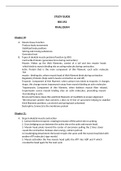
NR503: Mid-term study guide Week 1 Summary & Key points: 1. It is vital to connect social justice theory to advocacy, health disparities and to outcomes. 2. How are outcomes determined? 3. Where can morbidity, mortality, incidence and prevalence data be found at the state and national level? a. State Department of health website; NCCDPHP i. (NCCDPHP) The CDC's National Center for Chronic Disease Prevention and Health Promotion consists of nine divisions that support a variety of activities that improve the nation's health by preventing chronic diseases and their risk factors ii. National, state, and community levels b. CDC, the National Center for Health Statistics (NCHS) is considered the nation's principal health statistics agency c. CDI - 97 indicators 4. How does social justice and health inequities influence population health care provision? 5. Why is this critical information for the provision of evidence-based care? 6. Are you able to both define and apply key terms, such as: vital statistics, morbidity, mortality, cases, social justice, epidemiology, population health, incidence, prevalence, outcomes, inter-professional collaboration, HP2020, determinants of health, risk analysis? 7. What is the Campaign for Action? 8. Explain the differences between primary a. Primary prevention refers to preventing disease before it occurs. (prevention and planning) Usually, primary prevention occurs through application of epidemiological concepts and databases to assess risk factors and then target those populations in which there can be the greatest impact on outcomes to ward off impending disease or unhealthy outcomes. For example, if the APN has assessed epidemiological data and observes that there is a high incidence and prevalence of lung cancer in those individuals and populations who smoke before the fifth grade, then this epidemiological data can be the basis for planning a smoking cessation educational program for school-age children before the fifth grade. b. Secondary - Secondary prevention consists of screening and diagnosis of disease. Secondary prevention is one of the most cost-effective strategies to improve current health status and prevent chronic, debilitating disease states through screening of individuals and populations. For example, screening helps APNs detect a disease once it is present and assist and facilitate the patient or population to get care for the disease that has been detected. The APN must be knowledgeable and apply standards of care and accepted national clinical guidelines to advise the individual or population to undergo preventive screening that is age appropriate and developmentally appropriate
Geschreven voor
Documentinformatie
- Geüpload op
- 25 november 2021
- Aantal pagina's
- 26
- Geschreven in
- 2021/2022
- Type
- Tentamen (uitwerkingen)
- Bevat
- Vragen en antwoorden
Onderwerpen
- mid term study guide
-
nr503 mid term study guide