NR602_ Midterm_ Study_ Guide 2021.
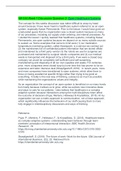
NR602_ Midterm_ Study_ Guide 2021. Menstrual cycle physiology The initiation of menstruation, called menarche, usually happens between the ages of 12 and 15. Menstrual cycles typically continue to age 45 to 55, when menopause occurs. Many women find themselves reluctant to discuss the existence and normality of menstruation. The word menstruation has been replaced by a variety of euphemisms, such as the curse, my period, my monthly, my friend, the red flag, or on the rag. Most women experience deviations from the average menstrual cycle during their reproductive years. As a result, it is not uncommon for women to display certain preoccupations regarding their menstrual bleeding, not only in relation to the regularity of its occurrence, but also in regard to the characteristics of the flow, such as volume, duration, and associated signs and symptoms. Unfortunately, society has encouraged the notion that a woman’s normalcy is based on her ability to bear children. This misperception has understandably forced women to worry over the most miniscule changes in their menstrual cycles. Indeed, changes in menstruation are one of the most frequent reasons why women visit their clinician. Numerous patterns in the secretion of estrogens and progesterone are possible; in fact, it is difficult to find two cycles that are exactly the same. Studies that include women of different ethnicities, occupations, genetics, nutritional status, and age have demonstrated that the length and duration of the menstrual cycle vary widely (Assadi, 2013; Johnson et al., 2013; Karapanou & Papadimitriou, 2010). Menarche is the most readily evident external event that indicates the end of one developmental stage and the beginning of a new one. It is now believed that body composition is critically important in determining the onset of puberty and menstruation in young women (Ferin & Lobo, 2012). The ratio of total body weight to lean body weight is probably the most relevant factor, and individuals who are moderately obese (i.e., 20–30% above their ideal body weight) tend to have an earlier onset of menarche (Johnson et al., 2013). Widely accepted standards for distinguishing what are regular versus irregular menses, or normal versus abnormal menses, are generally based on what is considered average and not necessarily typical for every woman. According to these standards, the normal menstrual cycle is 21 to 35 days with a menstrual flow lasting 4 to 6 days, although a flow for as few as 2 days or as many as 8 days is still considered normal (Ferin & Lobo, 2012). The amount of menstrual flow varies, with the average being 50 mL; nevertheless, this volume may be as little as 20 mL or as much as 80 mL. Generally, women are not aware that anovulatory cycles and abnormal uterine bleeding (changes in bleeding outside of normal; see Chapter 24) are common after menarche and just prior to menopause (Ferin & Lobo, 2012; Fritz & Speroff, 2011). Menstrual cycles that occur during the first 1 to 1.5 years after menarche are frequently irregular due to the immaturity of the hypothalamic–pituitary–ovarian axis (Fritz & Speroff, 2011). Vaccines during pregnancy Live vaccines are contraindicated during pregnancy (MMR, Oral Polio, Varicella & FluMist) Injectable influenza vaccine is an inactivated virus and is safe to use in pregnancy Ask if the woman has ever known anyone with tuberculosis or traveled to areas where tuberculosis is common. If she is at risk, she should receive a tuberculin skin test when she can return in 48 to 72 hours. Past history of varicella is important, as well as the woman’s vaccine history, to determine if she is at risk for chickenpox. Women can receive vaccines in pregnancy (Table 30-1). The Centers for Disease Control and Prevention (CDC) updates the adult vaccine schedule often, and this information can be easily accessed on its website. The CDC website also includes detailed information about safety of vaccines for travel of local disease outbreaks during pregnancy (CDC, 2014). All women who are pregnant should be offered the influenza vaccine during flu season, though live attenuated influenza vaccine (LAIV [FluMist]) should not be given to pregnant women. All women should be encouraged to receive a tetanus, diphtheria, and acellular pertussis (Tdap) vaccination in the third trimester (CDC, 2016). Other vaccines, such as hepatitis B, can be administered if the woman is at risk (CDC, 2016). During pregnancy, women have a decreased immune response to pathogens, making them more susceptible to infection. If a woman has cats, she should be careful to avoid contracting toxoplasmosis—an infection that is spread through cat feces. Someone else should change the cat litter box daily to prevent contact with the Toxoplasma gondii parasite. Wearing gloves while gardening, and careful hand washing are also essential. More information and patient handouts are available for free at the CDC website. TABLE 30-1 Vaccines in Pregnancy Recommended Each Preg nancy Rationale Timing Influenza (flu)a Women who are pregnant are at increased risk for flu-related complications. Any gestation when the injection is available Tetanus, diphtheria, pertussis (Tdap) After maternal vaccination, antibodies cross the placenta and decrease the risk of pertussis infection in the newborn. Third trimester (ideally 27– 36 weeks’ gestation) Advised If at Risk Rationale Timing Hepatitis B If the woman is at risk for acquiring HBV, she should be vaccinated. Indications include risk of occupational exposure to blood, treatment for a sexually transmitted infection, more than 1 sex partner in the past 6 months, recent intravenous drug use, and HBsAg– positive sex partner. 3 injections beginning at any point in gestation Contraindicated Rationale Measles, mumps, rubella This live virus vaccine has a (theoretical) risk to the fetus. Varicella This live virus vaccine has a (theoretical) risk to the fetus. Abbreviations: HBsAg, HBV surface antigen; HBV, hepatitis B virus. a Live attenuated influenza vaccine (LAIV [FluMist]) should not be given to pregnant women. Emergency contraception Sperm can live for up to 5 days in the female reproductive tract, and pregnancy can occur with intercourse 5 days prior to ovulation. The highest risk of pregnancy is in the 48 hours immediately preceding ovulation (Wilcox, Dunson, & Baird, 2000). However, due to the uncertainty of ovulation timing, emergency contraception is offered if unprotected intercourse (UPI) occurs at any time in the menstrual cycle. The Yuzpe, levonorgestrel, and ulipristal acetate emergency contraceptive pill (ECP) regimens as well as the copper IUD may all be used within 120 hours of UPI. The Yuzpe and levonorgestrel methods have a dramatic decline in their effectiveness with time and should be used as soon as possible after an event of UPI.
Written for
Document information
- Uploaded on
- November 20, 2021
- Number of pages
- 78
- Written in
- 2021/2022
- Type
- Exam (elaborations)
- Contains
- Questions & answers
Subjects
- nr602
-
nr602 midterm study guide 2021
-
midterm study guide

Also available in package deal