Introduction to medical microbiology
Microbes fall into one of the following groups:
Viruses
Fungi and other microscopic eukaryotes
Bacteria
Microbes can only be seen by microscopy- light or electron microscope
electron microscope – 1Å– 100µm (small molecule, viruses, bacterium)
light microscope – 1µm- 1cm (bacterium, animal cell, plant cell)
Fungi, other microscopic eukaryotes and bacteria are cellular and have complex genomes
Viruses are not cellular, relatively simple genomes
Viruses:
- they need to grow in cells (classed as infectious agents)
- many different viral pathogens (all have small genomes this reduces the number of potential
antiviral targets
Human infection
Common complaints – rhinovirus
more clinical concern – influenza, herpes virus
dangerous pathogens – ebola virus
Certain viruses infect bacterial cells – bacteriophage
Concerns about viruses – potential for rapid spread –
e.g. influenza virus spread in 2 months; potential for high
fatality rate/ lack of treatment options – e.g. nipah virus
– causes illness and inflammation of the brain and/or
respiratory disease – has fatality rate of 40-75% ( no
drugs or vaccines available to treat it)
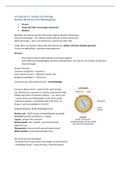
General features of an enveloped virus:
Nucleic acid – SS/DS (single stranded/double stranded)
RNA/DNA typically contained in a capsid
Capsid – protein ‘NA container’
Nucleocapsid is NA + Capsid – symmetry formed
diagnostic use
Glycoprotein- interacts with external environment
Matrix protein- structural/ assembly roles
Not all viruses are enveloped:
- Envelope free viruses tend to last longer in environments
- enveloped viruses – host cell entry / immune evasion
, Fungi and other microscopic eukaryotes
All eukaryotes cells have a nuclear membrane which makes them harder to treat by antibiotics;
Some can form resting stages or spores which are more difficult to deal with
Fungi:
- Grow as single cells (yeast) or long branches (hyphae)
- Some fungi are dimorphic – can grow as either yeast or hyphae
- Most clinical concern – Candida albicans. Aspergilus fumigatus ( invasive infections/ and
immunocompromised; number of invasive infections
Other (non-fungal) microscopic eukaryotes- parasites:
Primarily protozoa
e.g. Plasmodium falciparum which causes the most dangerous form of malaria
Bacteria:
- Biggest clinical problem
- Bacterial and archaeal cells are prokaryotes ( Differ from eukaryotes as they lack a nuclear
membrane; Grow typically as single cell outside human cells)
- May bacterial species- 35,000 to 2,000,000 species estimated (hundreds can be human
pathogens)
- Divided into Gram positive and Gram negative cell types (reflects different cell wall
structures; detected by chemical staining
Staphylococcus aureus – blue cocci
Escherichia coli – pink bacilli
Microbes fall into one of the following groups:
Viruses
Fungi and other microscopic eukaryotes
Bacteria
Microbes can only be seen by microscopy- light or electron microscope
electron microscope – 1Å– 100µm (small molecule, viruses, bacterium)
light microscope – 1µm- 1cm (bacterium, animal cell, plant cell)
Fungi, other microscopic eukaryotes and bacteria are cellular and have complex genomes
Viruses are not cellular, relatively simple genomes
Viruses:
- they need to grow in cells (classed as infectious agents)
- many different viral pathogens (all have small genomes this reduces the number of potential
antiviral targets
Human infection
Common complaints – rhinovirus
more clinical concern – influenza, herpes virus
dangerous pathogens – ebola virus
Certain viruses infect bacterial cells – bacteriophage
Concerns about viruses – potential for rapid spread –
e.g. influenza virus spread in 2 months; potential for high
fatality rate/ lack of treatment options – e.g. nipah virus
– causes illness and inflammation of the brain and/or
respiratory disease – has fatality rate of 40-75% ( no
drugs or vaccines available to treat it)
General features of an enveloped virus:
Nucleic acid – SS/DS (single stranded/double stranded)
RNA/DNA typically contained in a capsid
Capsid – protein ‘NA container’
Nucleocapsid is NA + Capsid – symmetry formed
diagnostic use
Glycoprotein- interacts with external environment
Matrix protein- structural/ assembly roles
Not all viruses are enveloped:
- Envelope free viruses tend to last longer in environments
- enveloped viruses – host cell entry / immune evasion
, Fungi and other microscopic eukaryotes
All eukaryotes cells have a nuclear membrane which makes them harder to treat by antibiotics;
Some can form resting stages or spores which are more difficult to deal with
Fungi:
- Grow as single cells (yeast) or long branches (hyphae)
- Some fungi are dimorphic – can grow as either yeast or hyphae
- Most clinical concern – Candida albicans. Aspergilus fumigatus ( invasive infections/ and
immunocompromised; number of invasive infections
Other (non-fungal) microscopic eukaryotes- parasites:
Primarily protozoa
e.g. Plasmodium falciparum which causes the most dangerous form of malaria
Bacteria:
- Biggest clinical problem
- Bacterial and archaeal cells are prokaryotes ( Differ from eukaryotes as they lack a nuclear
membrane; Grow typically as single cell outside human cells)
- May bacterial species- 35,000 to 2,000,000 species estimated (hundreds can be human
pathogens)
- Divided into Gram positive and Gram negative cell types (reflects different cell wall
structures; detected by chemical staining
Staphylococcus aureus – blue cocci
Escherichia coli – pink bacilli