Thursday, November 4, 2021
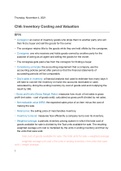
Ch6: Inventory Costing and Valuation
BFIN
- Consignor: an owner of inventory goods who ships them to another party who will
then nd a buyer and sell the goods for the owner.
- The consignor retains title to the goods while they are held o site by the consignee.
- Consignee: one who receives and holds goods owned by another party for the
purpose of acting as an agent and selling the goods for the owner.
- The consignee gets paid a fee from the consignor for nding a buyer.
- Consistency principle: the accounting requirement that a company use the
accounting policies period after period so that the nancial statements of
succeeding periods will be comparable.
- Day’s sales in inventory: a nancial analysis tool used to estimate how many days it
will take to convert the inventory on hand into accounts receivable or cash;
calculated by diving the ending inventory by cost of goods sold and mutiplying the
result by 365.
- Gross pro t ratio (Gross Margin Ratio): measures how much of net sales is gross
pro t (net sales - cost of goods sold); calculated as gross pro t divided by net sales.
- Net realizable value (NRV): the expected sales price of an item minus the cost of
making the sale.
- Retail price: the selling price of merchandise inventory.
- Inventory turnover: measures how e ciently a company turns over its inventory.
- Weighted average: a periodic inventory pricing system in which the total cost of
goods available for sale is divided by the Toal units available for sale. The resulting
weighted average unit cost is multiplied by the units in ending inventory and then by
the units that were sold.
total cost of goods available for sale / the total units for sale = weighted average
weighted average unit cost x the units in ending inventory x the units that were
sold = weight average.
1
fi fi fi fi ffi fi fi fffi
, - Beginning inventory:
+ Is the book value of a company’s inventory at the start of an accounting
period.
+ Is the value of inventory carried over from the end of the preceding accounting
period.
- Ending inventory: is the value of goods still available for sale and held by a company
at the end of an accounting period.
- Physical inventory count (taking an inventory): to count merchandise inventory for the
purpose of reconciling goods actually on hand to the inventory control account in the
general ledger.
• Beginning Inventory + Purchase - Ending inventory = COGS
- Internal controls: the policies and procedures used to protect assets, ensure reliable
accounting, promote e cient operations, and urge adherence to company policies.
Cost of goods available for sale = cost of goods sold + Ending inventory
Total goods available for sale = beginning inventory + purchased
Inventory turnover = cost of goods sold / average merchandises inventory
Days’ sales in inventory = (ending inventory / cost of goods sold) x 365
2
ffi
Ch6: Inventory Costing and Valuation
BFIN
- Consignor: an owner of inventory goods who ships them to another party who will
then nd a buyer and sell the goods for the owner.
- The consignor retains title to the goods while they are held o site by the consignee.
- Consignee: one who receives and holds goods owned by another party for the
purpose of acting as an agent and selling the goods for the owner.
- The consignee gets paid a fee from the consignor for nding a buyer.
- Consistency principle: the accounting requirement that a company use the
accounting policies period after period so that the nancial statements of
succeeding periods will be comparable.
- Day’s sales in inventory: a nancial analysis tool used to estimate how many days it
will take to convert the inventory on hand into accounts receivable or cash;
calculated by diving the ending inventory by cost of goods sold and mutiplying the
result by 365.
- Gross pro t ratio (Gross Margin Ratio): measures how much of net sales is gross
pro t (net sales - cost of goods sold); calculated as gross pro t divided by net sales.
- Net realizable value (NRV): the expected sales price of an item minus the cost of
making the sale.
- Retail price: the selling price of merchandise inventory.
- Inventory turnover: measures how e ciently a company turns over its inventory.
- Weighted average: a periodic inventory pricing system in which the total cost of
goods available for sale is divided by the Toal units available for sale. The resulting
weighted average unit cost is multiplied by the units in ending inventory and then by
the units that were sold.
total cost of goods available for sale / the total units for sale = weighted average
weighted average unit cost x the units in ending inventory x the units that were
sold = weight average.
1
fi fi fi fi ffi fi fi fffi
, - Beginning inventory:
+ Is the book value of a company’s inventory at the start of an accounting
period.
+ Is the value of inventory carried over from the end of the preceding accounting
period.
- Ending inventory: is the value of goods still available for sale and held by a company
at the end of an accounting period.
- Physical inventory count (taking an inventory): to count merchandise inventory for the
purpose of reconciling goods actually on hand to the inventory control account in the
general ledger.
• Beginning Inventory + Purchase - Ending inventory = COGS
- Internal controls: the policies and procedures used to protect assets, ensure reliable
accounting, promote e cient operations, and urge adherence to company policies.
Cost of goods available for sale = cost of goods sold + Ending inventory
Total goods available for sale = beginning inventory + purchased
Inventory turnover = cost of goods sold / average merchandises inventory
Days’ sales in inventory = (ending inventory / cost of goods sold) x 365
2
ffi