ECON 102 CH5 DECISION MAKING, LEARNING, CREATIVITY, AND ENTREPRENEURSHIP
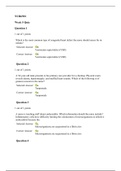
ECON 102 CH5 DECISION MAKING, LEARNING, CREATIVITY, AND ENTREPRENEURSHIP Multiple Choice Questions ( ch5) 31. The process by which managers respond to opportunities and threats facing their organization by analyzing options and taking actions is known as: A) brainstorming B) intuition C) decision making D) bounded rationality E) heuristics Answer: C Page: 219 Difficulty: Easy Learning Objective: 1 32. Managers make decisions when they are involved in which managerial function? A) Planning B) Controlling C) Leading D) Organizing E) All of the above Answer: E Page: 219 Difficulty: Easy Learning Objective: 1 33. Decisions which have been made many times in the past and for which managers have rules and guidelines as to how to make similar decisions in the future are known as: A) nonprogrammed decisions B) heuristic decisions C) programmed decisions D) intuitive decisions E) creative decisions Answer: C Page: 220 Difficulty: Easy Learning Objective: 1 34. When an organization's accounting department decides to send out a bill to a new customer, what type of decision does this represent? A) Programmed B) Nonprogrammed C) Intuition D) Groupthink E) Bounded rationality Answer: A Page: 220 Difficulty: Moderate Learning Objective: 1 35. When an organization's finance department decides to go to a bank and take out a loan because its revenues for the month are projected to be less than its expenses, what type of decision does this represent? A) Intuition B) Groupthink C) Programmed D) Nonprogrammed E) Satisficing Answer: C Page: 220 Difficulty: Moderate Learning Objective: 1
Written for
- Institution
-
Liberty University
- Course
-
ECON 102
Document information
- Uploaded on
- November 7, 2021
- Number of pages
- 12
- Written in
- 2021/2022
- Type
- Exam (elaborations)
- Contains
- Questions & answers
Subjects
- learning
- creativity
-
econ 102 ch5 decision making
-
and entrepreneurship multiple choice questions ch5 31 the process by which managers respond to opportunities and threats facing their organizati