

Does Caffeine affect Heart Rate? - The Daphnia
Apparatus:
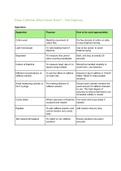
Apparatus Purpose How to be used appropriately
Cotton wool Restricts movement of Put few strands of cotton on slide
cotton flea to stop Daphnia moving
Light microscope To view beating heart of Use at low power, to avoid
Daphnia Daphnia dying
Stopwatch To measure time period Start, and stop at exactly 20
when counting heartbeats seconds
Culture of Daphnia To measure heart rate of, to Should be handled carefully to
repeat using multiple avoid harm, use tweezers
Different concentrations of To see the effect of caffeine Dissolve 0.5g of caffeine in 100cm3
caffeine solution on heart rate Water. Dilute to make weaker
solutions
Small measuring cylinder or For making dilutions of Ensure each cylinder contains the
5cm³ syringe caffeine solution exact amount of caffeine intended
to use. This high degree of
accuracy to ensure that there is an
increased validity in results
Cavity slides Where specimen of Daphnia Can wash and reuse slides if
is placed and viewed needed
Pipettes To add caffeine solution and Add solution drop by drop
control solution onto cavity
slide
Test tube/small beakers To collect or mix caffeine Ensure solutions are exact /
solutions accurate
,Method:
How to prepare the Microscopic slide:
1. Place a few strands of cotton wool on a cavity slide - this restricts movement of the water
flea
2. Use tweezers to transfer the specimen to the cavity slide
3. Add a few drops of distilled water or pond water using a pipette - this is the control
solution
How to use a light microscope:
1. View under low power and adjust the focus onto the beating heart of the daphnia
Investigate the effect of Caffeine on the Heart Rate of Daphnia:
1. Use a stopwatch to record the number of heartbeats per minute
2. For example, one person measures 20 seconds using a stopwatch, and the other taps a
pencil on a piece of paper for each heartbeat observed
3. Count the number of pencil marks at the end of the 20 seconds
4. Multiply this value by 3 to calculate beats per minute (heart rate)
5. Repeat this using the same solution but 10 different Daphnia
6. Repeat procedure with different concentrations of caffeine solution, using ten different
Daphnia for each concentration
7. Record an average of the 10 readings at each concentration, and plot the results on a
graph (heart rate against concentration of caffeine)
Risk Assessment:
● Do not touch the microscope lamp with wet hands as it uses electricity - this is for
● Do not spill any of the water on the floor
● Risk of daphnia dying - Therefore use low power light, do not give too high
concentrations of caffeine (may speed up heart rate so much that it dies)
● Wash hands thoroughly after handling Daphnia or pond water
● Risk of daphnia dying - handle the daphnia with caution when placing on the glass slide
Ethical concerns of using the daphnia in experimenting:
- There is a concern in regards to using animals to experiment as it is considered as
taking a life
- However one may argue that it is okay as daphnia tend to have a short life span of about
up to a week, so some may consider the usage of daphnia as okay as it also provides
insight and knowledge
Results:
Treatment 1st trial 2nd trial
Distilled water 123 139
0.125% caffeine 211 224
0.25% caffeine 247 230
0.5% caffeine 190 198
,Conclusion:
The table does not confirm what our hypothesis was: that the higher the concentration of the
caffeine solution the more the beats per minute of the daphnia. This, though, might be a mistake
since the caffeine solution may not have been exactly as we wanted it on each occasion, hence
making the results inaccurate. Also, when drawing the dots for each heartbeat, some dots were
drawn on top of one another and therefore difficult to distinguish causing some error.
Evaluation:
The experiment could be improved with:
- More trials: the more data we have, the more accurate our results would be
- Recording the daphnia and watching the video over to ensure validity in the bpm
, Diet and Energy - Vitamin C
Aim: To investigate the vitamin C content in different fruit juices.
Apparatus Purpose How to be used
appropriately
Vitamin C solutions (known To figure out the volume of Ensure concentrations of
concentration) vitamin C needed each solution are known. Add
the solution in drop by drop
DCPIP Dye to indicate presence of Ensure your DCPIP is at a
vitamin C - (goes from blue to set volume and known
colourless) concentration
Pipette To add DCPIP / Vitamin C Ensure you add 1Ml of
solutions to test tubes DCPIP and ensure you know
how many drops / how much
vitamin you add
Test Tubes To hold your DCPIP Make sure there is a set
amount of DCPIP in each
tube
Beakers Contains vitamin c solutions Ensure the concentrations of
vitamin C are known
Test tube rack To hold test tubes Make sure you are careful
when placing the solutions in
the rack to avoid spillage
Method:
1. Make up a few (about 6) Vitamin C solutions of different known concentrations
2. Use a measuring cylinder to measure out a set volume of DCPIP (at a set concentration)
into a test tube
3. Add one of the Vitamin C solutions into the DCPIP, drop by drop with a pipette
4. Gently shake the test tube for a set length of time. Time this with a stop watch after each
drop of Vitamin C solution is added
5. When the solution turns colourless, record the volume (the number of drops) of solution
that was added
6. Repeat the experiment twice more with the same solution, and take an average of the 3
readings
7. Make sure you keep all the other variables constant during the experiment, for example
the temperature
8. Repeat this procedure with each solution
Apparatus:
Apparatus Purpose How to be used appropriately
Cotton wool Restricts movement of Put few strands of cotton on slide
cotton flea to stop Daphnia moving
Light microscope To view beating heart of Use at low power, to avoid
Daphnia Daphnia dying
Stopwatch To measure time period Start, and stop at exactly 20
when counting heartbeats seconds
Culture of Daphnia To measure heart rate of, to Should be handled carefully to
repeat using multiple avoid harm, use tweezers
Different concentrations of To see the effect of caffeine Dissolve 0.5g of caffeine in 100cm3
caffeine solution on heart rate Water. Dilute to make weaker
solutions
Small measuring cylinder or For making dilutions of Ensure each cylinder contains the
5cm³ syringe caffeine solution exact amount of caffeine intended
to use. This high degree of
accuracy to ensure that there is an
increased validity in results
Cavity slides Where specimen of Daphnia Can wash and reuse slides if
is placed and viewed needed
Pipettes To add caffeine solution and Add solution drop by drop
control solution onto cavity
slide
Test tube/small beakers To collect or mix caffeine Ensure solutions are exact /
solutions accurate
,Method:
How to prepare the Microscopic slide:
1. Place a few strands of cotton wool on a cavity slide - this restricts movement of the water
flea
2. Use tweezers to transfer the specimen to the cavity slide
3. Add a few drops of distilled water or pond water using a pipette - this is the control
solution
How to use a light microscope:
1. View under low power and adjust the focus onto the beating heart of the daphnia
Investigate the effect of Caffeine on the Heart Rate of Daphnia:
1. Use a stopwatch to record the number of heartbeats per minute
2. For example, one person measures 20 seconds using a stopwatch, and the other taps a
pencil on a piece of paper for each heartbeat observed
3. Count the number of pencil marks at the end of the 20 seconds
4. Multiply this value by 3 to calculate beats per minute (heart rate)
5. Repeat this using the same solution but 10 different Daphnia
6. Repeat procedure with different concentrations of caffeine solution, using ten different
Daphnia for each concentration
7. Record an average of the 10 readings at each concentration, and plot the results on a
graph (heart rate against concentration of caffeine)
Risk Assessment:
● Do not touch the microscope lamp with wet hands as it uses electricity - this is for
● Do not spill any of the water on the floor
● Risk of daphnia dying - Therefore use low power light, do not give too high
concentrations of caffeine (may speed up heart rate so much that it dies)
● Wash hands thoroughly after handling Daphnia or pond water
● Risk of daphnia dying - handle the daphnia with caution when placing on the glass slide
Ethical concerns of using the daphnia in experimenting:
- There is a concern in regards to using animals to experiment as it is considered as
taking a life
- However one may argue that it is okay as daphnia tend to have a short life span of about
up to a week, so some may consider the usage of daphnia as okay as it also provides
insight and knowledge
Results:
Treatment 1st trial 2nd trial
Distilled water 123 139
0.125% caffeine 211 224
0.25% caffeine 247 230
0.5% caffeine 190 198
,Conclusion:
The table does not confirm what our hypothesis was: that the higher the concentration of the
caffeine solution the more the beats per minute of the daphnia. This, though, might be a mistake
since the caffeine solution may not have been exactly as we wanted it on each occasion, hence
making the results inaccurate. Also, when drawing the dots for each heartbeat, some dots were
drawn on top of one another and therefore difficult to distinguish causing some error.
Evaluation:
The experiment could be improved with:
- More trials: the more data we have, the more accurate our results would be
- Recording the daphnia and watching the video over to ensure validity in the bpm
, Diet and Energy - Vitamin C
Aim: To investigate the vitamin C content in different fruit juices.
Apparatus Purpose How to be used
appropriately
Vitamin C solutions (known To figure out the volume of Ensure concentrations of
concentration) vitamin C needed each solution are known. Add
the solution in drop by drop
DCPIP Dye to indicate presence of Ensure your DCPIP is at a
vitamin C - (goes from blue to set volume and known
colourless) concentration
Pipette To add DCPIP / Vitamin C Ensure you add 1Ml of
solutions to test tubes DCPIP and ensure you know
how many drops / how much
vitamin you add
Test Tubes To hold your DCPIP Make sure there is a set
amount of DCPIP in each
tube
Beakers Contains vitamin c solutions Ensure the concentrations of
vitamin C are known
Test tube rack To hold test tubes Make sure you are careful
when placing the solutions in
the rack to avoid spillage
Method:
1. Make up a few (about 6) Vitamin C solutions of different known concentrations
2. Use a measuring cylinder to measure out a set volume of DCPIP (at a set concentration)
into a test tube
3. Add one of the Vitamin C solutions into the DCPIP, drop by drop with a pipette
4. Gently shake the test tube for a set length of time. Time this with a stop watch after each
drop of Vitamin C solution is added
5. When the solution turns colourless, record the volume (the number of drops) of solution
that was added
6. Repeat the experiment twice more with the same solution, and take an average of the 3
readings
7. Make sure you keep all the other variables constant during the experiment, for example
the temperature
8. Repeat this procedure with each solution



