100% tevredenheidsgarantie Direct beschikbaar na je betaling Lees online óf als PDF Geen vaste maandelijkse kosten 4.2 TrustPilot
logo-home
Tentamen (uitwerkingen)

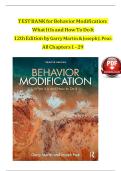
PATHOPHYSIOLOGY TEST BANK 4TH EDITION BY NORRIS

Beoordeling
-
Verkocht
-
Pagina's
447
Cijfer
A+
Geüpload op
25-10-2021
Geschreven in
2021/2022

PATHOPHYSIOLOGY TEST BANK 4TH EDITION BY NORRIS PATHOPHYSIOLOGY TEST BANK 4TH EDITION BY NORRIS PORTH’S PATHOPHYSIOLOGY 4TH EDITION NORRIS TEST BANK   Chapter 01 - Cell Structure and Function 1. The nucleus , which is essential for function and survival of the cell. A) is the site of protein synthesis B) contains the genetic code C) transforms cellular energy D) initiates aerobic metabolism 2. Although energy is not made in mitochondria, they are known as the power plants of the cell because they: A) contain RNA for protein synthesis. B) utilize glycolysis for oxidative energy. C) extract energy from organic compounds. D) store calcium bonds for muscle contractions. 3. Although the basic structure of the cell plasma membrane is formed by a lipid bilayer, most of the specific membrane functions are carried out by: A) bound and transmembrane proteins. B) complex, long carbohydrate chains. C) surface antigens and hormone receptors. D) a gating system of selective ion channels. 4. To effectively relay signals, cell-to-cell communication utilizes chemical messenger systems that: A) displace surface receptor proteins. B) accumulate within cell gap junctions. C) bind to contractile microfilaments. D) release secretions into extracellular fluid. 5. Aerobic metabolism, also known as oxidative metabolism, provides energy by: A) removing the phosphate bonds from ATP. B) combining hydrogen and oxygen to form water. C) activating pyruvate stored in the cytoplasm. D) breaking down glucose to form lactic acid. 6. Exocytosis, the reverse of endocytosis, is important in into the extracellular fluid. A) Engulfing and ingesting fluid and proteins for transport B) Killing, degrading, and dissolving harmful microorganisms C) Removing cellular debris and releasing synthesized substances D) Destruction of particles by lysosomal enzymes for secretion 7. The process responsible for generating and conducting membrane potentials is: A) diffusion of current-carrying ions. B) millivoltage of electrical potential. C) polarization of charged particles. D) ion channel neurotransmission. 8. Epithelial tissues are classified according to the shape of the cells and the number of layers. Which of the following is a correctly matched description and type of epithelial tissue? A) Simple epithelium: cells in contact with intercellular matrix; some do not extend to surface B) Stratified epithelium: single layer of cells; all cells rest on basement membrane C) Glandular epithelium: arise from surface epithelia and underlying connective tissue D) Pseudostratified epithelium: multiple layers of cells; deepest layer rests on basement membrane 9. Connective tissue contains fibroblasts that are responsible for: A) providing a fibrous framework for capillaries. B) synthesis of collagen, elastin, and reticular fibers. C) forming tendons and the fascia that covers muscles. D) filling spaces between tissues to keep organs in place. 10. Although all muscle tissue cells have some similarities, smooth muscle (also known as involuntary muscle) differs by: A) having dense bodies attached to actin filaments. B) containing sarcomeres between Z lines and M bands. C) having rapid contractions and abundant cross-striations. D) contracting in response to increased intracellular calcium. 11. Which of the following aspects of the function of the nucleus is performed by ribosomal RNA (rRNA)? A) Copying and carrying DNA instructions for protein synthesis B) Carrying amino acids to the site of protein synthesis C) Providing the site where protein synthesis occurs D) Regulating and controlling protein synthesis 12. Breakdown and removal of foreign substances and worn-out cell parts are performed by which of the following organelles? A) Lysosomes B) Golgi apparatus C) Ribosomes D) Endoplasmic reticulum (ER) 13. Impairment in the function of peroxisomes would result in: A) inadequate sites for protein synthesis. B) an inability to transport cellular products across the cell membrane. C) insufficient energy production within a cell. D) accumulation of free radicals in the cytoplasm. 14. After several months of trying to conceive, a couple is undergoing fertility testing. Semen analysis indicates that the man’s sperm have decreased motility, a finding that is thought to underlie the couple’s inability to become pregnant. Which of the following cellular components may be defective within the man’s sperm? A) Ribosomes B) Microtubules C) Mitochondria D) Microfilaments 15. Which of the following statements is true of glycolysis? A) Glycolysis requires oxygen. B) Glycolysis occurs in cells without mitochondria. C) Glycolysis provides the majority of the body’s energy needs. D) Glycolysis produces energy, water, and carbon dioxide. 16. Which of the following membrane transport mechanisms requires the greatest amount of energy? A) Facilitated diffusion B) Passive transport C) Vesicular transport D) Simple diffusion 17. A male patient with a diagnosis of type 1 diabetes mellitus is experiencing hyperglycemia because he lacks sufficient insulin to increase the availability of glucose transporters in his cell membranes. Consequently, his cells lack intracellular glucose and it accumulates in his blood. Which of the following processes would best allow glucose to cross his cell membranes? A) Facilitated diffusion B) Simple diffusion C) Secondary active transport D) Endocytosis 18. Which of the following statements is true of skeletal muscle cells? A) Skeletal muscle cells each have an apical, lateral, and basal surface. B) They are closely apposed and are joined by cell-to-cell adhesion molecules. C) Their basal surface is attached to a basement membrane. D) Skeletal muscle is multinucleated, lacking true cell boundaries. 19. Which of the following body tissues exhibits the highest rate of turnover and renewal? A) The squamous epithelial cells of the skin B) The connective tissue supporting blood vessels C) The skeletal muscle that facilitates movement D) The nervous tissue that constitutes the central nervous system 20. A patient with a pathophysiologic condition that affects the desmosomes is most likely to exhibit: A) impaired contraction of skeletal and smooth muscle. B) weakness of the collagen and elastin fibers in the extracellular space. C) impaired communication between neurons and effector organs. D) separation at the junctions between epithelial cells. Answer Key 1. B 2. C 3. A 4. D 5. B 6. C 7. A 8. C 9. B 10. A 11. C 12. A 13. D 14. B 15. B 16. C 17. A 18. D 19. A 20. D Chapter 02 - Cellular Responses to Stress, Injury, and Aging 1. Ischemia and other toxic injuries increase the accumulation of intracellular calcium as a result of: A) release of stored calcium from the mitochondria. B) improved intracellular volume regulation. C) decreased influx across the cell membrane. D) attraction of calcium to fatty infiltrates. 2. The patient is found to have liver disease, resulting in the removal of a lobe of his liver. Adaptation to the reduced size of the liver leads to of the remaining liver cells. A) metaplasia B) organ atrophy C) compensatory hyperplasia D) physiologic hypertrophy 3. A person eating peanuts starts choking and collapses. His airway obstruction is partially cleared, but he remains hypoxic until he reaches the hospital. The prolonged cell hypoxia caused a cerebral infarction and resulting in the brain. A) caspase activation B) coagulation necrosis C) rapid phagocytosis D) protein p53 deficiency 4. Bacteria and viruses cause cell damage by , which is unique from the intracellular damage caused by other injurious agents. A) disrupting the sodium/potassium ATPase pump B) interrupting oxidative metabolism processes C) replicating and producing continued injury D) decreasing protein synthesis and function 5. The patient has a prolonged interruption in arterial blood flow to his left kidney, causing hypoxic cell injury and the release of free radicals. Free radicals damage cells by: A) destroying phospholipids in the cell membrane. B) altering the immune response of the cell. C) disrupting calcium storage in the cell. D) inactivation of enzymes and mitochondria. 6. Injured cells have impaired flow of substances through the cell membrane as a result of: A) increased fat load. B) altered permeability. C) altered glucose utilization. D) increased surface receptors. 7. Reversible adaptive intracellular responses are initiated by: A) stimulus overload. ..........
Meer zien Lees minder
Instelling
Vak


Oeps! We kunnen je document nu niet laden. Probeer het nog eens of neem contact op met support.

Gekoppeld boek

Geschreven voor

Instelling
Studie
Vak

Documentinformatie

Geüpload op
25 oktober 2021
Aantal pagina's
447
Geschreven in
2021/2022
Type
Tentamen (uitwerkingen)
Bevat
Vragen en antwoorden

Onderwerpen

Voorbeeld van de inhoud

PORTH’S PATHOPHYSIOLOGY
4TH EDITION NORRIS TEST
BANK

,Chapter 01 - Cell Structure and Function


1. The nucleus , which is essential for function and survival of the cell.


A) is the site of protein synthesis


B) contains the genetic code


C) transforms cellular energy


D) initiates aerobic metabolism


2. Although energy is not made in mitochondria, they are known as the power plants of the cell
because they:


A) contain RNA for protein synthesis.


B) utilize glycolysis for oxidative energy.

,C) extract energy from organic compounds.


D) store calcium bonds for muscle contractions.


3. Although the basic structure of the cell plasma membrane is formed by a lipid bilayer, most of
the specific membrane functions are carried out by:


A) bound and transmembrane proteins.


B) complex, long carbohydrate chains.


C) surface antigens and hormone receptors.


D) a gating system of selective ion channels.


4. To effectively relay signals, cell-to-cell communication utilizes chemical messenger systems that:


A) displace surface receptor proteins.


B) accumulate within cell gap junctions.


C) bind to contractile microfilaments.

, D) release secretions into extracellular fluid.

5. Aerobic metabolism, also known as oxidative metabolism, provides energy by:

A) removing the phosphate bonds from ATP.

B) combining hydrogen and oxygen to form water.

C) activating pyruvate stored in the cytoplasm.

D) breaking down glucose to form lactic acid.

6. Exocytosis, the reverse of endocytosis, is important in into the extracellular fluid.

A) Engulfing and ingesting fluid and proteins for transport

B) Killing, degrading, and dissolving harmful microorganisms

C) Removing cellular debris and releasing synthesized substances

D) Destruction of particles by lysosomal enzymes for secretion

7. The process responsible for generating and conducting membrane potentials is:

A) diffusion of current-carrying ions.

B) millivoltage of electrical potential.

C) polarization of charged particles.

D) ion channel neurotransmission.

8. Epithelial tissues are classified according to the shape of the cells and the number of layers.
Which of the following is a correctly matched description and type of epithelial tissue?

A) Simple epithelium: cells in contact with intercellular matrix; some do not extend to surface

B) Stratified epithelium: single layer of cells; all cells rest on basement membrane

C) Glandular epithelium: arise from surface epithelia and underlying connective tissue

D) Pseudostratified epithelium: multiple layers of cells; deepest layer rests on basement membrane


9. Connective tissue contains fibroblasts that are responsible for:
Maak kennis met de verkoper

Seller avatar
De reputatie van een verkoper is gebaseerd op het aantal documenten dat iemand tegen betaling verkocht heeft en de beoordelingen die voor die items ontvangen zijn. Er zijn drie niveau’s te onderscheiden: brons, zilver en goud. Hoe beter de reputatie, hoe meer de kwaliteit van zijn of haar werk te vertrouwen is.
theguide2021 Chamberlain College Of Nursing
Volgen Je moet ingelogd zijn om studenten of vakken te kunnen volgen
Verkocht
322
Lid sinds
4 jaar
Aantal volgers
286
Documenten
550
Laatst verkocht
1 maand geleden
The_Guide_2021

This account provides current documents to aid in your exam preparations by The_Guide_2021 Weekly quizes, assignments, mid term , final exams and course testbanks for all courses are available (LESS THAN 10DOLLAR STORE). Looking forward to be of great aid in your exams. FOR MY CLASSMATES, LETS DO THIS TOGETHER ALL THE TIME ! BEST OF LUCK IN YOUR EXAMS!!

4.0

45 beoordelingen

5
21
4
10
3
9
2
3
1
2

Recent door jou bekeken

Waarom studenten kiezen voor Stuvia

Gemaakt door medestudenten, geverifieerd door reviews

Kwaliteit die je kunt vertrouwen: geschreven door studenten die slaagden en beoordeeld door anderen die dit document gebruikten.

Niet tevreden? Kies een ander document

Geen zorgen! Je kunt voor hetzelfde geld direct een ander document kiezen dat beter past bij wat je zoekt.

Betaal zoals je wilt, start meteen met leren

Geen abonnement, geen verplichtingen. Betaal zoals je gewend bent via Bancontact, iDeal of creditcard en download je PDF-document meteen.

Student with book image

“Gekocht, gedownload en geslaagd. Zo eenvoudig kan het zijn.”

Alisha Student

Veelgestelde vragen