CONTENTS
LECTURE 1 - Introduction 3
Introduction, Jan Teorell 3
LECTURE 2 - What is autocracy? 6
Chapter 1: Explaining democratisation, Jan Teorell 6
Clark et al.: Democracy and dictatorship: Conceptualisation and measurement 11
Dahl: What political institutions does large-scale democracy require? 15
LECTURE 3 - What is democracy? 18
Gandhi: Chapter 1 18
Song and Wright: The North Korean autocracy in comparative perspective 25
LECTURE 4 - How does autocracy work? 28
Levitsky and Way: The rise of competitive authoritarianism 28
Bunce and Wolchik: Defeating dictators: Electoral change and stability in competitive
authoritarian regimes 31
LECTURE 5 - How do autocracies work? 34
Gandhi and Lust-Okar: Elections under Authoritarianism 35
McGregor, Party Man 40
Gary et al., How censorship in China allows government criticism but silences collective
expression 41
LECTURE 6 - Social explanations 44
Chapter 2: The shadow of the past: social determinants, Jan Teorell 45
Fish, Steven: 7, Democracy (Are muslims distinctive?) 47
LECTURE 7 50
Chapter 3: The power of prosperity: economic determinants, Jan Teorell 51
Geddes: What Causes democratisation 53
Lipset: Some social requisites of democracy: Economic development and political
legitimacy 58
LECTURE 8 61
Chapter 4: The impetus from abroad: international determinants 61
Gunitsky: Democratic waves in a historical perspective 65
Walt: Regime change for dummies 68
LECTURE 9 69
Brownlee et al.: Why the modest harvest 69
Derpanopoulos et al.: Are coups good for democracy? 73
Anthony Marx: Race-making and the Nation-state 76
Max Fisher: Peaceful protests are much more effective than violence for toppling
dictators 80
LECTURE 10 81
Javier Corrales: Hugo Boss (2006) 82
1
, Bermeo: On democratic backsliding 83
Levitsky: How democracies die 85
LECTURE 11 89
Varieties of democracy policy brief: Pandemic Backsliding: Democracy and
Disinformation Seven Months into the Covid-19 Pandemic 89
LECTURE 12 92
Berman: The pipe dream of undemocratic liberalism 92
Mudde and Kaltwasser: Populism and (liberal) democracy: A framework for analysis 94
Extra readings 100
Stepan and Robertson: An “Arab” more than “muslim” electoral gap 100
Chapter 5: The force from below: popular mobilisation 102
2
,LECTURE 1 - Introduction
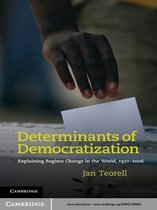
Introduction, Jan Teorell
There has been extraordinary improvement in democracy in the past approx. 35 years.
- Average level of democracy has been steadily on the rise since 1970s.
- 1974 in Southern Europe.
- 1980s in Latin America.
- Disintegration of the single-party rule in the Soviet bloc.
- Free and fair and multi party elections became the norm in some former Soviet and
some African (e.g. Zambia) countries after 1989.
=> Third wave of democratisation
However, this third wave is compatible with some setbacks, e.g in Gambia, Venezuela,
Columbia, Belarus.
And, countries in the Middle East and North Africa have been left pretty much unnoticed by
this wave.
Four distinct answers to the factors of the third wave:
- Modernisation theory: democratisation as a result of the general trend toward
economic development, deepened industrialisation, educational expansion.
- Transition paradigm: democracy has been brought about from above (elites)
(strategic approach).
- Social forces tradition: democratisation has been triggered by mobilisation forces
from below (e.g. working class)
- Economic approach: democratisation as a concession by the rich to the poor out of
fear of redistribution as a result of eroding inequality.
=> Approaches are incomplete.
Study of the book: democracy over time, 165 countries from 1972-2006.
- Large range of explanatory variables.
- Hitherto untested factors.
- Separating the effects on movements towards and away from democracy.
- Exploring determinants in long and the short run.
- Assessing intermediary links in the chain of causation.
- Combines statistical and case study analyses.
- Carefully selected cases that illustrate particular determinants.
1. Factors driving and not driving the third wave
Author (Teorell) agrees with Lipset’s definition of socioeconomic modernisation: broad range
of societal processes.
Modernisation hinders authoritarian reversals rather than promoting a democratic transition.
3
, The strongest bite, according to Teorell, in modernisation assemblage is not education or
industrialisation, but media proliferation.
- It can prevent coups.
- However; it cannot materialise under authoritarian conditions
=> Thus, not promoting transition but preventing backsliding.
- This facet needs some democratic condition; freedom of the press.
Economic upturns help sustain autocracies and economic crises may trigger transition.
- Economic crises wedge the ruling and economic elite and weaken the regime’s
legitimacy.
In terms of mass protests, peaceful protests are way more effective than rioting/armed
rebellion.
- Rioting is often brought about by marginalised groups whereas peaceful protests
may appeal to a larger part of the population.
The third wave constituted a sort of domino effect of falling authoritarian regimes. However,
disentangling the mechanisms responsible for this neighbour diffusion is a difficult matter
(needs more research).
Regional organisations may promote democratisation among its members. It does so by
pressuring authoritarian member states.
The author claims that the importance of colonialism in the developing world may have been
exaggerated.
The author claims that democratisation in the third wave did not ensue from increased
economic equality or in particularly homogenous nations.
Factors impeding democratisation: Muslim population and dependence on foreign trade.
- However; Lack of democracy in muslim countries is not due to oil or female
subordination.
- However; dependency theory has a core assumption at fault.
2. Institutions under authoritarianism
Dictatorships vary in their institutional setup; How does this affect the path of
democratisation?
=> Military dictatorships are more prone to democratise than single-party states.
=> Authoritarian multiparty are more prone to democratise due to its unstable dynamics
(competition).
- Multiparty (even if elections are rigged/controlled) create intra-regime divisions
important for democratisation.
- + it may unify the opposition => Also favorable to democratisation.
4
LECTURE 1 - Introduction 3
Introduction, Jan Teorell 3
LECTURE 2 - What is autocracy? 6
Chapter 1: Explaining democratisation, Jan Teorell 6
Clark et al.: Democracy and dictatorship: Conceptualisation and measurement 11
Dahl: What political institutions does large-scale democracy require? 15
LECTURE 3 - What is democracy? 18
Gandhi: Chapter 1 18
Song and Wright: The North Korean autocracy in comparative perspective 25
LECTURE 4 - How does autocracy work? 28
Levitsky and Way: The rise of competitive authoritarianism 28
Bunce and Wolchik: Defeating dictators: Electoral change and stability in competitive
authoritarian regimes 31
LECTURE 5 - How do autocracies work? 34
Gandhi and Lust-Okar: Elections under Authoritarianism 35
McGregor, Party Man 40
Gary et al., How censorship in China allows government criticism but silences collective
expression 41
LECTURE 6 - Social explanations 44
Chapter 2: The shadow of the past: social determinants, Jan Teorell 45
Fish, Steven: 7, Democracy (Are muslims distinctive?) 47
LECTURE 7 50
Chapter 3: The power of prosperity: economic determinants, Jan Teorell 51
Geddes: What Causes democratisation 53
Lipset: Some social requisites of democracy: Economic development and political
legitimacy 58
LECTURE 8 61
Chapter 4: The impetus from abroad: international determinants 61
Gunitsky: Democratic waves in a historical perspective 65
Walt: Regime change for dummies 68
LECTURE 9 69
Brownlee et al.: Why the modest harvest 69
Derpanopoulos et al.: Are coups good for democracy? 73
Anthony Marx: Race-making and the Nation-state 76
Max Fisher: Peaceful protests are much more effective than violence for toppling
dictators 80
LECTURE 10 81
Javier Corrales: Hugo Boss (2006) 82
1
, Bermeo: On democratic backsliding 83
Levitsky: How democracies die 85
LECTURE 11 89
Varieties of democracy policy brief: Pandemic Backsliding: Democracy and
Disinformation Seven Months into the Covid-19 Pandemic 89
LECTURE 12 92
Berman: The pipe dream of undemocratic liberalism 92
Mudde and Kaltwasser: Populism and (liberal) democracy: A framework for analysis 94
Extra readings 100
Stepan and Robertson: An “Arab” more than “muslim” electoral gap 100
Chapter 5: The force from below: popular mobilisation 102
2
,LECTURE 1 - Introduction
Introduction, Jan Teorell
There has been extraordinary improvement in democracy in the past approx. 35 years.
- Average level of democracy has been steadily on the rise since 1970s.
- 1974 in Southern Europe.
- 1980s in Latin America.
- Disintegration of the single-party rule in the Soviet bloc.
- Free and fair and multi party elections became the norm in some former Soviet and
some African (e.g. Zambia) countries after 1989.
=> Third wave of democratisation
However, this third wave is compatible with some setbacks, e.g in Gambia, Venezuela,
Columbia, Belarus.
And, countries in the Middle East and North Africa have been left pretty much unnoticed by
this wave.
Four distinct answers to the factors of the third wave:
- Modernisation theory: democratisation as a result of the general trend toward
economic development, deepened industrialisation, educational expansion.
- Transition paradigm: democracy has been brought about from above (elites)
(strategic approach).
- Social forces tradition: democratisation has been triggered by mobilisation forces
from below (e.g. working class)
- Economic approach: democratisation as a concession by the rich to the poor out of
fear of redistribution as a result of eroding inequality.
=> Approaches are incomplete.
Study of the book: democracy over time, 165 countries from 1972-2006.
- Large range of explanatory variables.
- Hitherto untested factors.
- Separating the effects on movements towards and away from democracy.
- Exploring determinants in long and the short run.
- Assessing intermediary links in the chain of causation.
- Combines statistical and case study analyses.
- Carefully selected cases that illustrate particular determinants.
1. Factors driving and not driving the third wave
Author (Teorell) agrees with Lipset’s definition of socioeconomic modernisation: broad range
of societal processes.
Modernisation hinders authoritarian reversals rather than promoting a democratic transition.
3
, The strongest bite, according to Teorell, in modernisation assemblage is not education or
industrialisation, but media proliferation.
- It can prevent coups.
- However; it cannot materialise under authoritarian conditions
=> Thus, not promoting transition but preventing backsliding.
- This facet needs some democratic condition; freedom of the press.
Economic upturns help sustain autocracies and economic crises may trigger transition.
- Economic crises wedge the ruling and economic elite and weaken the regime’s
legitimacy.
In terms of mass protests, peaceful protests are way more effective than rioting/armed
rebellion.
- Rioting is often brought about by marginalised groups whereas peaceful protests
may appeal to a larger part of the population.
The third wave constituted a sort of domino effect of falling authoritarian regimes. However,
disentangling the mechanisms responsible for this neighbour diffusion is a difficult matter
(needs more research).
Regional organisations may promote democratisation among its members. It does so by
pressuring authoritarian member states.
The author claims that the importance of colonialism in the developing world may have been
exaggerated.
The author claims that democratisation in the third wave did not ensue from increased
economic equality or in particularly homogenous nations.
Factors impeding democratisation: Muslim population and dependence on foreign trade.
- However; Lack of democracy in muslim countries is not due to oil or female
subordination.
- However; dependency theory has a core assumption at fault.
2. Institutions under authoritarianism
Dictatorships vary in their institutional setup; How does this affect the path of
democratisation?
=> Military dictatorships are more prone to democratise than single-party states.
=> Authoritarian multiparty are more prone to democratise due to its unstable dynamics
(competition).
- Multiparty (even if elections are rigged/controlled) create intra-regime divisions
important for democratisation.
- + it may unify the opposition => Also favorable to democratisation.
4