Social power theory- French and Raven
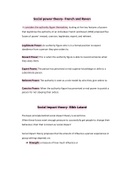
It considers the authority figure themselves, looking at five key features of power
that legitimise the authority of an individual. French and Raven (1959) proposed five
‘bases of power’: reward, coercion, legitimate, expert, and referent.
Legitimate Power: An authority figure who is in a formal position to expect
obedience from a person they give orders to.
Reward Power: This is when the authority figure is able to reward someone when
they obey them.
Expert Power: The person has perceived or real superior knowledge or skills to a
subordinate person.
Referent Power: The authority is seen as a role model by who they give orders to.
Coercive Power: When the authority figure has perceived or real power to punish a
person for not obeying their orders
Social impact theory- Bibb Latané
The basic principle behind social impact theory is social force.
When these forces exert enough pressure to successfully get people to change their
behaviour, then that is known as ‘social impact’.
Social impact theory proposes that the amount of influence a person experiences in
group settings depends on:
➔ Strength: a measure of how much influence or
It considers the authority figure themselves, looking at five key features of power
that legitimise the authority of an individual. French and Raven (1959) proposed five
‘bases of power’: reward, coercion, legitimate, expert, and referent.
Legitimate Power: An authority figure who is in a formal position to expect
obedience from a person they give orders to.
Reward Power: This is when the authority figure is able to reward someone when
they obey them.
Expert Power: The person has perceived or real superior knowledge or skills to a
subordinate person.
Referent Power: The authority is seen as a role model by who they give orders to.
Coercive Power: When the authority figure has perceived or real power to punish a
person for not obeying their orders
Social impact theory- Bibb Latané
The basic principle behind social impact theory is social force.
When these forces exert enough pressure to successfully get people to change their
behaviour, then that is known as ‘social impact’.
Social impact theory proposes that the amount of influence a person experiences in
group settings depends on:
➔ Strength: a measure of how much influence or