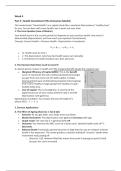
NUR 4120 MS3 FINAL NEW STUFF Question/answers
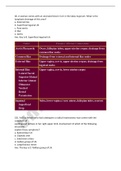
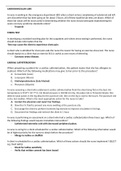
1. Regimen to hanging blood, prioritization: - First get consent - Type and cross patient's blood - Right before hanging blood you will take VS - Give patient antihistamine before hanging the blood - After all of this is done then you can hang the blood 2. A patient's low hemoglobin level has necessitated transfusion of PRBCs. Prior to administration, what action should the nurse perform? A. Assess the patient's vital signs to establish baselines. 3. The patient is receiving a transfusion of packed red blood cells, which of these clinical manifestations would alert the nurse to the development of transfusion related acute lung injury (TRALI)? - Pink frothy sputum 4. When administering a blood transfusion, the patient develops a rapid HR, and a different breathing pattern. What should the nurse do? SATA - Give epinephrine - Assess VS - Stop Infusion 5. A nurse is preparing to transfuse 1 unit packed red blood cells to a patient with anemia. Which of these measures should the nurse implement to decrease the possibility of a blood transfusion reaction? - Infuse the blood at 5 ml/min for the first 15 min 6. A nurse is caring for patient diagnosed with severe anemia who is to receive blood transfusion therapy. Which of the signs should alert the nurse of possible complications? - The patient reports lower back pain sign of transfusion reaction 7. A patient is receiving a transfusion of 2 units of PRBC’s. During the infusion of the 2nd unit the nurse observes the patient has distended neck veins in sitting position. Which action should the nurse take initially? - Slow the infusion rate 8. A patient is receiving a blood transfusion and complains of a new onset of slight dyspnea. The nurse's rapid assessment reveals bilateral lung crackles and elevated BP. What is the nurse's most appropriate action? - Slow the infusion rate and monitor the patient closely 9. The nurse is assessing a client with a history of heart failure who is receiving a unit of packed red blood cells. The client’s respiratory rate is 33 breaths/min and blood pressure is 140/90 mm Hg. Which action does the nurse take first? - Slow the infusion rate of the transfusion 10. A patient who is receiving a blood transfusion suddenly exhibits signs of transfusion reaction. - Stop the transfusion - Maintain a patent IV with NS - Monitor pt VS - Send blood immediately to the blood bank - File a blood transfusion report 11. A patient is being treated in the ICU after a medical error resulted in an acute hemolytic transfusion reaction. What was the etiology of this patient's adverse reaction? - The donor blood was incompatible with that of the patient. 12. The nurse is preparing to transfuse a third unit of red blood cells to a client. Which laboratory result is the nurse most concerned about? - Potassium level of 5.5 mg/dL DIC 13. A patient's blood work reveals a platelet level of 17,000/mm3 . When inspecting the patient's integumentary system, what finding would be most consistent with this platelet level? Petechiae 14. An intensive care nurse is aware of the need to identify patients who may be at risk of developing disseminated intravascular coagulation (DIC). Which of the following ICU patients most likely faces the highest risk of DIC? A patient who is being treated for septic shock 15. Which client would be most at risk for developing disseminated intravascular coagulation (DIC)? A 78-year-old client diagnosed
Written for
Document information
- Uploaded on
- October 15, 2021
- Number of pages
- 16
- Written in
- 2021/2022
- Type
- Exam (elaborations)
- Contains
- Questions & answers
Subjects
-
1 regimen to hanging blood
-
prioritization first get consent type and cross patients blood right before hanging blood you will take vs give patient antihistamine before hanging the blood