Instrumental and analytical Chemistry
Chapter 1 An overview of instrumental Analytical Chemistry
Qualitative analysis: the need to identify what is present in a sample. Examples: identifying
product of a chemical reaction, screening for the presence of a drug determining the spatial
distribution of contaminant in soils …
Quantitative analysis: elemental and molecular analyses => trace elements and chemical
speciation analysis. Speciation is the identification of a specific molecule.
Bioanalysis is the accurate quantification of drugs and endogenous substances in biological
samples. Bio-analyses are molecules that can interfere with receptors and can have a toxic
property.
Screening is a qualitative way of analyzing a sample for the presence or absence for a specific
molecule. It is a low-cost way of analyzing.
Quantitative analyse has a limit of detection and a limit of the quanta it can analyse. It
identificates both bio-analyse doesn’t identify and is a semi-quantitative determination.
Only the use of the 7 basic units is allowed. That means that a concentration is in mol/L and
not in M. (K, s, m, kg, cs, mol, A)
Metrology is the science that allows you to make calibrations. It makes a chain of standards
that allow you to determine with great accuracy. Metrology distinguishes the definition of a
unit and its realization. Metrology in chemistry is defined as the science of Measurment.
1
,There are 2 types of errors:
- Accuracy: how well the measured result differs from the actual result. A distinction is
made here between the absolute and the relative error:
o The absolute error is the difference between the measured value and the actual
value. E = xi – xt
𝑥 −𝑥
o The relative error is the absolute error / the actual value. Er = 𝑖 𝑥 𝑡
𝑡
- Precision: a certain uncertainty on the measurement that is determined by repeating
the measurements on repeated samples.
The deviation: di = |𝑥𝑖 − 𝑥̅ | the spread between the measured value and the mean
value.
ISO: international standard organization. It provides norms that should be respected. For the
chemistry department it is ISO17025.
Analyses are spread from the macro to the microworld and even in some cases to the traces
or ultra-traces. Analyzations on traces have a high risk of contamination while analyzations on
macromolecules don’t because of the high concentration.
2
,Chapter 2 Performance characteristics of instruments - Chemometrics
Def: the performance characteristics of the chemical analytical processes are those
quantifiable terms, which may indicate the extent of the quality of the processes.
Method and instrument => sensitivity, selectivity, LOD, LOQ, background and baseline,
repeatability, reproducibility …
The analytical result => uncertainty, precision, standard deviation, systematic error, accuracy…
True value (= reference value) 𝜏
It characterizes a quantity perfectly defined in the conditions that exist when that quantity is
considered. An ideal value that can only be reached if all causes of measurement error were
eliminated and the entire population was sampled.
In the measurement science a true value doesn’t exist because there is always propagation of
a random and/or systematic errors.
The true value is better described as a reference value => standards. The reference value can
be approximated by using a probability distribution function (pdf), mostly normal distributed.
For a lack of normal distribution, the concentration of the sample should be reconsidered.
Don’t forget that a pdf is described by a Gauss curve, from -00, to +00.
The reference value can be bought as a certified reference material or can be made by yourself
by spiking a sample with a known concentration of a standard.
Accuracy
The accuracy is the closeness of agreement between a test result and the true value or
reference value of a measurement. The accuracy is a qualitative concept and involves a
combination of random error components and a systematic error or bias component.
But in analytical practice it is described as a quantitative way by the bias of recovery.
The bias: the difference between the measurement value or test result and the reference
̅ – X0
value: Bias = X
3
, Apparent recovery (%)
The apparent recovery is the observed value or test result ̅ X derived from an analytical
procedure by means of a calibration graph divided by the reference value X0:
It is important to validate a measurement. If the measurement is in the range of 80%-120%
the measurement is satisfied. It’s used in food safety and medicine, but the range of validation
we be smaller. Why > 100%? Because of the risk of contamination and the propagation of
random errors.
Apparent recovery is not the recovery factor, which is the yield of a pre-concentration or
extraction stage of an analytical process for an analyte divided by the amount of analyte
present in the original sample.
How to assess the reference value X0
By using a standard addition (spike procedure) or a certified reference material (CRM)
Spike of-r reference standards are materials of known concentration that are used as
calibrators in the assays.
Certified reference material (CRM): Reference material characterized by a metrologically valid
procedure for one or more specified properties, accompanied by a certificate that provides
the value of the specified property, its associated uncertainty, and a statement of metrological
traceability.
Precision
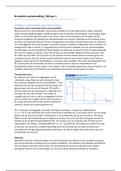
Precision is the closeness of agreement between independent test results => spread on the
Gauss curve.
The smaller the random part of the experimental errors which
affect the results, the more precise the procedure.
4
Chapter 1 An overview of instrumental Analytical Chemistry
Qualitative analysis: the need to identify what is present in a sample. Examples: identifying
product of a chemical reaction, screening for the presence of a drug determining the spatial
distribution of contaminant in soils …
Quantitative analysis: elemental and molecular analyses => trace elements and chemical
speciation analysis. Speciation is the identification of a specific molecule.
Bioanalysis is the accurate quantification of drugs and endogenous substances in biological
samples. Bio-analyses are molecules that can interfere with receptors and can have a toxic
property.
Screening is a qualitative way of analyzing a sample for the presence or absence for a specific
molecule. It is a low-cost way of analyzing.
Quantitative analyse has a limit of detection and a limit of the quanta it can analyse. It
identificates both bio-analyse doesn’t identify and is a semi-quantitative determination.
Only the use of the 7 basic units is allowed. That means that a concentration is in mol/L and
not in M. (K, s, m, kg, cs, mol, A)
Metrology is the science that allows you to make calibrations. It makes a chain of standards
that allow you to determine with great accuracy. Metrology distinguishes the definition of a
unit and its realization. Metrology in chemistry is defined as the science of Measurment.
1
,There are 2 types of errors:
- Accuracy: how well the measured result differs from the actual result. A distinction is
made here between the absolute and the relative error:
o The absolute error is the difference between the measured value and the actual
value. E = xi – xt
𝑥 −𝑥
o The relative error is the absolute error / the actual value. Er = 𝑖 𝑥 𝑡
𝑡
- Precision: a certain uncertainty on the measurement that is determined by repeating
the measurements on repeated samples.
The deviation: di = |𝑥𝑖 − 𝑥̅ | the spread between the measured value and the mean
value.
ISO: international standard organization. It provides norms that should be respected. For the
chemistry department it is ISO17025.
Analyses are spread from the macro to the microworld and even in some cases to the traces
or ultra-traces. Analyzations on traces have a high risk of contamination while analyzations on
macromolecules don’t because of the high concentration.
2
,Chapter 2 Performance characteristics of instruments - Chemometrics
Def: the performance characteristics of the chemical analytical processes are those
quantifiable terms, which may indicate the extent of the quality of the processes.
Method and instrument => sensitivity, selectivity, LOD, LOQ, background and baseline,
repeatability, reproducibility …
The analytical result => uncertainty, precision, standard deviation, systematic error, accuracy…
True value (= reference value) 𝜏
It characterizes a quantity perfectly defined in the conditions that exist when that quantity is
considered. An ideal value that can only be reached if all causes of measurement error were
eliminated and the entire population was sampled.
In the measurement science a true value doesn’t exist because there is always propagation of
a random and/or systematic errors.
The true value is better described as a reference value => standards. The reference value can
be approximated by using a probability distribution function (pdf), mostly normal distributed.
For a lack of normal distribution, the concentration of the sample should be reconsidered.
Don’t forget that a pdf is described by a Gauss curve, from -00, to +00.
The reference value can be bought as a certified reference material or can be made by yourself
by spiking a sample with a known concentration of a standard.
Accuracy
The accuracy is the closeness of agreement between a test result and the true value or
reference value of a measurement. The accuracy is a qualitative concept and involves a
combination of random error components and a systematic error or bias component.
But in analytical practice it is described as a quantitative way by the bias of recovery.
The bias: the difference between the measurement value or test result and the reference
̅ – X0
value: Bias = X
3
, Apparent recovery (%)
The apparent recovery is the observed value or test result ̅ X derived from an analytical
procedure by means of a calibration graph divided by the reference value X0:
It is important to validate a measurement. If the measurement is in the range of 80%-120%
the measurement is satisfied. It’s used in food safety and medicine, but the range of validation
we be smaller. Why > 100%? Because of the risk of contamination and the propagation of
random errors.
Apparent recovery is not the recovery factor, which is the yield of a pre-concentration or
extraction stage of an analytical process for an analyte divided by the amount of analyte
present in the original sample.
How to assess the reference value X0
By using a standard addition (spike procedure) or a certified reference material (CRM)
Spike of-r reference standards are materials of known concentration that are used as
calibrators in the assays.
Certified reference material (CRM): Reference material characterized by a metrologically valid
procedure for one or more specified properties, accompanied by a certificate that provides
the value of the specified property, its associated uncertainty, and a statement of metrological
traceability.
Precision
Precision is the closeness of agreement between independent test results => spread on the
Gauss curve.
The smaller the random part of the experimental errors which
affect the results, the more precise the procedure.
4