PARTNERSHIPS: MODULE 5
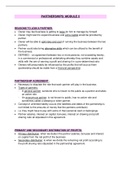
REASONS TO JOIN A PARTNER:
• Owner may feel business is getting to large for him to manage by himself.
• Owner might want to expand business and extra capital would be provided by
partner.
• Owner will be able to split risks and cost of running the business between the two
partners.
• Partner could also bring alternative skills which can be utilized to the benefit of
the business.
• DEFINED: - an agreement between two or more persons, not exceeding twenty,
in a commercial or professional undertaking whereby they combine assets and
skills with the aim of earning a profit and sharing it in a pre-determined ratio
• Owners will presumably be influenced by the profits that will accrue them
(partnership should be viable from a financial perspective)
PARTNERSHIP AGREEMENT:
• Necessary to stipulate the role that each partner will play in the business
• Types of partners:
- A general partner: someone who is known to the public as a partner and takes
an active role.
- An anonymous partner: is not known to public, has no active role and
sometimes called a sleeping or silent partner.
• Concept of unlimited liability occurs (the liabilities and debts of the partnership is
not limited to the amounts of money that the partners contribute)
• i.e. they might have to pay with some of their personal cash or belongings.
• Partner salaries, interest on capital, bonuses, interest on drawing and profit
sharing ratio all stipulated in this agreement.
PRIMARY AND SECONDARY DISTRIBUTION OF PROFITS:
• Primary distribution: when we deduct the partner salaries, bonuses and interest
on capital from the net profit of the business
• Secondary distribution: is when we divide the remaining net profit according to
the profit sharing ratio stipulated in the partnership agreement.
REASONS TO JOIN A PARTNER:
• Owner may feel business is getting to large for him to manage by himself.
• Owner might want to expand business and extra capital would be provided by
partner.
• Owner will be able to split risks and cost of running the business between the two
partners.
• Partner could also bring alternative skills which can be utilized to the benefit of
the business.
• DEFINED: - an agreement between two or more persons, not exceeding twenty,
in a commercial or professional undertaking whereby they combine assets and
skills with the aim of earning a profit and sharing it in a pre-determined ratio
• Owners will presumably be influenced by the profits that will accrue them
(partnership should be viable from a financial perspective)
PARTNERSHIP AGREEMENT:
• Necessary to stipulate the role that each partner will play in the business
• Types of partners:
- A general partner: someone who is known to the public as a partner and takes
an active role.
- An anonymous partner: is not known to public, has no active role and
sometimes called a sleeping or silent partner.
• Concept of unlimited liability occurs (the liabilities and debts of the partnership is
not limited to the amounts of money that the partners contribute)
• i.e. they might have to pay with some of their personal cash or belongings.
• Partner salaries, interest on capital, bonuses, interest on drawing and profit
sharing ratio all stipulated in this agreement.
PRIMARY AND SECONDARY DISTRIBUTION OF PROFITS:
• Primary distribution: when we deduct the partner salaries, bonuses and interest
on capital from the net profit of the business
• Secondary distribution: is when we divide the remaining net profit according to
the profit sharing ratio stipulated in the partnership agreement.