Leadership & Teamwork Unit 2
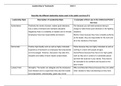
Describe the different leadership styles used in the public services (P1)
Leadership Style Description of Leadership Style 2 examples of their use in the Uniformed Public
Services
Authoritarian Positively the centre of power, makes quick decisions, Fire because you will need someone strong in
has a clarity of demand and maintains discipline. charge to make those quick decisions in the fighting
Negatively there is a reliability on leaders and on threats. situations.
Employees have less responsibility and absent. Marine Corps because they have complete authority
as the leader, they are responsible for the work and
all of the members of the team.
Democratic Positive high Quality work as well as highly motivated. Police because they are highly motivated as well as
Experience of teamwork so employees feel empowered working in a team with people all ages.
and encouraged. However, discussion may take time, Doctor/Nurse because they have to do high quality
discipline and safety of team maybe compromised. work as they are in control of a vulnerable person
and their life could be in your hands. They have to
be motivated to be confident and focused on the
task in hand.
Laissez Faire Strengths: The leader can delegate and the employees RNLI and Mountain Rescue because they are called
have freedom and no supervision they also feel trusted when needed to help (volunteering) so they have
and empowered. Unfortunately, goals may not be
1
, Leadership & Teamwork Unit 2
achieved, no clear direction or supervision. freedom.
Transactional Positively leaders have a clear chain of demand and Army because the leader is in charge of everyone
they are dominating. However, there is a focus on short- below them, they are dominating to everyone below
term tasks only and unethical practise to reach target. them.
Security Guard because they have one job to do to
protect a place or subject. Therefore, they have a
short focus on tasks as they can only do one thing
at one time.
Transformational Positively the leader has passion and energy so the High ranking officer in the army or marines because
team feel cared for as well as the employees feel they inspire the troops ranking below them.
empowered. However, there is a lack of motivation Navy because as they influence others to help
amongst some; teams may not share vision and leaders achieve goals and they develop as people.
frustration at failure.
Bureaucratic Positively leaders has clear guidance and policies. Police because they stick to the laws and order of
Maintains order and enforces a routine. However, there the book they have to go by.
is no negotiation and a rigid approach to work. No Bomb Disposal Officer because they stick to the
flexibility so it leads to a loss of work interest, but it routine, if they do not it can cause serious danger
covers up the poor leader. and or injury.
2
Describe the different leadership styles used in the public services (P1)
Leadership Style Description of Leadership Style 2 examples of their use in the Uniformed Public
Services
Authoritarian Positively the centre of power, makes quick decisions, Fire because you will need someone strong in
has a clarity of demand and maintains discipline. charge to make those quick decisions in the fighting
Negatively there is a reliability on leaders and on threats. situations.
Employees have less responsibility and absent. Marine Corps because they have complete authority
as the leader, they are responsible for the work and
all of the members of the team.
Democratic Positive high Quality work as well as highly motivated. Police because they are highly motivated as well as
Experience of teamwork so employees feel empowered working in a team with people all ages.
and encouraged. However, discussion may take time, Doctor/Nurse because they have to do high quality
discipline and safety of team maybe compromised. work as they are in control of a vulnerable person
and their life could be in your hands. They have to
be motivated to be confident and focused on the
task in hand.
Laissez Faire Strengths: The leader can delegate and the employees RNLI and Mountain Rescue because they are called
have freedom and no supervision they also feel trusted when needed to help (volunteering) so they have
and empowered. Unfortunately, goals may not be
1
, Leadership & Teamwork Unit 2
achieved, no clear direction or supervision. freedom.
Transactional Positively leaders have a clear chain of demand and Army because the leader is in charge of everyone
they are dominating. However, there is a focus on short- below them, they are dominating to everyone below
term tasks only and unethical practise to reach target. them.
Security Guard because they have one job to do to
protect a place or subject. Therefore, they have a
short focus on tasks as they can only do one thing
at one time.
Transformational Positively the leader has passion and energy so the High ranking officer in the army or marines because
team feel cared for as well as the employees feel they inspire the troops ranking below them.
empowered. However, there is a lack of motivation Navy because as they influence others to help
amongst some; teams may not share vision and leaders achieve goals and they develop as people.
frustration at failure.
Bureaucratic Positively leaders has clear guidance and policies. Police because they stick to the laws and order of
Maintains order and enforces a routine. However, there the book they have to go by.
is no negotiation and a rigid approach to work. No Bomb Disposal Officer because they stick to the
flexibility so it leads to a loss of work interest, but it routine, if they do not it can cause serious danger
covers up the poor leader. and or injury.
2