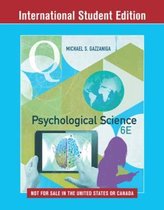
Chapter 1 Psychological science (Gazzaniga, 2018)
What is psychology? > the study of mental activity, brain and behaviour through research
• Mind= mental activity, mental activity results from biological processes in the brain.
• Behaviour= the totality of observable human action.
1.2.
• Amiable scepticism = being open to new ideas but carefully considering the evidence ( critical
thinking)
• Sometimes critical thinking is hard because we humans are biased and tend to follow
common sense and intuition which is often wrong.
1.3
• Errors and biases do not occur because we lack intelligence, but because we are motivated to
use our intelligence to make sense of thing and understand them. That’s why sometimes we
see patterns that are not there. We try too hard (unconsciously) to make sense of things to
match our perceptions. We see what we expect/ want to see and fail to notice things that do
not fit these perceptions we had.
Major biases:
• Confirmation bias: ignore evidence and follow evidence that fits their beliefs (selective
sampling of information)
• Correlation does not imply causation
• Hindsight bias (accepting after-the-fact explanations): thinking past events were more
predictable than they actually were (“I could have known this/ I knew this would happen”).
May cause distorted memories and false evidence. Also known as the “I knew it all along”
phenomenon.
• Heuristics: taking mental shortcuts to make decisions. E.g: on the news you heard something
small and now you think you know all about the topic.
• Availability heuristic: things that come most easily to mind guide our decision making and
thinking. The more horrifying the events, the more likely you will remember them. E.g:
preferring driving instead of flying because plane crashes are more likely to be on the news
than car crashes and seem more horrifying.
1.4
• Something good happens> it must be our personal strengths/ good characteristics
Something bad happens> it must be an outside force or circumstance
• Cringe= feeling embarrassed for other people
• If people lack the skills to produce right answers, they are unable to judge if someone else is
right or wrong.
• Dunning-Kruger effect: people with low ability of a task overestimate their ability and people
with high ability of a task underestimate their ability. The more confident the less the
competence.
What is psychology? > the study of mental activity, brain and behaviour through research
• Mind= mental activity, mental activity results from biological processes in the brain.
• Behaviour= the totality of observable human action.
1.2.
• Amiable scepticism = being open to new ideas but carefully considering the evidence ( critical
thinking)
• Sometimes critical thinking is hard because we humans are biased and tend to follow
common sense and intuition which is often wrong.
1.3
• Errors and biases do not occur because we lack intelligence, but because we are motivated to
use our intelligence to make sense of thing and understand them. That’s why sometimes we
see patterns that are not there. We try too hard (unconsciously) to make sense of things to
match our perceptions. We see what we expect/ want to see and fail to notice things that do
not fit these perceptions we had.
Major biases:
• Confirmation bias: ignore evidence and follow evidence that fits their beliefs (selective
sampling of information)
• Correlation does not imply causation
• Hindsight bias (accepting after-the-fact explanations): thinking past events were more
predictable than they actually were (“I could have known this/ I knew this would happen”).
May cause distorted memories and false evidence. Also known as the “I knew it all along”
phenomenon.
• Heuristics: taking mental shortcuts to make decisions. E.g: on the news you heard something
small and now you think you know all about the topic.
• Availability heuristic: things that come most easily to mind guide our decision making and
thinking. The more horrifying the events, the more likely you will remember them. E.g:
preferring driving instead of flying because plane crashes are more likely to be on the news
than car crashes and seem more horrifying.
1.4
• Something good happens> it must be our personal strengths/ good characteristics
Something bad happens> it must be an outside force or circumstance
• Cringe= feeling embarrassed for other people
• If people lack the skills to produce right answers, they are unable to judge if someone else is
right or wrong.
• Dunning-Kruger effect: people with low ability of a task overestimate their ability and people
with high ability of a task underestimate their ability. The more confident the less the
competence.