Biology Unit 4 Note:
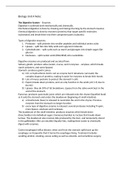
The Digestive System – Enzymes
Digestion is achieved both mechanically and chemically.
Mechanical digestion is done by chewing and mixing/churning by the stomach muscles.
Chemical digestion is done by enzymes (proteins) that target specific molecules
(substrates) and break them into their component parts (subunits).
Types of digestive enzymes:
1. Proteases – split proteins into smaller peptides and individual amino acids
2. Lipases – split fats into fatty acids and a glycerol molecule
3. Carbohydrates – split carbs such as starch and glycogen into simple sugars like
glucose
4. Nucleases – split nucleic acids (DNA/RNA) into nucleotides
Digestive enzymes are produced and secreted from:
Salivary glands: produce saliva (water, mucus, and 2 enzymes – amylase, which breaks
starch polymers, and some lipases)
Stomach: produces gastric juices:
A) HCl, or Hydrochloric Acid is not an enzyme but it denatures (unravels) the
complex shapes of proteins, making it easier for enzymes to break their bonds
B) Lots of mucus proteins to protect the stomach’s cells.
C) Pepsin breaks down proteins, and can only function in the acidic pH (1.5) due to
the HCl
D) Lipases: they do 30% of fat breakdown. Lipases from the saliva work best in the
acid of the stomach.
Pancreas: produces pancreatic juices which are released onto the chyme (liquefied food)
as it exits the stomach and enters the duodenum (beginning of small intestine):
a) a bicarbonate (base) is released to neutralize the acid in the chyme. Previous
enzymes from the stomach no longer function
b) every type of digestive enzyme is released: several proteases including Trypsin,
more lipases, amylases and nucleases.
The duodenum of the small intestine: produces enzymes which break down
disaccharides into individual sugars (monosaccharides) ie: lactase that breaks down
lactose. The duodenum also receives bile produced by the liver, and temporarily stored
in the gallbladder. Bile can emulsify (liquefy) fats, making them easier to chemically
digest with enzymes.
Gastro-esophageal reflux disease: when acid from the stomach spills back up the
esophagus so frequently that it harms the esophagus lining. Treatment includes
avoiding alcohol, smoking, excess eating as well as antacids, and sometimes surgery.
, Ulcer: broken down stomach lining becomes irritated by gastric acid. Gastric acid can
also spill and irritate tissues of other organs. Sores found in the stomach lining,
esophagus or upper SA are peptic ulcers.
Constipation: peristalsis moves the feces too slowly, or when colon absorbs too much
water and the feces gets too compacted. Causes include surgery, medication, air travel
and pregnancy. Treatment: healthy diet with fibre, exercise, drinking lots of water
Diarrhea: lining of the colon is irritated e.g.: by a viral or bacterial infection, the colon is
less effective in reclaiming water. Treatment: clean water, nutritious food.
Type 1 Diabetes: pancreas cells are damaged, they cannot produce insulin. Effects can
be controlled, but it cannot be prevented. Type 2: body cells do not respond to insulin
appropriately. Causes: obesity, lack of exercise, excess body fat. Treatment: insulin
replacement (daily injections), testing blood sugar, physical activity, nutrition.
Circulatory System: continuous network of tubular blood vessels connected to the
heart. It carries O2 and nutrients to the body’s cells, and Co2 and cellular wastes away
from them. 2 separate circuits:
In the pulmonary circuit,
- deoxygenated blood travels from the right side of your heart through the
pulmonary arteries to your lungs.
- the blood picks up oxygen and releases carbon dioxide. The pulmonary veins
then return the oxygenated blood to the left side of the heart.
In the systemic circuit,
- oxygenated blood from the lungs is brought to the left atrium via the pulmonary
vein and is then pumped to the left ventricle.
- blood is pumped to the aorta, the artery which supplies oxygen-rich blood to all
systems of the body. The nutrients diffuse out, and wastes + CO2 diffuse in at the
capillaries. Deoxygenated blood returns to the right atrium of the heart via the
vena cava veins (superior & inferior).
The two upper chambers, atria, receive blood returning to the heart. The atria pump
blood a short distance to the ventricles. The two lower chambers, ventricles, have
thicker muscular walls that enable them to pump blood throughout the body. Valves in
the heart prevent blood from flowing backwards. The valves between the atria and
ventricles are the atrioventricular valves. The pulmonary valve is between the right
ventricle and the pulmonary artery. The aortic valve is between the left ventricle and
the aorta.
The Digestive System – Enzymes
Digestion is achieved both mechanically and chemically.
Mechanical digestion is done by chewing and mixing/churning by the stomach muscles.
Chemical digestion is done by enzymes (proteins) that target specific molecules
(substrates) and break them into their component parts (subunits).
Types of digestive enzymes:
1. Proteases – split proteins into smaller peptides and individual amino acids
2. Lipases – split fats into fatty acids and a glycerol molecule
3. Carbohydrates – split carbs such as starch and glycogen into simple sugars like
glucose
4. Nucleases – split nucleic acids (DNA/RNA) into nucleotides
Digestive enzymes are produced and secreted from:
Salivary glands: produce saliva (water, mucus, and 2 enzymes – amylase, which breaks
starch polymers, and some lipases)
Stomach: produces gastric juices:
A) HCl, or Hydrochloric Acid is not an enzyme but it denatures (unravels) the
complex shapes of proteins, making it easier for enzymes to break their bonds
B) Lots of mucus proteins to protect the stomach’s cells.
C) Pepsin breaks down proteins, and can only function in the acidic pH (1.5) due to
the HCl
D) Lipases: they do 30% of fat breakdown. Lipases from the saliva work best in the
acid of the stomach.
Pancreas: produces pancreatic juices which are released onto the chyme (liquefied food)
as it exits the stomach and enters the duodenum (beginning of small intestine):
a) a bicarbonate (base) is released to neutralize the acid in the chyme. Previous
enzymes from the stomach no longer function
b) every type of digestive enzyme is released: several proteases including Trypsin,
more lipases, amylases and nucleases.
The duodenum of the small intestine: produces enzymes which break down
disaccharides into individual sugars (monosaccharides) ie: lactase that breaks down
lactose. The duodenum also receives bile produced by the liver, and temporarily stored
in the gallbladder. Bile can emulsify (liquefy) fats, making them easier to chemically
digest with enzymes.
Gastro-esophageal reflux disease: when acid from the stomach spills back up the
esophagus so frequently that it harms the esophagus lining. Treatment includes
avoiding alcohol, smoking, excess eating as well as antacids, and sometimes surgery.
, Ulcer: broken down stomach lining becomes irritated by gastric acid. Gastric acid can
also spill and irritate tissues of other organs. Sores found in the stomach lining,
esophagus or upper SA are peptic ulcers.
Constipation: peristalsis moves the feces too slowly, or when colon absorbs too much
water and the feces gets too compacted. Causes include surgery, medication, air travel
and pregnancy. Treatment: healthy diet with fibre, exercise, drinking lots of water
Diarrhea: lining of the colon is irritated e.g.: by a viral or bacterial infection, the colon is
less effective in reclaiming water. Treatment: clean water, nutritious food.
Type 1 Diabetes: pancreas cells are damaged, they cannot produce insulin. Effects can
be controlled, but it cannot be prevented. Type 2: body cells do not respond to insulin
appropriately. Causes: obesity, lack of exercise, excess body fat. Treatment: insulin
replacement (daily injections), testing blood sugar, physical activity, nutrition.
Circulatory System: continuous network of tubular blood vessels connected to the
heart. It carries O2 and nutrients to the body’s cells, and Co2 and cellular wastes away
from them. 2 separate circuits:
In the pulmonary circuit,
- deoxygenated blood travels from the right side of your heart through the
pulmonary arteries to your lungs.
- the blood picks up oxygen and releases carbon dioxide. The pulmonary veins
then return the oxygenated blood to the left side of the heart.
In the systemic circuit,
- oxygenated blood from the lungs is brought to the left atrium via the pulmonary
vein and is then pumped to the left ventricle.
- blood is pumped to the aorta, the artery which supplies oxygen-rich blood to all
systems of the body. The nutrients diffuse out, and wastes + CO2 diffuse in at the
capillaries. Deoxygenated blood returns to the right atrium of the heart via the
vena cava veins (superior & inferior).
The two upper chambers, atria, receive blood returning to the heart. The atria pump
blood a short distance to the ventricles. The two lower chambers, ventricles, have
thicker muscular walls that enable them to pump blood throughout the body. Valves in
the heart prevent blood from flowing backwards. The valves between the atria and
ventricles are the atrioventricular valves. The pulmonary valve is between the right
ventricle and the pulmonary artery. The aortic valve is between the left ventricle and
the aorta.