End of the Cold War & Collapse of the USSR
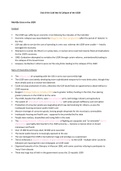
Mid-80s Crisis in the USSR
Context
• The USSR was suffering an economic crisis following four decades of the Cold War
• Economic collapse was exacerbated by Reagan’s Star Wars programme (aBer the period of ‘detente’ in
the 70s)
• USA was able to service the cost of spending in arms race, whereas the USSR were unable — heavily
damaged the economy
• AKempts to counter the West (i.e in proxy wars, in nuclear arms race) had massive financial implicaNons
for the USSR’s economy
• 1985: Gorbachev aKempted to revitalise the USSR through certain reforms, unintenNonally leading to
the collapse of the Soviet Union
• However, Gorbachev’s reforms were not the only factor leading to the collapse of the USSR
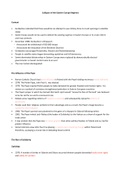
Signs of Impending Collapse
• The military cost of compeNng with the USA in arms race was terribly high
• The USSR were consistently developing more sophisNcated weaponry for mass destrucNon, though they
were simply used as a nuclear war deterrent
• Could not stop producNon of arms, otherwise the USA would have an opportunity to aKack without a
USSR response
• Reagan’s Strategic Defence IniNaNve (SDI) saw to greater military funding in the USA, thus placing
greater pressure on the USSR to do the same
• The USSR, despite their efforts, were less advanced arms, technology, industry and agriculture
• The system of centralised state planning was in crisis with wide-spread inefficiency and corrupNon
• ProducNon of consumer goods was stagnaNng which was demoralising for ciNzens, as was the
inadequate housing and poor public health care
• Massive shortage of consumer goods, leaving people desperate for the most basic commodiNes
• Inadequate housing and health care - supposed to be provided by the state
• People were restless, dissaNsfied and losing faith in the state
• The mounNng financial, military and human costs of fighNng an unpopular and “un-winnable” war in
Afghanistan was highly detrimental to the USSR economy — became a massive drain on Soviet
manpower and funds
• Over 15 000 Soviet troops died, 50 000 were wounded
• The Soviet public became increasingly opposed to the war
• The war damaged the USSR’s internaNonal image and presNge as a superpower
• The US enforced a boycoK on exports of grain and technology to the USSR - mulNple other countries
followed suit imposing their own embargoes on USSR trade
• Organised boycoKs of the Olympics in Moscow 1980, with some countries refusing to parNcipate to
‘voice’ their distaste
• There was huge loss of faith in the government across the 15-republic USSR
, Gorbachev’s Reforms
Gorbachev’s New Thinking
• March 1985: Gorbachev is elected as the General Secretary of the Communist Party of the Soviet Union
(CPSU)
• Despite not being his intenNon, his reforms do not save the USSR but rather parNally lead to its collapse
• Was intent on addressing criNcal economic, poliNcal and foreign affairs
• Part of it was re-thinking Soviet prioriNes and not having Marxist-Leninist ideology determine Soviet
foreign policy
• In hopes of doing so, he wanted to sever Nes with Cuba, the USSR’s satellite states, SA’s communist
party
• He intended to rethink foreign policy with absolutely no intenNon of ending communism
• Hoped to end the Cold War through this rethinking of foreign policy
• Gorbachev’s reforms acknowledged that the Soviet system has crucial weaknesses — chose to ‘look’ at
the West and see what they could adopt to help advance communism in the Soviet Union
• A very clear shiB is seen as he looks to find the value in his compeNNon i.e the West
Perestroika
• The economy is stagnant and corrupt, suffering agriculturally and industrially = food shortages,
inadequate housing, raNoning, poor public health care systems
• Was a plan to restructure the economy
• Gorbachev’s primary objecNve was revitalise the USSR economy
• He realised the financial burden of keeping up with the SDI was damaging the USSR economy
• Gorbachev planned to enter into arms-reducNon discourse with Reagan
• Wanted Reagan to pull back on the USA’s SDI given the negaNve effects it was having on the USSR’s
economy
• The aims of Perestroika:
- to speed up economic growth
- to improve economy efficiency
- to modernise the USSR economy operated
- to aKract much needed foreign investment
- to improve economic deficiency
- to target corrupNon that cost the economy
- to provide people with the incenNve to build the economy
• Gorbachev was open to new ideas but was not interested in moving away from communism
• In this way, he was primarily moving from state-planning/centralised-planning/state control so that
there was more local autonomy in how enterprises are run
• He understood that he could not improve the standard of living without restructuring the economy
• In the iniNal process, the economy became worse because people were not certain of how to operate
without state control
• He called for a major cut in military spending, which required an end to the arms race
• Opened dialogue with Reagan regarding arms-reducNon measures, claiming that the USSR was not fit to
compete with the USA by any means
Mid-80s Crisis in the USSR
Context
• The USSR was suffering an economic crisis following four decades of the Cold War
• Economic collapse was exacerbated by Reagan’s Star Wars programme (aBer the period of ‘detente’ in
the 70s)
• USA was able to service the cost of spending in arms race, whereas the USSR were unable — heavily
damaged the economy
• AKempts to counter the West (i.e in proxy wars, in nuclear arms race) had massive financial implicaNons
for the USSR’s economy
• 1985: Gorbachev aKempted to revitalise the USSR through certain reforms, unintenNonally leading to
the collapse of the Soviet Union
• However, Gorbachev’s reforms were not the only factor leading to the collapse of the USSR
Signs of Impending Collapse
• The military cost of compeNng with the USA in arms race was terribly high
• The USSR were consistently developing more sophisNcated weaponry for mass destrucNon, though they
were simply used as a nuclear war deterrent
• Could not stop producNon of arms, otherwise the USA would have an opportunity to aKack without a
USSR response
• Reagan’s Strategic Defence IniNaNve (SDI) saw to greater military funding in the USA, thus placing
greater pressure on the USSR to do the same
• The USSR, despite their efforts, were less advanced arms, technology, industry and agriculture
• The system of centralised state planning was in crisis with wide-spread inefficiency and corrupNon
• ProducNon of consumer goods was stagnaNng which was demoralising for ciNzens, as was the
inadequate housing and poor public health care
• Massive shortage of consumer goods, leaving people desperate for the most basic commodiNes
• Inadequate housing and health care - supposed to be provided by the state
• People were restless, dissaNsfied and losing faith in the state
• The mounNng financial, military and human costs of fighNng an unpopular and “un-winnable” war in
Afghanistan was highly detrimental to the USSR economy — became a massive drain on Soviet
manpower and funds
• Over 15 000 Soviet troops died, 50 000 were wounded
• The Soviet public became increasingly opposed to the war
• The war damaged the USSR’s internaNonal image and presNge as a superpower
• The US enforced a boycoK on exports of grain and technology to the USSR - mulNple other countries
followed suit imposing their own embargoes on USSR trade
• Organised boycoKs of the Olympics in Moscow 1980, with some countries refusing to parNcipate to
‘voice’ their distaste
• There was huge loss of faith in the government across the 15-republic USSR
, Gorbachev’s Reforms
Gorbachev’s New Thinking
• March 1985: Gorbachev is elected as the General Secretary of the Communist Party of the Soviet Union
(CPSU)
• Despite not being his intenNon, his reforms do not save the USSR but rather parNally lead to its collapse
• Was intent on addressing criNcal economic, poliNcal and foreign affairs
• Part of it was re-thinking Soviet prioriNes and not having Marxist-Leninist ideology determine Soviet
foreign policy
• In hopes of doing so, he wanted to sever Nes with Cuba, the USSR’s satellite states, SA’s communist
party
• He intended to rethink foreign policy with absolutely no intenNon of ending communism
• Hoped to end the Cold War through this rethinking of foreign policy
• Gorbachev’s reforms acknowledged that the Soviet system has crucial weaknesses — chose to ‘look’ at
the West and see what they could adopt to help advance communism in the Soviet Union
• A very clear shiB is seen as he looks to find the value in his compeNNon i.e the West
Perestroika
• The economy is stagnant and corrupt, suffering agriculturally and industrially = food shortages,
inadequate housing, raNoning, poor public health care systems
• Was a plan to restructure the economy
• Gorbachev’s primary objecNve was revitalise the USSR economy
• He realised the financial burden of keeping up with the SDI was damaging the USSR economy
• Gorbachev planned to enter into arms-reducNon discourse with Reagan
• Wanted Reagan to pull back on the USA’s SDI given the negaNve effects it was having on the USSR’s
economy
• The aims of Perestroika:
- to speed up economic growth
- to improve economy efficiency
- to modernise the USSR economy operated
- to aKract much needed foreign investment
- to improve economic deficiency
- to target corrupNon that cost the economy
- to provide people with the incenNve to build the economy
• Gorbachev was open to new ideas but was not interested in moving away from communism
• In this way, he was primarily moving from state-planning/centralised-planning/state control so that
there was more local autonomy in how enterprises are run
• He understood that he could not improve the standard of living without restructuring the economy
• In the iniNal process, the economy became worse because people were not certain of how to operate
without state control
• He called for a major cut in military spending, which required an end to the arms race
• Opened dialogue with Reagan regarding arms-reducNon measures, claiming that the USSR was not fit to
compete with the USA by any means